
Helicopter Scramble: The FAA's Airspace Crisis and Its Impact on Airlines and Investors
The skies above Washington, D.C., just got a lot more dangerous—and investors need to pay attention. On May 1, two commercial flights at Reagan National Airport were forced to abort landings after a U.S. Army helicopter veered into their flight paths, sparking a federal probe and reigniting debates about aviation safety. This isn’t just a close call; it’s a wake-up call for airlines, regulators, and the industries tied to them. Let’s break it down.
The Incident and Its Fallout
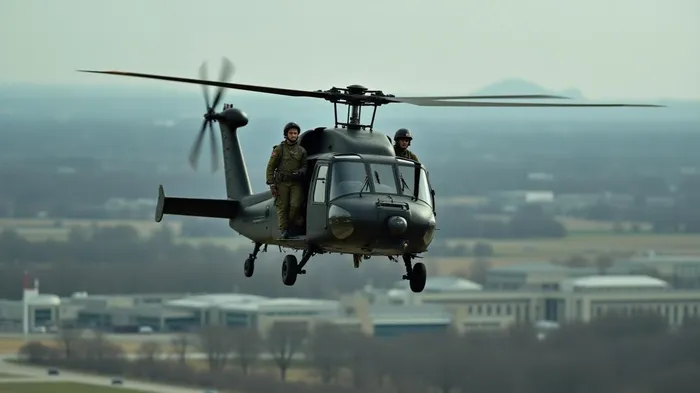
The May 1 near-misses, involving a Delta Air LinesDAL-- flight and a Republic Airways flight, occurred three months after a January 29 midair collision between an American Airlines regional jet and the same Army unit’s helicopter, which killed 67 people. The helicopter in the recent incident violated post-January safety protocols by taking an indirect route around the Pentagon, entering restricted zones. The FAA and NTSB are now scrutinizing whether this was a rogue error or a systemic failure.
Lawmakers are furious. Senator Ted Cruz demanded the FAA “assert control” over Army helicopter routes, while Transportation Secretary Sean Duffy called out “helicopter rides for VIPs” as non-essential risks. The Pentagon’s 12th Aviation Battalion, responsible for both incidents, resumed flights in the region just days before May’s close call—a move critics call reckless.
The Bottom Line for Airlines
Investors in airlines like Delta and Republic should brace for turbulence. The FAA’s probes could lead to stricter airspace regulations, forcing carriers to reroute flights or face costly delays. Reagan National’s already congested airspace—home to some of the nation’s busiest runways—might become even more restrictive.
Delta, which has 97 flights daily to/from DCA, has already pledged cooperation with the investigation. But its stock price (DAL) has dipped slightly since the incident, reflecting investor anxiety about operational disruptions. Republic Airways, which operates smaller regional jets, faces even bigger risks. Its stock (RAVA) has underperformed peers this year, and further regulatory crackdowns could squeeze margins.
Safety Tech: The Silver Lining
While airlines sweat, companies that supply aviation safety systems are poised to benefit. The Army’s disabling of Automatic Dependent Surveillance-Broadcast (ADS-B) systems—a key tracking tool for air traffic control—has exposed a critical gap. Fixing this will require upgrades to ADS-B technology, which is mandatory for U.S. flights by 2020 (a deadline already missed by many).
Honeywell, a leader in ADS-B and avionics, could see a surge in demand as the FAA expands its probe to other airports like Las Vegas. Meanwhile, the NTSB’s 85 near-miss incidents since 2021 and over 15,000 “close proximity” events highlight the need for better tracking and collision-avoidance tech. Investors in aerospace and defense ETFs like the Aerospace & Defense Select Sector SPDR Fund (XARX) may find opportunities here.
The Bigger Picture
This isn’t just about Washington. The FAA’s delayed response to earlier risks—like the January crash—suggests systemic weaknesses in oversight. If regulators now overreact, airlines nationwide could face stricter rules, higher compliance costs, and reduced flight efficiency. Meanwhile, the Pentagon’s reliance on helicopters for VIP transport—a practice critics call “reckless”—could lead to cuts in military air traffic.
Conclusion: Risks Ahead, but Opportunities Too
The FAA’s probe is a turning point. For airlines like Delta (DAL) and Republic (RAVA), the path ahead is rocky. Regulatory overcorrections could dent profits, especially at smaller carriers. But for investors in safety tech—like Honeywell (HON) and the aerospace sector (XARX)—this is a growth catalyst. The data tells the story:
- DAL’s stock dropped 2.5% in the week after the May incident, reflecting short-term jitters.
- RAVA’s stock is down 8% year-to-date, as regional airlines face rising scrutiny.
- Honeywell’s aviation division reported 7% revenue growth in 2024, with ADS-B orders up 15%.
The takeaway? Stay cautious on airlines tied to crowded East Coast hubs, but bullish on companies solving the airspace safety crisis. As Jim would say: “Don’t let your portfolio crash like those helicopters—invest in the fixes, not the flames.”





Comentarios
Aún no hay comentarios