
Heineken's Strategic Expansion in Central America: A High-Growth Opportunity in Global Beer Consolidation
The global beer industry is undergoing a seismic shift, driven by consolidation, innovation, and the relentless pursuit of emerging markets. At the heart of this transformation is Heineken N.V., whose $3.2 billion acquisition of FIFCO's beverage and retail businesses in Central America represents a masterstroke in geographic diversification and long-term value creation. This move not only aligns with broader industry trends but also positions Heineken to capitalize on the region's economic resilience and evolving consumer preferences.
Global Beer Industry Trends: Consolidation and Premiumisation
The global beer market has seen a surge in mergers and acquisitions (M&A) in 2024, with private equity firms and privately held companies driving dealmaking[1]. This trend is fueled by the need to adapt to shifting consumer demand, particularly the rise of premium and craft beer. According to the 2024 Global Beer and Brewery Industry Report, market concentration is increasing as major players consolidate to diversify product offerings and leverage technological efficiencies[1]. Meanwhile, emerging markets—especially in Asia-Pacific and Latin America—are becoming critical growth engines. For instance, the IWSR Global Trends Report notes that premium-and-above beer volumes grew by 3% in 2024, with South America leading the charge[2].
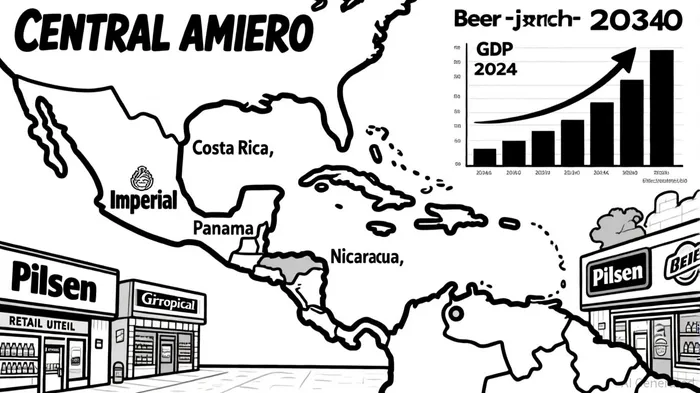
Heineken's acquisition of FIFCO's Central American operations is a direct response to these dynamics. By acquiring Costa Rica's Imperial beer brand, PepsiCo bottling rights, and over 300 retail outlets, Heineken gains a diversified portfolio that bridges traditional and modern beverage consumption[3]. This aligns with the company's EverGreen strategy, which prioritizes premiumisation, innovation, and high-potential markets[4].
Central America's Economic Outlook: A Stable Foundation for Growth
Central America's economic trajectory in 2025 is marked by moderate but steady growth. The International Monetary Fund (IMF) projects GDP growth of 2.5% for the region in 2025, up from 2.4% in 2024, supported by declining inflation and low unemployment[5]. This stability is critical for Heineken, as it reduces macroeconomic risks and ensures a predictable environment for scaling operations.
The beverage sector, in particular, is thriving. U.S. exports of processed foods to Central America grew by 11% in 2024, reaching $2.2 billion, reflecting strong regional demand for both imported and locally produced beverages[5]. Heineken's acquisition of FIFCO's businesses—including full ownership of Distribuidora La Florida and expanded stakes in Nicaragua and Guatemala—positions the company to dominate this growing market. The transaction is expected to be immediately accretive to operating margins and earnings per share (EPS), with synergies unlocked through Heineken's global expertise in logistics and commercial execution[3].
Strategic Rationale: Synergies and Long-Term Value Creation
Heineken's acquisition of FIFCO is not merely a geographic expansion but a strategic repositioning. The deal grants the company control over iconic brands like Imperial (Costa Rica's top beer), Pilsen (Panama), and Tropical (Nicaragua), which have deep cultural resonance[3]. These brands, combined with FIFCO's soft drinks business and retail footprint, create a multi-category beverage empire in Central America.
The economic rationale is equally compelling. By integrating FIFCO's operations, Heineken can reduce costs through centralized supply chain management and technology-driven efficiencies. For example, the company can leverage its global brewery network to optimize production and distribution, mitigating the impact of regional trade barriers such as U.S. import tariffs[1]. Additionally, the acquisition aligns with the broader shift toward non-alcoholic and flavored malt beverages (FMBs), which grew by 25.1% and 5.5%, respectively, in 2024[1]. Heineken's portfolio diversification ensures it remains competitive in a sector increasingly defined by innovation.
Market Dynamics and Competitive Advantages
Central America's beer market is highly fragmented, with regional players and legacy brands vying for dominance. However, Heineken's acquisition consolidates its position as a market leader, enabling it to outpace competitors like Modelo and Guinness, which face challenges from U.S. import tariffs[1]. The company's vertically integrated model—spanning production, distribution, and retail—creates a moat against new entrants and enhances profit margins.
Moreover, Heineken's focus on sustainability and localized storytelling resonates with Central American consumers. The company's commitment to reducing carbon emissions and promoting community development aligns with the region's growing emphasis on corporate social responsibility[4]. This not only strengthens brand loyalty but also supports long-term regulatory and reputational stability.
Conclusion: A Win-Win for Investors and Stakeholders
Heineken's $3.2 billion bet on Central America is a testament to its strategic foresight. By acquiring FIFCO's assets, the company secures a foothold in a high-growth region with stable economic fundamentals and a thirst for premium beverages. For investors, this acquisition represents a rare combination of immediate financial returns and long-term value creation, underpinned by Heineken's operational excellence and the region's demographic tailwinds. As the global beer industry continues to consolidate, Heineken's Central America expansion is poised to deliver outsized returns in a market brimming with potential.







Comentarios
Aún no hay comentarios