
Heineken: A Strategic Buy Amid Industry Headwinds
Resilient Q3 Performance Amid Regional Diversification
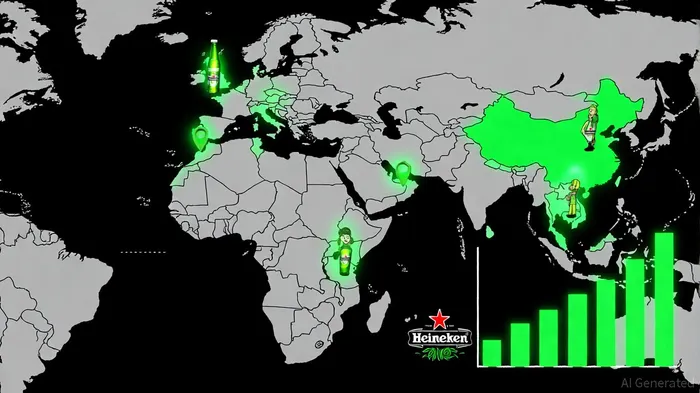
Heineken's Q3 2025 results underscore its ability to navigate headwinds. While global beer volume fell by 4.3% year-over-year, the company's premium beer segment showed resilience, with a 0.4% year-to-date volume increase despite a 2.2% quarterly decline, according to Heineken's 2025 third-quarter results. Regional performance highlighted its strategic focus: Southern Africa, Vietnam, and China delivered robust growth, offsetting weaker sales in Europe and the Americas. This geographic diversification is critical, as it insulates Heineken from localized downturns and positions it to capitalize on emerging markets' long-term potential.
EverGreen 2030: A Blueprint for Sustained Growth
Heineken's EverGreen 2030 strategy, unveiled in 2025, reinforces its commitment to mid-single-digit organic net revenue growth annually until 2030, with profit growth expected to outpace revenue, as outlined in its EverGreen 2030 plan. The plan prioritizes 17 key markets, including strategic acquisitions and selective divestments to streamline operations. By targeting €500 million in annual gross savings by 2030, the company aims to bolster margins even as it reinvests in premiumization and sustainability initiatives. This dual focus on cost discipline and innovation aligns with value investing principles, emphasizing long-term profitability over short-term volatility.
Undervaluation and Cost Discipline: A Value Investor's Sweet Spot
Heineken's current P/E ratio of 21.91, while modestly above the industry average of 20.92, is significantly lower than its 12-month average of 35.58, according to FinanceCharts. This discount reflects market skepticism about near-term beer volume declines but overlooks the company's structural advantages. For instance, Heineken's operating profit guidance for 2025-projected to grow toward the lower end of the 4%–8% range-suggests a conservative but achievable path, supported by €500 million in gross savings noted in the Q3 trading update. These savings, combined with its focus on premiumization, create a margin buffer that could drive earnings upside.
Emerging Markets and Premiumization: Tailwinds for Growth
Heineken's geographic focus on high-growth regions like Vietnam and China is a strategic masterstroke. These markets not only offset declines in mature economies but also align with global trends toward premiumization. While Q3 premium beer volume dipped 2.2%, the year-to-date 0.4% growth indicates a durable shift toward higher-margin products, as highlighted in the Q3 trading update. By reinvesting in premium brands and digital distribution channels, Heineken is positioning itself to capture value from consumers willing to pay more for quality and sustainability.
Conclusion: A Buy for the Long-Term
Heineken's combination of undervaluation, disciplined cost management, and long-term strategic clarity makes it an attractive buy. While the beer industry faces moderation, Heineken's EverGreen 2030 strategy and geographic diversification provide a clear path to outperforming peers. Investors who recognize the company's ability to balance cost efficiency with innovation will likely benefit from its premiumization tailwinds and emerging market growth.







Comentarios
Aún no hay comentarios