
Heineken's Strategic Adaptability in a Tariff-Driven World: A Defensive Yet Growth-Oriented Play in a Protectionist Era
In a global trade environment increasingly defined by protectionist policies and carbon tariffs, companies that can pivot quickly to mitigate risks while capitalizing on emerging trends are positioned for long-term success. Heineken, the Dutch brewing giant, exemplifies this duality through its localized production strategies and ESG-driven innovation. These pillars not only insulate the company from geopolitical volatility but also unlock growth in sustainability-conscious markets. For investors seeking a defensive yet forward-looking play, Heineken's approach offers a compelling case study.
Localized Production: A Shield Against Tariff Volatility
Heineken's localized production model is a masterclass in risk mitigation. By brewing 95% of its volume in regional facilities and selling it locally, the company sidesteps the brunt of tariffs and supply chain bottlenecks. This strategy has proven critical in navigating U.S. tariffs on imported canned beer and aluminum, which have disproportionately affected competitors reliant on cross-border exports. For instance, Heineken's U.S. operations remain resilient despite these challenges, as its domestic production in markets like Vietnam, India, and China ensures consistent supply without exposing it to high-margin erosion.
The company's localized approach is further amplified by its eB2B digital platform, which connects 686,000 customers and generates €3.1 billion in gross merchandise value. This digital infrastructure enables real-time demand forecasting, reducing distribution costs and enhancing agility in response to trade shocks. Heineken's CEO, Dolf van den Brink, has emphasized the importance of “capital discipline” in this context, with a 2025 target of €400 million in operational savings. These savings, coupled with a diversified regional footprint, position Heineken to outperform peers in a fragmented trade landscape.
ESG Innovation: Building a Sustainable Competitive Edge
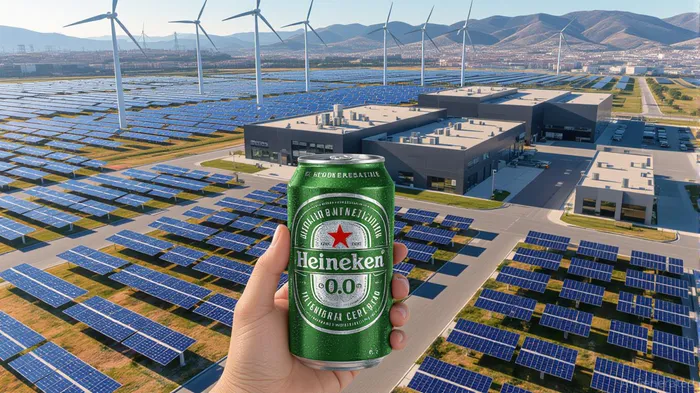
While localized production addresses immediate tariff risks, Heineken's ESG initiatives are reshaping its long-term value proposition. The company's net-zero-by-2040 roadmap is not merely a regulatory compliance exercise but a strategic lever to future-proof its operations. By 2024, 84% of Heineken's global operations were powered by renewable electricity, with flagship sites like its Vialonga brewery in Portugal on track to achieve 100% renewable energy by 2030. This transition aligns with the EU's Carbon Border Adjustment Mechanism (CBAM) and insulates Heineken from carbon-intensive cost shocks.
Heineken's Scope 3 emissions strategy further underscores its innovation. Partnerships with firms like FertigHy—a low-carbon fertilizer producer—are set to cut 2 million tonnes of CO₂ annually by 2025, directly addressing supply chain emissions. Circular economy efforts, including 39% of beer sold in reusable packaging and 44% of packaging with recycled content, are equally transformative. These initiatives not only reduce waste but also appeal to a consumer base increasingly prioritizing sustainability.
Premiumization and New Frontiers: Growth in a Shifting Market
Heineken's strategic adaptability extends beyond risk management. Its premiumization playbook—launching high-margin products like Heineken® Silver in Vietnam and Kingfisher Ultra in India—has bolstered profit resilience amid trade uncertainties. Meanwhile, the 14% growth in its 0.0 beer line (now a $13.7 billion global market) taps into the “sobriety curiosity” trend, offering a revenue stream insulated from traditional beer market cycles.
The company's foray into energy drinks via a minority stake in TENZING and its UK pubs business further diversify its revenue base. These moves reflect a broader shift toward “experiences” rather than commoditized products, a trend that aligns with consumer spending patterns in a post-pandemic world.
Investment Implications: Defensive Resilience with Growth Catalysts
For investors, Heineken's dual focus on localized production and ESG innovation creates a unique value proposition. Its regionalized model limits exposure to U.S. tariffs, while its sustainability initiatives position it to capitalize on green investing trends. The company's ability to balance cost discipline with high-growth regional investments (e.g., China, India) further enhances its appeal.
Key Takeaways for Investors:
1. Defensive Qualities: Heineken's localized production and digital supply chain reduce vulnerability to trade wars and currency volatility.
2. Growth Levers: ESG-driven innovations, from carbon-neutral brewing to circular packaging, align with regulatory and consumer trends.
3. Margin Resilience: Premiumization and cost savings targets (e.g., €400 million in 2025) support sustainable earnings growth.
In a world where protectionism and climate policy are reshaping global commerce, Heineken's strategic adaptability offers a blueprint for long-term success. For investors, the company represents a rare combination of defensive resilience and forward-looking innovation—a must-watch in an increasingly fragmented global economy.







Comentarios
Aún no hay comentarios