
Heineken's Leadership Shift in the Americas and Its Implications for Growth: Strategic Leadership and Market Expansion Opportunities in Developing Economies
Heineken's recent leadership transition in the Americas, marked by the appointment of Alex Carreteiro as Regional President effective March 2026, signals a strategic pivot toward accelerating growth in developing economies. This shift aligns with the company's broader EverGreen 2030 strategy, which prioritizes market expansion in high-growth regions like Mexico, Brazil, India, and Vietnam. With Carreteiro's extensive experience in emerging markets and Heineken's renewed focus on digital transformation, product innovation, and sustainability, the Americas are poised to become a cornerstone of the company's global ambitions.
Strategic Leadership: Carreteiro's Background and Vision
Alex Carreteiro's appointment follows the departure of Marc Busain in October 2025. Carreteiro, a seasoned executive with leadership roles at PepsiCoPEP-- and Nestlé, brings a proven track record in scaling operations in emerging markets such as Brazil, Chile, and Argentina according to reports. His expertise in navigating complex economic environments and driving growth in fast-evolving markets positions him to execute Heineken's EverGreen 2030 objectives.
The EverGreen 2030 strategy, unveiled in October 2025, emphasizes leveraging Heineken's global footprint to capitalize on structural growth in both developed and developing markets according to the company's announcement. The Americas, particularly Mexico and Brazil, are highlighted as critical regions due to their demographic trends-urbanization, a rising middle class, and Gen Z-driven consumption patterns. Carreteiro's leadership is expected to accelerate Heineken's focus on premium beer, 0.0 beer, and "beyond beer" innovations, while enhancing operational efficiency through digital transformation according to market analysis.
Market Expansion in Developing Economies: Mexico and Brazil
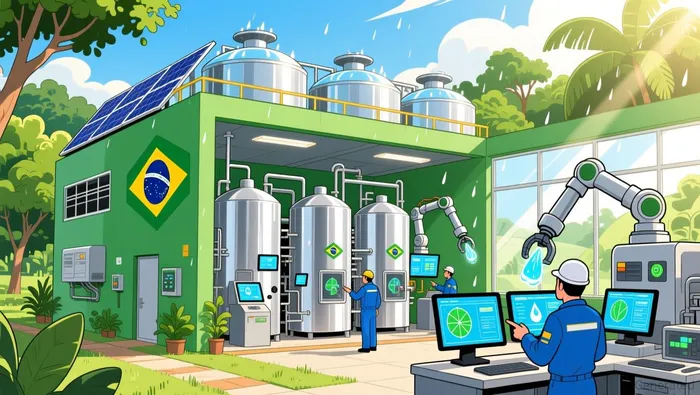
Heineken's strategic initiatives in the Americas are anchored in targeted market expansion and product diversification. In Brazil, the company has invested over €400 million in a new brewery in Passos, Minas Gerais, which triples its production capacity in the Southeast region, a key consumption hub according to the company's announcement. This facility, equipped with energy-efficient systems and water-saving technologies, reduces water usage by 30% and supports Heineken's sustainability goals according to technical specifications. Additionally, the company has expanded non-alcoholic beer production for its Heineken 0.0 brand, reflecting a shift toward health-conscious consumer preferences according to industry reports.
 In Mexico, Heineken has partnered with SparkOptimus to adopt generative AI solutions, improving customer service efficiency by 10% and boosting trade marketing productivity by 50% according to partnership details. These digital initiatives are part of the company's €1+ billion Digital Backbone project, aimed at streamlining operations across 70+ markets according to the company's strategy. The acquisition of FIFCO's beverage and retail business in Central America further strengthens Heineken's distribution network, enabling deeper penetration into Latin America's growing middle class according to the company's announcement.
Financial Projections and Growth Metrics
Heineken's EverGreen 2030 strategy targets mid-single-digit organic net revenue growth annually, supported by cost-cutting measures and productivity enhancements. The company aims to achieve an additional €400–500 million in annual savings by 2030, building on €3 billion in savings from its previous EverGreen 2025 program according to financial analysis. In Brazil, Heineken's beer volume market share rose to 25.4% in H1 2025, up from 23.8% in the prior year, driven by strategic inventory adjustments and premium brand growth according to market data.
Emerging markets, which account for 80% of the global population but only half the per capita beer consumption of developed markets, represent a significant growth opportunity. Heineken's focus on 17 "Focus Growth Markets" in the Americas, including Mexico and Brazil, is expected to drive volume growth as urbanization and disposable incomes rise according to the company's strategy. The company's sustainability commitments-such as net-zero carbon emissions for Scope 1 and 2 by 2030 and water efficiency targets-also align with investor priorities, enhancing long-term resilience according to sustainability reports.
Implications for Investors
Heineken's leadership shift and strategic realignment under EverGreen 2030 present compelling opportunities for investors. The Americas, with their high-growth potential and Heineken's strengthened operational footprint, are well-positioned to deliver above-market returns. Carreteiro's experience in emerging markets, combined with the company's investments in digital transformation and sustainability, underscores a disciplined approach to growth.
However, challenges such as inflationary pressures and economic volatility in developing economies remain. Heineken's ability to maintain pricing power while expanding market share in Brazil and Mexico will be critical. The company's recent performance-2.1% organic net revenue growth in H1 2025 despite a 1.2% global beer volume decline-demonstrates its capacity to adapt to macroeconomic headwinds according to earnings reports.
Conclusion
Heineken's leadership transition in the Americas, coupled with its EverGreen 2030 strategy, reflects a clear-eyed focus on leveraging emerging markets for sustainable growth. With Alex Carreteiro at the helm, the company is poised to capitalize on demographic tailwinds, digital innovation, and product diversification in key regions like Mexico and Brazil. For investors, this strategic pivot offers a compelling case for long-term value creation, provided Heineken can execute its cost-saving initiatives and maintain its leadership in premium and 0.0 beer segments.





Comentarios
Aún no hay comentarios