
Heidmar Maritime Seizes Opportunity in Structurally Undersupplied Feeder Vessel Market
The global feeder container vessel market is on the cusp of a golden era, driven by a perfect storm of structural undersupply, rising demand, and regulatory tailwinds. Heidmar Maritime's recent acquisition of the C/V A. Obelix, a 1,702 TEU feeder vessel built in 2008, positions it strategically to capitalize on this rare convergence of factors. Here's why this move could deliver outsized returns—and what investors should watch next.
The Case for Structural Undersupply: A Perfect Storm
The feeder vessel segment (typically under 3,000 TEU) is experiencing a chronic shortage of capacity, fueled by three key dynamics:
Aging Fleet and Low Newbuild Activity:
The global feeder fleet has an average age of 15 years, with many vessels nearing the end of their economic lifespans. Newbuild orders remain depressed at just 4% of total fleet capacity, as shipyards prioritize larger vessels (over 5,000 TEU) for transoceanic routes.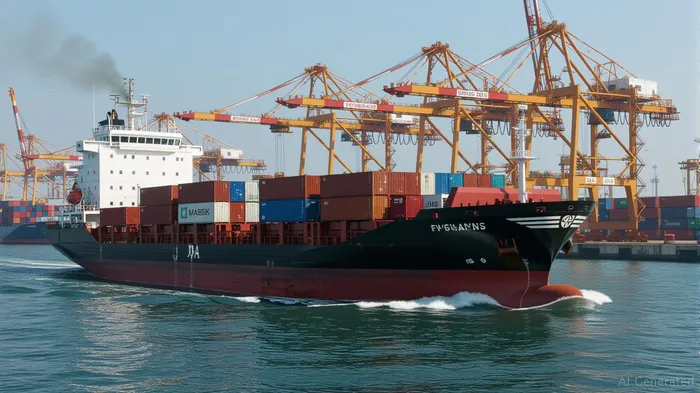
Regulatory pressures, such as the IMO's CII carbon intensity metric, have accelerated scrapping of older, less efficient vessels. Over 25-year-old feeders are increasingly uneconomical to retrofit, leaving gaps in capacity that newbuilds cannot fill quickly.Soaring Demand from Emerging Markets:
Regions like Southeast Asia, Africa, and South America are experiencing e-commerce booms and port infrastructure upgrades, driving demand for feeder vessels to connect smaller ports to global supply chains. For instance, India's port investments and Brazil's record cargo volumes highlight how trade corridors are expanding beyond traditional hubs.Geopolitical Disruptions and Route Complexity:
The lingering effects of the Red Sea crisis, strikes in European ports, and rerouting via the Cape of Good Hope have strained feeder networks. These disruptions have increased transit times by 14 days for some Asia-Europe routes, boosting demand for agile feeder services to plug gaps in mainline networks.
The result? Freight rates for feeder vessels have surged, with Asia-Europe spot rates hitting $4,000/FEU and U.S. East Coast rates climbing to $3,520/FEU in early 2025. This pricing power is set to persist as supply struggles to catch up with demand.
Heidmar's Strategic Move: A Calculated Bet on Scarcity
Heidmar's acquisition of the C/V A. Obelix—a 17-year-old feeder vessel—may seem counterintuitive in an age of regulatory scrutiny. But the move is shrewd for three reasons:
A Vessel with Legs:
The A. Obelix, while older, is not yet obsolete. Its 2008 build date places it in the middle of the feeder fleet's age distribution (15-year average) and avoids the 25-year scrapping threshold. With no drydocking required until 2028, it can operate profitably for years under current regulations.Strategic Geographic Focus:
The vessel's size (1,702 TEU) is ideal for connecting smaller ports in regions like the Mediterranean, Caribbean, and Southeast Asia—exactly where emerging trade corridors are booming. Heidmar's ability to deploy it in high-growth routes could yield premium rates.Leveraging Market Tightness:
With feeder vessels in short supply, Heidmar can command higher charter rates. The vessel's age also means lower acquisition costs compared to newer builds (which cost up to $100M), boosting returns on equity.
Investment Thesis: High Returns, but Mind the Risks
Why Buy Heidmar?
- Scarcity Premium: The undersupply ensures high utilization rates and pricing power.
- Earnings Visibility: Contracts for feeder vessels in emerging markets are often long-term, reducing revenue volatility.
- Environmental Tailwinds: Newer regulations favor operators with modernized fleets, but Heidmar's vessel may qualify for retrofits (e.g., LNG upgrades) at a fraction of the cost of newbuilds.
Risks to Monitor:
- Regulatory Overreach: Stricter emissions rules could force premature scrapping of older vessels.
- Geopolitical Volatility: Conflicts or trade wars could disrupt feeder routes (e.g., Red Sea instability).
- Competition from Larger Vessels: If carriers deploy mega-ships to smaller ports, feeder demand could wane.
Conclusion: A High-Reward, High-Conviction Play
Heidmar Maritime's entry into the feeder vessel market is a masterstroke. The structural undersupply, driven by aging fleets and weak newbuild activity, ensures that capacity constraints will persist for years—a tailwind for operators with the right assets.
Investors seeking exposure to this trend should consider Heidmar, but pair it with close monitoring of freight rates (e.g., Baltic Feeder Index) and geopolitical developments. For the risk-tolerant, this is a chance to profit from scarcity in a vital but overlooked corner of global trade.
Final Take: Buy Heidmar MaritimeHMR-- for a 2–3 year horizon, with a focus on its ability to navigate regulatory and operational risks.





Comentarios
Aún no hay comentarios