
Hedging Strategies in the Fire Insurance Sector: Evaluating the Financial Resilience of Alternative Risk Transfer (ART) vs. Traditional Reinsurance Amid California's Climate Crisis
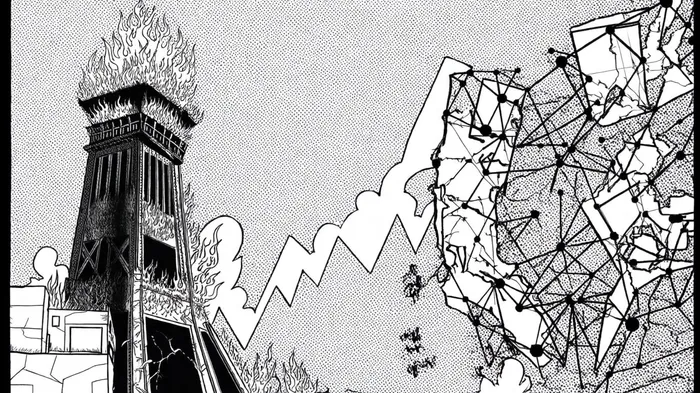
The escalating climate crisis has transformed California's wildfire landscape into a financial battleground for insurers. In 2025 alone, over 6,500 wildfires scorched 425,000 acres, destroying 16,375 structures and generating insured losses exceeding $30 billion-some estimates project losses as high as $75 billion, according to an Insurance Business report. Traditional reinsurance models, long the backbone of risk transfer, are straining under the weight of these escalating costs. Meanwhile, Alternative Risk Transfer (ART) mechanisms-catastrophe bonds, parametric insurance, and captives-are emerging as critical tools for insurers seeking to hedge against climate-driven volatility. This analysis evaluates the financial resilience and profitability of ART versus traditional reinsurance in California's fire insurance sector, drawing on recent data and market trends.
The Crisis in Traditional Reinsurance
Traditional reinsurance, which historically provided insurers with a safety net for catastrophic losses, is increasingly inadequate in the face of California's wildfire risks. Reinsurers have retreated from secondary perils like wildfires, which often fail to meet the high thresholds required to trigger payouts, according to an Insurance Business analysis. For instance, reinsurers absorbed less than 3% of insured losses from the 2025 wildfires, the Insurance Business report found, forcing primary insurers to bear the brunt of claims. This has led to emergency rate hikes, policy non-renewals, and a hardening market. Mercury GeneralMCY-- and the California FAIR Plan, for example, saw their cash reserves plummet from $1.5 billion to $305 million by June 2025, highlighting the sector's fragility as documented in the same Insurance Business report.
Regulatory constraints further exacerbate the problem, as noted in a Marsh McLennan analysis. California's reforms allowing insurers to pass reinsurance costs to policyholders have not fully offset the financial strain. As a result, major insurers like State Farm and AllstateALL-- have either raised premiums by 22% or exited the state altogether, the Insurance Business report observed. Traditional reinsurance's inability to adapt to the scale and frequency of wildfires highlights a systemic gap in risk management.
The Rise of Alternative Risk Transfer (ART)
ART instruments are gaining traction as insurers seek more flexible and resilient solutions. Catastrophe bonds (cat bonds), for example, allow insurers to offload risk to capital markets, where investors assume exposure in exchange for returns. If a predefined event-such as a wildfire exceeding a specific geographic footprint-occurs, investors lose their principal, providing insurers with immediate liquidity, as explained in a WTW overview. In 2025, cat bonds accounted for $5 billion in wildfire-related reinsurance capacity, offering a lifeline to insurers facing traditional market constraints, according to the Insurance Business report.
Parametric insurance, another ART tool, triggers payouts based on predefined indices (e.g., temperature thresholds or satellite-measured fire extent) rather than actual loss assessments. This eliminates lengthy claims processes, enabling faster recovery for policyholders and insurers alike, as the Marsh McLennan analysis describes. For instance, parametric solutions leveraged remote sensing data to disburse funds within days of the 2025 Palisades Fire, reducing administrative costs and volatility, the Marsh McLennan analysis noted. Captive insurance and risk retention groups (RRGs) also allow insurers to self-fund portions of their risk, tailoring coverage to specific needs while retaining control over capital, consistent with the WTW overview.
Comparative Financial Resilience and Profitability
The financial performance of ART versus traditional reinsurance reveals stark contrasts. Traditional reinsurance's profitability has declined as wildfire losses consume annual catastrophe budgets. For example, the 2025 Los Angeles wildfires generated ceded losses of $11–$17 billion, accounting for 25–33% of major reinsurers' annual catastrophe budgets, according to a WAHR-Re article. This volatility has driven up reinsurance premiums and reduced capacity, particularly for smaller insurers.
In contrast, ART mechanisms offer greater predictability and cost stability. Captives and risk pools aggregate losses across multiple years, smoothing out per-event volatility, a point emphasized in the Marsh McLennan analysis. A 2025 case study of a global forest owner using ART to hedge wildfire risk demonstrated a 15% reduction in three-year costs compared to traditional reinsurance, the Marsh McLennan analysis reported. Additionally, ART's access to capital markets-where $655 billion in reinsurance capacity was available as of early 2025 per the WAHR-Re article-provides insurers with diversified funding sources, reducing reliance on a shrinking traditional reinsurance market.
However, ART is not without challenges. Basis risk-the mismatch between predefined triggers and actual losses-remains a concern. For example, parametric payouts may exceed or fall short of actual damages, creating financial uncertainty, as the Insurance Business analysis cautioned. Moreover, ART requires sophisticated modeling and higher upfront costs, limiting its accessibility for smaller insurers.
Strategic Implications for Insurers
The choice between ART and traditional reinsurance hinges on an insurer's risk appetite, capital structure, and geographic exposure. For large insurers with strong balance sheets, hybrid models combining both approaches may offer optimal resilience. For instance, national insurers in 2025 leveraged cat bonds to cover tail risks while retaining traditional reinsurance for moderate events, the WAHR-Re article observed. Smaller insurers, meanwhile, may benefit from captives or parametric solutions to manage costs without overexposure.
Regulatory collaboration will also be critical. California's recent reforms, which allow reinsurance costs to be factored into premium filings, could incentivize broader adoption of ART by making risk transfer more transparent and affordable, according to the Marsh McLennan analysis.
Conclusion
California's wildfire crisis has exposed the limitations of traditional reinsurance while accelerating the adoption of ART. While traditional models struggle with rising costs and basis risk, ART instruments offer insurers greater flexibility, faster payouts, and access to capital markets. However, the effectiveness of ART depends on careful structuring and regulatory support. For investors and insurers navigating this evolving landscape, a strategic blend of traditional and alternative risk transfer mechanisms may be the key to long-term resilience in an era of climate-driven uncertainty.





Comentarios
Aún no hay comentarios