
The Hedging Shift: Why Option-Based Strategies Are the Future in FX Volatility
Amid rising costs, retaliatory tariffs, and currency swings that have turned global trade into a financial rollercoaster, companies are rethinking their foreign exchange (FX) hedging strategies. While Canadian firms have been shortening their hedges to ride out volatility, U.S. firms face a different calculus: longer-dated, option-based hedging offers a smarter way to balance risk and flexibility in an unpredictable environment. The data shows why this shift is critical—and how investors can profit from it.
The New Reality: Volatility as the Norm
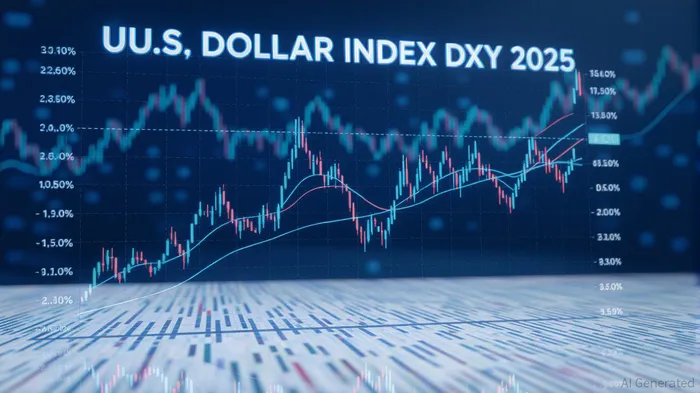
The past year has seen the U.S. dollar swing wildly, hitting a two-decade high in late 2022 before plummeting to a nine-month low in early 2023. Tariffs—such as the 10% minimum on non-NAFTA imports—have exacerbated this instability, with retaliatory measures from trading partners compounding the chaos. For corporations, this means currency risk is no longer an outlier but a permanent fixture.
Why Traditional Forwards Fall Short
For decades, corporations relied on fixed-forwards—contracts locking in exchange rates for a set period—to hedge FX risk. But in today's volatile markets, this approach has fatal flaws:
1. Rigidity: A multi-year forward commits a firm to a single rate, even if the currency swings wildly in its favor.
2. Cost Inefficiency: Short-term forwards have become prohibitively expensive. For example, one-month options saw 72% cost increases post-April 2025 tariffs, while two-year options rose only 23%.
3. Missed Opportunities: If the dollar strengthens unexpectedly, companies using fixed forwards could leave money on the table.
The Canadian experience underscores this. While 51% of Canadian fund managers have shortened their hedge windows to six months or less, this short-term myopia leaves them exposed to sudden shifts. The U.S. firms, by contrast, are adopting a smarter approach: option-based hedging.
The Option Advantage: Flexibility Meets Cost Efficiency
Options—such as window forwards or zero-premium collars—allow firms to lock in downside protection while retaining upside flexibility. Here's why they outperform:
- Lower Break-Even Points:
- A window forward lets companies choose the exact period (e.g., 90 days within a 12-month window) to execute a hedge. This avoids overpaying for unused protection.
Zero-premium collars transfer some upside risk to the bank in exchange for free downside protection.
Cost Savings at Scale:
Over 54% of U.S. and U.K. firms have extended hedge tenors to 2–5 years, leveraging longer-dated options to reduce rolling costs. A two-year option might cost just 23% more than a one-year forward but covers twice the time.
Adaptability in Uncertainty:
With tariffs and central bank policies shifting quarterly, firms need tools that don't lock them into outdated assumptions. Options let companies react to real-time data, such as a sudden shift in trade negotiations or a central bank rate hike.
The Data Speaks: Winners and Losers
- Firms without hedging: 76% suffered net losses on unhedged FX risks in 2024.
- Firms using options:
- Reduced profit/loss volatility by 40% (per the MillTech Quarterly survey).
- Captured 85% of potential gains when currencies moved favorably, compared to 35% for fixed-forward users.
Investment Implications
Back Companies with Option-Based Hedging:
Look for firms in sectors like energy, automotive, or tech—all heavily exposed to FX swings—that disclose robust option strategies. A rising star here is Mizuho Financial, which has pioneered dynamic hedging tools for its corporate clients.Avoid Short-Term Hedging Reliance:
Canadian firms shortening their hedges may face a reckoning if volatility persists. The Toronto Stock Exchange (TSX) has underperformed the S&P 500 by 12% since 2024, partly due to this risk aversion.Bet on Hedging Infrastructure:
Firms like CME Group (CME) and Interactive Brokers (IBKR) are expanding derivatives platforms tailored to long-dated options. These could see demand surge as companies scale up their strategies.
Conclusion: Flexibility is the New Safety Net
In a world where tariffs and central banks rewrite the rules monthly, rigidity is riskier than volatility itself. U.S. firms adopting option-based hedging aren't just managing risk—they're gaining an edge. Investors who follow this trend will find winners in an otherwise turbulent market. The future belongs to those who turn uncertainty into opportunity.







Comentarios
Aún no hay comentarios