
Hedging the Carbon Tsunami: How to Profit from the EU's CBAM Rollout
The European Union's Carbon Border Adjustment Mechanism (CBAM), set to fully launch in 2026, is reshaping global trade dynamics. By forcing non-EU manufacturers to pay for the carbon embedded in their exports, CBAM creates a direct link between their costs and the price of EU Emissions Trading System (ETS) allowances (EUAs). This mechanism not only reduces carbon leakage but also opens lucrative hedging opportunities for investors. Here's how to capitalize on this carbon reckoning.
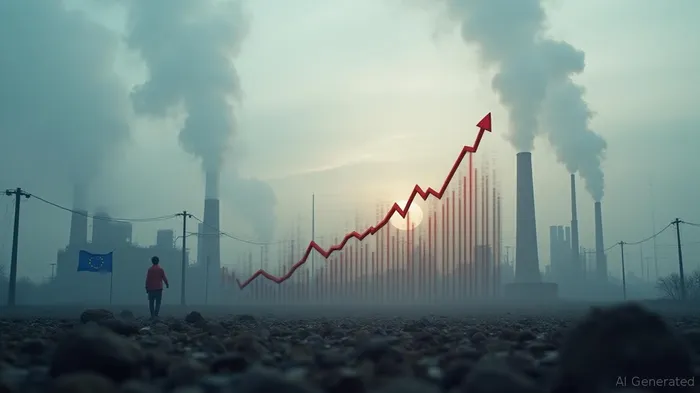
The CBAM-Carbon Price Nexus
Starting in 2026, non-EU producers exporting to the EU will need to surrender CBAM certificates, priced weekly based on the average EUA auction cost. This creates proxy hedging demand: firms exposed to CBAM will increasingly use EUA derivatives to lock in costs ahead of compliance deadlines. The result? A structural tailwind for EUA prices.
Why Now?
Current EUA futures for 2026 trade around €75–€80/ton, but this may underestimate the coming surge. The CBAM's phased rollout (starting at 40% coverage for maritime emissions in 2025) and the gradual phaseout of free ETS allowances in high-risk sectors like steel and cement will tighten EUA supply. Add to this the EU's 2030 target of cutting emissions 55% below 1990 levels, and the math is clear: EUAs are a scarce asset about to get scarcer.
Three Plays for the Carbon Hedging Boom
1. Go Long on EUAs: The Core Position
The simplest strategy is to establish a long position in EUA futures or exchange-traded products (ETPs) like the European Emissions Allowance (ELCC) ETF. With CBAM compliance costs directly tied to EUA prices, demand for physical and derivative EUAs will surge.
Risks: Short-term volatility driven by energy prices (e.g., natural gas) or economic downturns. But with CBAM's fixed 2026 deadline, this is a long-term bet on structural scarcity.
2. Options Strategies: Protecting Against Volatility
Use EUA call options to hedge against price spikes while limiting downside risk. For instance, buying a 2026 EUA call option with a strike price of €80 could profit if prices exceed €80 by expiry. This protects investors from sudden jumps in EUA prices caused by regulatory surprises or geopolitical shifts (e.g., Russian gas cuts).
3. Sector-Specific Plays: Betting on CBAM Winners
Industries most exposed to CBAM—steel, cement, aluminum—are ripe for targeted investments. EU-based firms in these sectors, like ThyssenKrupp (TKA.GR) or HeidelbergCement (HEIG.DE), could gain a competitive edge by already operating under the EU ETS, which charges embedded emissions internally. Meanwhile, companies in regions with weak carbon policies (e.g., China's steelmakers) may see reduced EU market share unless they invest in decarbonization.
The Global Carbon Pricing Ripple Effect
CBAM isn't just a trade tax—it's a blueprint for global carbon pricing. Countries like the U.S. and Canada are already exploring border carbon adjustments, while China's ETS may expand to include export sectors. This accelerates the shift to a world where carbon costs are a universal price of doing business. For investors, this means EUAs are a proxy for a broader, rising tide of carbon liabilities.
Action Items for 2025
- Build a Long EUA Position: Allocate 5–10% of a sustainability-themed portfolio to EUA futures or ETPs.
- Layer in Options: Use 2026 EUA call options (strike €80–€90) to capture upside while limiting risk.
- Target CBAM-Resistant Sectors: Look for EU-based industrial firms with low carbon footprints or exposure to green innovation.
The clock is ticking. With CBAM's 2026 deadline looming and EUA futures still underpricing the coming demand shock, now is the time to act. This isn't just about carbon—it's about who controls the rules of the new global economy.
Final Note: Monitor EU ETS allowance allocations and CBAM implementation progress. Delays or regulatory changes could alter timing, but the long-term trajectory is clear: carbon will cost, and those who hedge now will profit.







Comentarios
Aún no hay comentarios