
Hedge Funds Shift Strategies Amid Tariff Uncertainty: Betting on Staples Over Banks
As tariff wars escalate and economic uncertainty looms, hedge funds are repositioning portfolios to prioritize defensive sectors while sidelining financials. The shift reflects a growing consensus that tariff-induced inflation, supply chain disruptions, and recession risks are reshaping investment priorities. Here's why staples are winning, banks are losing, and what investors should do next.
The Tariff Quagmire: How Trade Wars Are Fueling Recession Fears
The U.S. tariffs on China, Mexico, and Canada—now at an effective rate of 17%—are creating a perfect storm of economic headwinds. By mid-2025, these measures have reduced U.S. GDP by 0.9%, cost 570,000 jobs, and raised household tax burdens by $1,182 annually. Legal battles over the legality of tariffs under the International Emergency Economic Powers Act (IEEPA) have added to uncertainty, with courts poised to rule in late July.
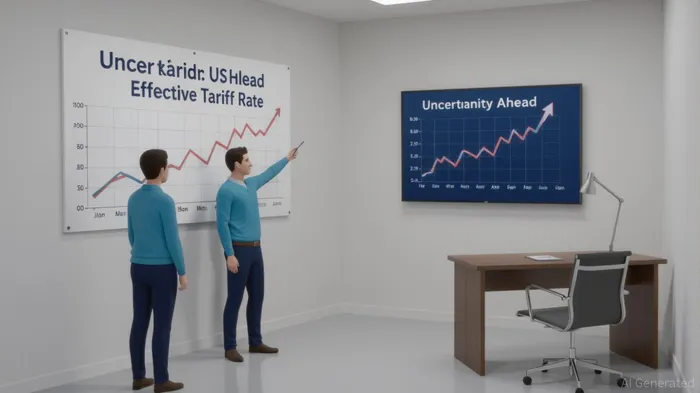
The stakes are high. Goldman SachsGS-- warns that tariffs could shave another 0.5% off GDP by year-end, while retaliatory measures—from China's rare earth export bans to Mexico's auto tariffs—are further crimping corporate margins.
Why Financials Are Losing Favor: Fragile Margins, Rising Risks
Banks and financials are among the most vulnerable sectors. Despite strong Q1 earnings, institutions like Bank of AmericaBAC-- and CitigroupC-- are bracing for a slowdown. Key risks:
- Margin Pressure:
Profit margins for financials are contracting as loan portfolios shrink and credit losses rise. BofA's provision for credit losses increased by 20% year-over-year in Q1.
Economic Sensitivity:
Consumer and corporate lending demand is waning as households face higher costs for essentials. Auto loans, a key revenue driver, are drying up as tariffs on imported vehicles hit 25%.
Tariff-Driven Volatility:
- Financials' exposure to sectors like real estate and auto manufacturing makes them prone to shocks from trade disputes.
Staples: The Safe Haven in a Stormy Market
Consumer staples are emerging as the sector of choice for investors seeking shelter. These companies benefit from inelastic demand, stable pricing power, and minimal exposure to trade wars:
- Defensive Strength:
- Philip Morris (PM): Up 81% in 12 months, fueled by its shift to smoke-free products (40% of revenue). Its 4.1% dividend yield and $50B in cash provide a cushion against volatility.
Procter & Gamble (PG): Organic sales grew 4% in 2024, driven by premium brands like Tide and Gillette.
Tariff Resilience:
Staples like WalmartWMT-- (WMT) and Coca-ColaKO-- (KO) rely on domestic supply chains, reducing exposure to import duties. WMT's e-commerce dominance further insulates it from trade pressures.
Goldman Sachs' Call:
- The firm highlights staples' 3.1% six-month return outperforming the broader market. Its analysis shows small-cap staples (e.g., Advance Auto Parts) are undervalued by 20–40%, offering upside.
The Sector Rotation Playbook: What to Do Now
Hedge funds are voting with their wallets, shifting into staples and industrials while trimming financials. Here's how to follow their lead:
- Overweight Staples:
- Top Picks: Philip MorrisPM-- (PM), Procter & GamblePG-- (PG), and Walmart (WMT).
ETF Option: The SPDR Consumer Staples Select Fund (XLP) offers diversified exposure.
Underweight Financials:
Avoid banks like Bank of America (BAC) and JPMorganJPM-- (JPM) until clarity on tariff outcomes emerges.
Monitor Tariff Developments:
- A U.S.-China trade deal in late July or a court ruling overturning IEEPA tariffs could trigger a rotation back into cyclical sectors.
Final Take: Prepare for Q3 Earnings Disappointments
The market is bracing for weak Q3 earnings, with Goldman Sachs forecasting S&P 500 profit margins to shrink to 11.6%. Staples' defensive nature and valuation discounts make them a safer bet than financials. Investors should stick with this rotation until tariff policies stabilize—likely not before late 2025.
In a world of uncertainty, the safest bets are the ones you can't do without.
Stay defensive. Stay prepared.





Comentarios
Aún no hay comentarios