
Hedge Fund-Style Products to Reshape India's $900 Billion Wealth Management Market
India's wealth management market, valued at $900 billion in 2025, is undergoing a seismic transformation driven by structural shifts in technology, investor behavior, and regulatory frameworks. As the sector prepares to surge to $2.3 trillion by FY2029, hedge fund-style products are emerging as a cornerstone of this evolution, offering dynamic, risk-adjusted returns to a rapidly expanding base of high-net-worth individuals (HNWIs) and ultra-HNWIs (UHNWIs) in an OutlookBusiness analysis. This shift is not merely a product of market optimism but a response to deepening financial sophistication, macroeconomic volatility, and the urgent need for diversified, alternative investment strategies.
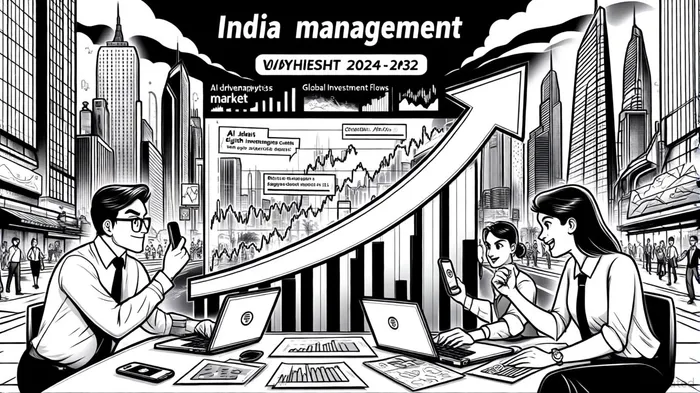
Structural Shifts: From High-Touch to Hybrid Models
The traditional wealth management model, characterized by high-touch advisory services, is giving way to a hybrid ecosystem blending AI-driven analytics, robo-advisory platforms, and self-service tools. According to a Lighthouse Canton report, digital wealth platforms now account for 30% of investor interactions in tier 2 and 3 cities, where the middle class is increasingly demanding real-time portfolio analytics and risk-adjusted performance metrics. This technological leap is democratizing access to sophisticated strategies, enabling investors to engage with hedge fund-style products that were once the domain of institutional players.
For instance, SEBI-regulated Category III Alternative Investment Funds (AIFs) have adopted quantitative models and long-short equity strategies to deliver absolute returns. Funds like Alpha Alternatives – Multi-Strategy Absolute Returns (MSAR) and Nuvama Absolute Return Strategy exemplify this trend, combining low-risk arbitrage with medium-risk equity exposure to navigate volatile markets, as highlighted in a RandomDimes guide. These products are particularly appealing in an environment where global macroeconomic uncertainties—ranging from inflationary pressures to geopolitical risks—demand agile, adaptive investment approaches.
Investor Behavior: Diversification and Risk Mitigation
The behavioral drivers behind this shift are equally compelling. India's HNWI population, representing 0.99% of the population, is projected to grow by 50.1% by 2028, with a significant portion seeking alternatives to traditional equity and fixed-income instruments, according to a MarketsandData report. This cohort, comprising professionals, entrepreneurs, and UHNWIs, is increasingly prioritizing intergenerational wealth transfer, estate planning, and global diversification. Hedge fund-style products, with their focus on downside protection and non-correlated returns, align perfectly with these needs.
For example, Whitespace Alpha – Equity Plus & Debt Plus employs market-neutral strategies using statistical arbitrage and momentum models to capture inefficiencies in asset pricing, as described in a 6Wresearch report. Similarly, Tata Equity Plus Absolute Returns Fund uses derivatives to hedge volatility, offering a dual portfolio model that balances growth and risk. These strategies are gaining traction as investors seek to insulate their portfolios from the cyclical swings of India's equity markets, which have historically been prone to sharp corrections.
Regulatory and Technological Catalysts
Regulatory reforms under SEBI have further accelerated the adoption of hedge fund-style products by classifying hedge funds as AIFs and introducing transparency mandates that enhance investor confidence while curbing systemic risks. Concurrently, the integration of ESG (Environmental, Social, and Governance) strategies into alternative investments is attracting a new generation of socially conscious investors. Funds like ASK Absolute Return Fund, which focus on long-short equity with low drawdowns, are leveraging ESG criteria to align returns with sustainability goals, according to a Global Risk Community report.
However, challenges persist. High management fees, liquidity constraints, and regulatory scrutiny remain barriers to mass adoption. Yet, the sector's growth trajectory—projected at a 10.8% CAGR from 2025 to 2030—suggests that these hurdles will be mitigated by technological innovation and investor education, per a GM Insights forecast. The entry of global players like UBS Group AG into India's wealth management space also signals a broader recognition of the market's potential, as noted in the OutlookBusiness coverage.
A Call to Action: Positioning for Growth
For investors and institutions, the case for early positioning in India's hedge fund-style products is compelling. The market's underpenetration—only 15% of India's affluent households currently use formal wealth management services—presents a vast untapped opportunity, as discussed in the Lighthouse Canton report. As digital platforms lower entry barriers and AI-driven analytics enhance decision-making, the sector is poised to outperform traditional asset classes.
In conclusion, India's wealth management revolution is being driven by a confluence of structural shifts and investor demand for dynamic, risk-adjusted returns. Hedge fund-style products, with their adaptability and innovation, are not just reshaping asset allocation—they are redefining investor expectations in a rapidly evolving financial landscape.







Comentarios
Aún no hay comentarios