
Hedge Fund Dollar Bets: Navigating Tail Risks in a Volatile 2025
The U.S. dollar is under siege. Hedge funds, long the arbitrageurs of global markets, are now squarely positioned against the greenback, betting on a continuation of its multiyear decline. The latest Commitments of Traders report from the Commodity Futures Trading Commission reveals a staggering 3,247-contract increase in net short positions against the U.S. Dollar Index (DXY), pushing the total to 18,542 contracts as of September 27, 2025 (Commitments of Traders report). This isn't just a short-term trade-it's a structural shift driven by macroeconomic tailwags that have upended traditional correlations and forced investors to rethink their dollar exposure.
The Options Market: A Canary in the Coal Mine
Hedge funds aren't just shorting the dollar in futures; they're hedging in options, where the put/call ratio and open interest tell a story of growing pessimism. As of September 2025, the CBOE Total Put/Call Ratio stood at 0.91, down from 0.98 a year earlier, according to the CBOE Total Put/Call Ratio. While this might seem bullish, the context is critical. The dollar's traditional safe-haven status has eroded, with global investors increasingly buying puts to protect against further declines. For instance, Danish pension funds increased their U.S. asset hedge ratios from 65% to 75% between February and April 2025-a decade-high jump, Reuters reported (Reuters). This surge in hedging activity is mirrored in the options market, where open interest for DXY futures options has surged, reflecting a demand for downside protection.
The catalyst? A perfect storm of macroeconomic risks. The Federal Reserve's September 2025 rate cut-its first in over two years-sent shockwaves through markets, with the federal funds rate dropping to 4.00%-4.25%, according to Morningstar. While the Fed framed this as a response to a cooling labor market, the move exacerbated fears of dollar weakness. Meanwhile, geopolitical tensions-ranging from Trump's 50% tariffs on China to the Ukraine conflict's ripple effects-have shattered the dollar's historical inverse correlation with equities, as argued in a Morningstar article. In April 2025, the DXY fell alongside the S&P 500 during a market selloff, a deviation that signaled waning confidence in the dollar's role as a safe haven, according to a Goldman Sachs insight.
Tailwags and the New Normal
Hedge funds are now deploying sophisticated strategies to navigate these tail risks. Discretionary macro managers, as highlighted by UBS, are favoring directional bets on commodities and currencies over systematic CTAs. For example, straddles and strangles in dollar options have gained traction, allowing funds to profit from volatility without predicting direction. The June 30 SPY 575/525 put spread-a high-conviction trade-cost just 1.5% of the share price but offered a 4.5:1 payoff ratio, as reported on CNBC. Such strategies reflect a broader trend: investors are no longer passively holding dollar assets but actively hedging against their erosion.
The data doesn't lie. Open interest in DXY futures options has surged, with the Intercontinental Exchange (ICE) reporting 35,725 contracts outstanding as of September 2025. While this figure is static compared to the previous week, it masks a 17.42% annual decline, underscoring the dollar's waning dominance. Meanwhile, the rise of zero-date-to-expiration (0DTE) options-particularly in Q2 2025-showcases a shift toward short-term hedging as investors grapple with unpredictable policy shifts, according to Northern Trust.
The Road Ahead: Dollar's Resilience or Reckoning?
Despite these headwags, the dollar remains a structural asset. It still accounts for 60% of global reserves and benefits from unmatched liquidity, per the Federal Reserve. However, hedge funds are betting on a bifurcated future. On one hand, the Fed's dovish pivot and U.S. fiscal deficits could push the dollar lower. On the other, a hard landing in China or a spike in inflation might reignite demand for the greenback.
For now, the math is clear: hedge funds are short the dollar, long on hedging, and hyper-focused on tail risks. As Lombard Odier notes, "Diversification is no longer a luxury-it's a necessity." In a world where geopolitical shocks and rate cuts collide, the dollar's fate will hinge on whether investors see it as a refuge or a relic.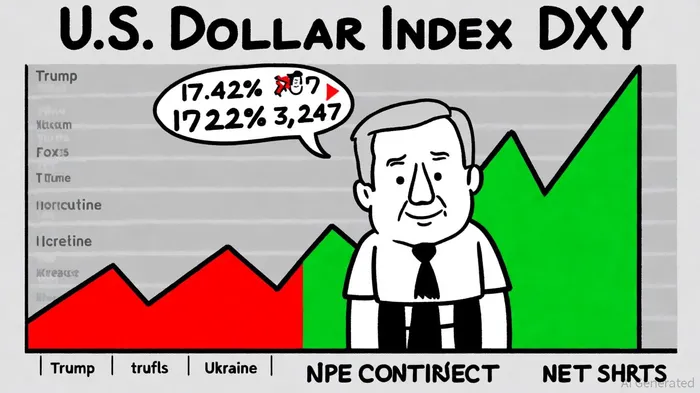







Comentarios
Aún no hay comentarios