
Hedera (HBAR) and the Future of Energy Finance: Blockchain-Driven Tokenization Reshaping Traditional Commodities Markets
Hedera (HBAR) and the Future of Energy Finance: Blockchain-Driven Tokenization Reshaping Traditional Commodities Markets
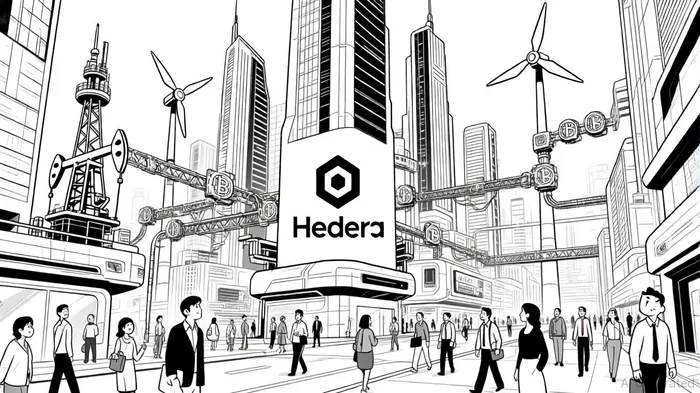
Blockchain-driven tokenization is rapidly transforming traditional commodities markets, and HederaHBAR-- Hashgraph (HBAR) is emerging as a pivotal player in this evolution. By leveraging its energy-efficient hashgraph consensus mechanism, institutional-grade governance, and strategic partnerships, Hedera is enabling the tokenization of energy commodities, carbon credits, and real-world assets (RWAs), creating a bridge between legacy finance and decentralized innovation.
Hedera's Technological Edge in Energy Finance
According to an All-In Crypto report, Hedera's hashgraph technology offers a compelling value proposition for energy finance. With a capacity for 10,000+ transactions per second and carbon-negative operations, the network addresses two critical pain points in traditional commodities trading: scalability and environmental sustainability. Unlike energy-intensive proof-of-work blockchains, Hedera's consensus model aligns with global decarbonization goals, making it an attractive infrastructure for energy firms seeking to tokenize assets while adhering to regulatory and ESG standards, as noted in that report.
The platform's governance structure, led by a council of 39 global institutions including GoogleGOOGL--, IBMIBM--, and Deutsche Telekom, further strengthens its appeal. This model ensures regulatory clarity and compliance-friendly operations, critical for enterprises navigating complex energy markets. For instance, Hedera's collaboration with Blockchain for Energy (B4E), a nonprofit consortium of energy leaders, has resulted in the B4ECarbon platform-a decentralized, auditable solution for emissions reporting. As reported by BitNewsBot, by integrating AI-driven analytics and IoT systems, B4ECarbon enables real-time tracking of emissions data, addressing greenwashing concerns and aligning with regulations like the EU's Corporate Sustainability Reporting Directive (CSRD).
Tokenization in Action: Case Studies
Hedera's impact is most evident in its tokenization projects across energy commodities and carbon markets:
abrdn's $4 Trillion Tokenization Initiative
As reported by BSC News, abrdn, a UK-based investment firm, has partnered with Hedera to tokenize real-world assets, democratizing access to energy investments. By minting 421 million tokens, abrdn aims to unlock a projected $4 trillion in assets by 2030, enabling smaller investors to participate in traditionally exclusive markets. This initiative also includes tokenized assets serving as collateral in foreign exchange trades, a first for digital assets in the UK.Carbon Credit Tokenization with DOVU
DOVU, in collaboration with Veteran's Carbon Holdings, has tokenized $1.1 billion in soil carbon assets on Hedera. Verified carbon credits are minted as digital assets, allowing farmers to monetize carbon sequestration efforts while scaling climate finance. This project underscores Hedera's role in creating transparent, verifiable carbon markets (covered in the All-In Crypto report referenced above).Tokenized Oil Assets with Zoniqx and One World Petroleum
The first tokenized petroleum fund on Hedera, launched by Zoniqx and One World Petroleum, converts oil assets and loans into SEC-compliant security tokens. This initiative demonstrates Hedera's ability to handle institutional-grade energy commodities, offering liquidity and compliance in a decentralized framework (see BitNewsBot coverage referenced above).Project Acacia: CBDC and Energy Settlements
Hedera's involvement in Australia's Project Acacia, a wholesale CBDC pilot led by the Reserve Bank of Australia (RBA), highlights its potential in energy commodity settlements. The project explores tokenized deposits and stablecoins (e.g., AUDD) for atomic settlements and cross-border payments, positioning Hedera as a backbone for future energy finance infrastructure (as reported by BitNewsBot).
Institutional Adoption and Market Dynamics
HBAR's institutional adoption is accelerating, driven by strategic partnerships and regulatory alignment. As noted in a Medium article, the token's listing on Robinhood in July 2025 provided access to 25 million retail users, while Grayscale's inclusion of HBARHBAR-- in its Smart Contract Platform Fund-replacing PolkadotDOT-- (DOT)-spurred an 11% price surge. These moves signal growing confidence in Hedera's governance model and compliance infrastructure.
Moreover, Hedera's DeFi ecosystem has matured, with platforms like SaucerSwap and Bonzo Finance contributing to a total value locked (TVL) of over $87 million as of May 2025, according to an All-In Crypto roundup. This liquidity, combined with low transaction fees and fast finality, positions HBAR as a versatile utility token for both energy finance and broader DeFi applications.
Future Outlook: AI Integration and Regulatory Evolution
Hedera's collaboration with NVIDIA, Intel, and EQTY Lab on Verifiable Compute further cements its role in energy finance. This platform timestamps AI computations on-chain, ensuring transparency in AI-driven energy analytics and emissions reporting. As AI becomes integral to energy market forecasting and sustainability tracking, Hedera's infrastructure offers a trust layer for these innovations (as discussed in BitNewsBot's coverage).
Regulatory developments will also shape HBAR's trajectory. With the EU's CSRD and U.S. SEC climate disclosure rules gaining momentum, platforms like B4ECarbon and Hedera's Consensus Service (HCS) are well-positioned to become industry standards for emissions data verification. Additionally, the anticipation of ETF approvals in 2025 has fueled speculative and institutional interest in HBAR, driving its price recovery amid broader crypto volatility (noted in BitNewsBot's reporting).
Investment Considerations
For investors, Hedera presents a unique confluence of technological innovation, institutional adoption, and real-world utility. Its focus on energy finance aligns with global trends toward decarbonization and digital asset integration. However, risks remain, including regulatory uncertainty and competition from other tokenization platforms.
Conclusion
Hedera (HBAR) is redefining energy finance through blockchain-driven tokenization, offering scalable, compliant, and sustainable solutions for commodities markets. As institutions and regulators increasingly embrace digital assets, Hedera's infrastructure-anchored by its governance model, energy efficiency, and strategic partnerships-positions it as a critical player in the transition to a tokenized energy economy. For investors, the platform's alignment with global decarbonization goals and institutional adoption trends makes it a compelling case study in the future of finance.





Comentarios
Aún no hay comentarios