
Heavitree Brewery's Declining Returns: Navigating a Slowing Market Amidst Uncertain Foundations
The brewing industry in 2025 is a study in contrasts. On one hand, innovation thrives—Dogfish Head Craft Brewery's recent release of the Grateful Dead Juicy Pale Ale, blending Kernza® grains with tropical hops, exemplifies the sector's pivot toward experimental product lines to capture evolving consumer tastes[2]. On the other, market volatility persists, as evidenced by the mixed fortunes of Minnesota's breweries, where new entrants like Brew Lab 101 Beer Co coexist with closures such as Finnegan's Brew Co[1]. For Heavitree Brewery (LON:HVTA), a company operating in a similarly fragmented landscape, the challenge is to balance creativity with financial resilience in a market where discretionary spending is increasingly scrutinized.
A Brewing Industry in Transition
The broader brewing sector's struggles are emblematic of macroeconomic pressures. Consumers, wary of inflation and stagnant wage growth, are shifting toward value-conscious choices, favoring premium lagers and local craft beers over high-priced imports[2]. This trend demands agility from breweries, which must innovate without inflating costs. Heavitree, however, remains an enigma. Despite repeated attempts to source its financial reports or strategic initiatives, no recent data is available. This opacity raises questions about its ability to adapt to market shifts, particularly as competitors like Dogfish Head leverage partnerships and novel ingredients to differentiate their offerings[2].
Indirect Indicators: Real Estate as a Proxy
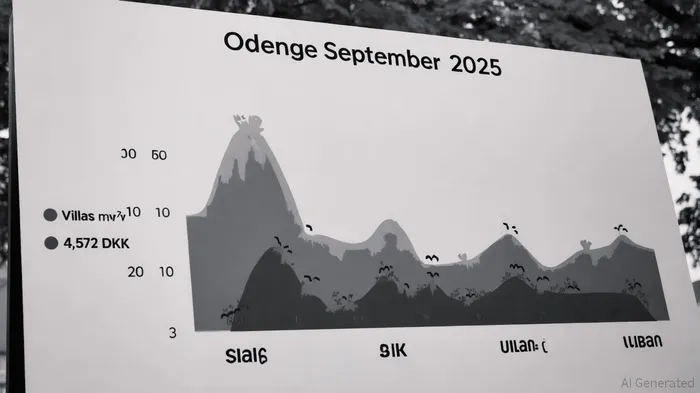
In the absence of direct financial metrics, indirect signals offer insight. Heavitree's proximity to the real estate market in Odense V, Denmark, provides a revealing proxy. As of September 2025, the area hosts 48 properties for sale, including 27 villas and nine row houses, with villa prices averaging 14,682 Danish kroner per square meter[3]. While this suggests a stable local economy, the moderate pace of development and limited new listings hint at broader economic caution. A slowing housing market often correlates with reduced consumer spending on non-essentials—a category that includes craft beer. If Heavitree's customer base mirrors this demographic, its growth potential could be constrained by tightening household budgets.
Strategic Gaps and Long-Term Risks
Heavitree's lack of publicly available strategic initiatives is a red flag. In a sector where differentiation is key, breweries must articulate clear value propositions—whether through sustainability, community engagement, or product innovation. The absence of such narratives for Heavitree contrasts sharply with Dogfish Head's collaborative approach, which leverages pop-culture tie-ins to build brand loyalty[2]. Without similar strategies, Heavitree risks becoming a passive player in a market increasingly defined by proactive adaptation.
Moreover, the brewery's reliance on a slowing local economy exposes it to dual risks: declining consumer demand and rising operational costs. While the Odense V real estate market remains resilient, its moderation suggests that Heavitree's long-term value retention hinges on external factors beyond its control. Investors must weigh whether the company has contingency plans to offset such vulnerabilities, a question unanswered by current data.
Conclusion: A Cautionary Outlook
Heavitree Brewery's position in 2025 is precarious. The brewing industry's pivot toward innovation and value-conscious consumers creates both opportunities and threats. While the Odense V real estate market offers a tentative floor for local demand, its moderation underscores the need for Heavitree to adopt aggressive, transparent strategies to secure growth. Until the company releases detailed financial reports or outlines its response to market dynamics, investors face a high degree of uncertainty. In a sector where agility defines survival, Heavitree's silence is deafening.







Comentarios
Aún no hay comentarios