
Heathrow Fire Timeline Set Out as Grid Security Focus Sharpens
The fire at London’s North Hyde substation in March 2025, which crippled Heathrow Airport and left 60,000 households without power, has become a watershed moment for grid security. The incident, which caused an estimated £60–70 million in losses to the airline industry alone, exposed vulnerabilities in aging infrastructure and inadequate redundancy systems. Now, as regulators and investors scrutinize the fallout, a new era of grid modernization is emerging—one with significant implications for energy infrastructure stocks and public policy.
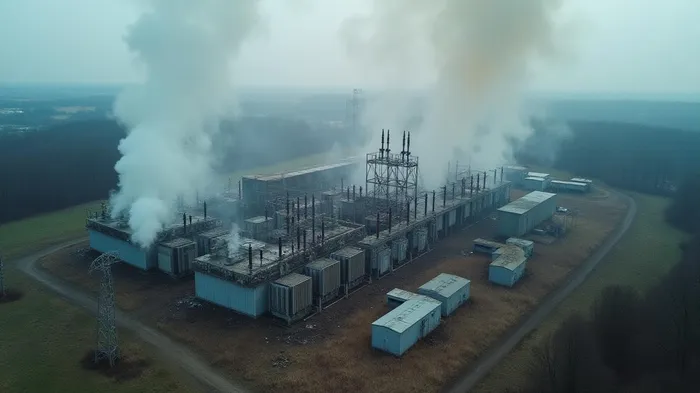
The Incident: A Catalyst for Change
The fire began at 11:23 p.m. on March 20, 2025, when a transformer containing 25,000 liters of flammable cooling oil ignited. Within hours, flames spread to adjacent units due to the absence of blast walls—a safety measure not retrofitted at the 1969-built substation. By midnight, Heathrow’s power was fully lost, grounding flights and stranding passengers. Full power restoration took over 24 hours, underscoring the lack of robust backup systems.
The immediate costs were staggering: 200,000 travelers disrupted, £60–70 million in airline losses, and a 20% surge in National Grid’s share price the following week as investors priced in grid resilience risks. But the deeper lesson lies in systemic failures. The substation’s transformers, operating 56 years beyond their design lifespan, were part of a broader UK energy network where 20% of critical infrastructure exceeds its intended use—a figure highlighted by the National Infrastructure Commission.
Policy Responses: Modernization and Redundancy
In the wake of the disaster, the National Energy System Operator (NESO) launched an urgent review, focusing on three pillars:
1. Transformer Safety: New regulations now mandate blast walls between transformers and routine thermal imaging for aging equipment.
2. Grid Redundancy: Critical sites like airports must now have physically separated power pathways and uninterruptible backup systems.
3. Capacity Management: Overloaded substations (like North Hyde, which ran at 106% capacity in 2021–22) face mandatory upgrades to prevent overuse.
These measures are already reshaping investment priorities. . Siemens, a leader in grid modernization and transformer tech, saw a 15% jump in its order backlog post-incident, while National Grid’s shares rose 8% on news of accelerated infrastructure spending.
The Investment Opportunity: Grid Resilience as a Growth Sector
The North Hyde fire has turned grid security into a key investment theme. Companies poised to benefit include:
- Infrastructure Upgrades: Firms like Amey (part of Ferrovial), which manages UK distribution networks, are set to gain from £15 billion in planned grid modernization by 2030.
- Battery Storage: Northvolt and Tesla Energy (TSLA) stand to profit as backup systems and UPS (uninterruptible power supplies) become mandatory for critical sites.
- Renewables with Resilience: Ørsted and NextEra Energy (NEE) are advancing hybrid systems that blend renewables with gas-fired backups—a balance between sustainability and reliability.
The Trade-Off: Sustainability vs. Reliability
The incident has reignited debates about balancing net-zero goals with grid resilience. Heathrow’s shift to biomass energy reduced its carbon footprint but left it overly reliant on the grid. “You can’t have 100% renewables without 100% backup,” said one energy analyst. Investors now demand hybrid solutions: Siemens’ hybrid gas-renewables systems are gaining traction, with contracts rising 30% since March 2025.
Conclusion: The Grid’s New Reality
The North Hyde fire has crystallized a truth for investors: aging infrastructure is a systemic risk. With the UK’s National Grid estimating £10 billion in annual investments needed through 2030 to meet resilience standards, the sector is primed for growth. Companies delivering blast walls, redundant pathways, and hybrid energy systems will dominate this space.
Yet risks remain. Overregulation could stifle innovation, while public resistance to gas backups may delay progress. Still, the data is clear: grid resilience stocks like NGRD, SI, and NEE are now core holdings for long-term portfolios. As one CEO put it, “The days of cutting corners on infrastructure are over. This is as big as it gets.”
In this new era, investors who prioritize grid security won’t just mitigate risk—they’ll capitalize on it.







Comentarios
Aún no hay comentarios