
Healthcare Sector's Quiet Resurgence: Undervalued Leaders Fueling Post-Market Momentum in Q3 2025
The healthcare sector, long a refuge for income-focused investors, has quietly emerged as a battleground for growth in Q3 2025. A confluence of regulatory tailwinds, blockbuster drug performance, and disciplined capital allocation has reignited interest in a sector once dismissed as overvalued and stagnant. At the heart of this resurgence are three companies-Eli LillyLLY-- and Company (LLY), MerckMRK-- & Co. Inc. (MRK), and AbbVie Inc.ABBV-- (ABBV)-which exemplify the intersection of undervaluation and earnings catalysts. Their recent results, coupled with strategic positioning, suggest that the healthcare sector's post-market momentum is not a fleeting trend but a recalibration of value.
Eli Lilly: The GLP-1 Gold Rush
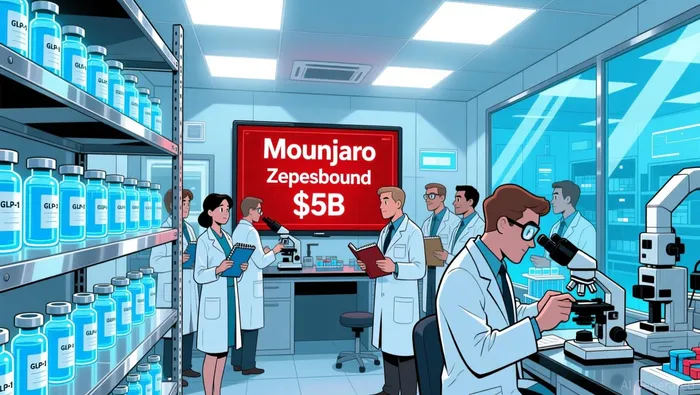
Eli Lilly's dominance in the GLP-1 receptor agonist market has cemented its status as a bellwether for healthcare innovation. According to a report by , the company's Q3 2025 earnings exceeded expectations, driven by the blockbuster performance of Mounjaro and Zepbound, which together accounted for over 30% of total revenue. A pivotal catalyst has been a federal deal expanding Medicare access to its diabetes and obesity treatments, a move that analysts estimate could add $5 billion in annualized revenue.
What makes LLYLLY-- particularly compelling is its ability to monetize therapeutic breakthroughs while navigating regulatory scrutiny. The stock currently trades at a forward P/E of 28, a discount to its historical average of 32, suggesting the market has yet to fully price in its long-term potential. As stated by Bloomberg, Lilly's R&D pipeline-anchored by next-generation GLP-1/CGRP dual agonists-positions it to maintain its edge in a rapidly expanding market.
Merck: Oncology's Undervalued Workhorse
Merck's Q3 2025 results underscore the resilience of its oncology franchise. The company reported $17.3 billion in sales, with Keytruda's revenue growing 8% year-over-year to $7.2 billion. This performance is even more impressive given the competitive pressures in the immunotherapy space. Merck's recent approval of KEYTRUDA QLEX Injection for subcutaneous use across all solid tumor indications has expanded its addressable market, while positive Phase 3 results for Enlicitide Decanoate in hypercholesterolemia hint at a diversified pipeline.
Despite these strengths, Merck remains one of the most undervalued large-cap healthcare stocks, trading at just 10 times forward earnings. This discount reflects lingering concerns about patent cliffs and pricing pressures, but it also creates a margin of safety for investors. As noted by , Merck's balance sheet-bolstered by $15 billion in cash and a 3.5% dividend yield-offers a compelling risk-rebalance proposition.
AbbVie: The Immunology Powerhouse
AbbVie's Q3 2025 performance was a masterclass in portfolio management. The company reported $15.776 billion in net revenues, with Skyrizi and Rinvoq driving 46.8% and 35.3% year-over-year growth, respectively. These figures not only exceeded Wall Street estimates but also validated AbbVie's strategy of focusing on high-margin biologics. The recent 5.5% dividend increase, announced alongside its earnings, further underscores its commitment to shareholder returns.
What sets AbbVieABBV-- apart is its ability to sustain growth without overreliance on a single asset. While Humira's legacy revenue stream has stabilized, the company's immunology portfolio is now the engine of growth. At a forward P/E of 19, AbbVie trades at a significant discount to its 5-year average of 24, making it an attractive candidate for value investors. As highlighted by , the company's disciplined M&A approach-such as its pending acquisition of a mid-stage rare disease firm-adds another layer of upside.
The Bigger Picture: Sector Rotation or Sustained Shift?
The post-market momentum in these stocks reflects a broader re-rating of healthcare. Regulatory tailwinds, including the Medicare drug price negotiation framework, have forced companies to innovate rather than rely on pricing power. Meanwhile, demographic tailwinds-aging populations and rising obesity rates-ensure long-term demand for therapies like GLP-1 and oncology treatments.
For investors, the key is to distinguish between transient hype and durable value. LLY, MRKMRK--, and ABBVABBV-- have demonstrated both: strong earnings catalysts and valuations that suggest the market has not yet priced in their full potential. As the sector continues to consolidate and rebalance, these companies are well-positioned to lead the next phase of growth.





Comentarios
Aún no hay comentarios