
Healthcare Sector Momentum and Its Impact on S&P 500 Performance: A Sector Rotation Analysis
The healthcare sector's journey through 2023–2025 has been one of underperformance followed by tentative stabilization, offering a compelling case study in sector rotation and long-term strategic positioning. While the S&P 500 surged 52% from early 2023 to 2024, the healthcare index lagged with a mere 4% gain, according to a J.P. Morgan note. This divergence reflected broader capital flows toward high-growth tech stocks and AI-driven megatrends, leaving healthcare as one of four S&P 500 sectors in negative territory as of May 2025, according to a MarketMinute article. Yet, by late September 2025, healthcare emerged as a defensive haven amid market turbulence, signaling a potential inflection point.
The Drivers of Underperformance
Healthcare's struggles stemmed from a confluence of headwinds. Elevated interest rates pressured sectors with long-duration cash flows, while regulatory uncertainty-particularly around drug pricing-discouraged investor optimism, as noted by J.P. Morgan. Clinical trial setbacks and post-pandemic imbalances in healthcare utilization further clouded the outlook, according to Schwab's sector outlook. These factors, combined with a shift in investor sentiment toward cyclical tech stocks, pushed healthcare valuations to a 20% discount to the S&P 500, a point highlighted in J.P. Morgan's analysis.
However, the sector's non-cyclical nature began to shine in Q3 2025. As technology stocks retreated and macroeconomic concerns resurfaced-such as a potential government shutdown and weak jobs data-investors rotated into defensive sectors like healthcare, a trend noted in MarketMinute coverage. This rotation was underpinned by the sector's stable demand, driven by an aging population and the inelasticity of medical spending. Major players such as Johnson & Johnson and UnitedHealth GroupUNH-- benefited from robust R&D pipelines and strong intellectual property positions, as discussed in Schwab's outlook.
Catalysts for 2025 and Beyond
The sector's long-term potential rests on innovation and demographic tailwinds. Obesity treatments, particularly GLP-1 medicines, have already annualized over $50 billion in revenue, while the 2024 approval of the first fatty liver disease treatment marked a breakthrough, a development flagged by J.P. Morgan. Advances in AI are further transforming healthcare delivery, enhancing diagnostics and administrative efficiency. These innovations, coupled with easing profit margin pressures and a favorable payer mix, position healthcare for a rebound as temporary headwinds abate, according to Fidelity's outlook.
Valuation metrics also suggest compelling entry points. The healthcare sector trades at a forward PEG ratio of 1.74 and a P/E ratio of 25.14, classified as "fair" relative to historical averages, per the sector P/E ratios. Despite regulatory risks, its defensive characteristics and growth drivers have earned it a "Marketperform" rating from the Schwab Center for Financial Research, as noted by Fidelity.
Strategic Implications for the S&P 500
Healthcare's 8.83% weight in the S&P 500 means its performance directly influences the index's trajectory, according to Schwab. While its contribution to the S&P 500's 18% gain from May to September 2025 was muted, its role as a stabilizer during market stress underscores its strategic value, a point highlighted in MarketMinute coverage. As sector rotation continues to reflect macroeconomic uncertainties, healthcare's blend of defensive resilience and innovation-driven growth could make it a key pillar for long-term investors.
Conclusion
The healthcare sector's recent underperformance has created a valuation gap that may soon narrow as innovation and demographic trends gain momentum. While regulatory and macroeconomic risks persist, its defensive attributes and long-term growth drivers make it a strategic asset in a diversified portfolio. For investors attuned to sector rotation dynamics, healthcare offers a unique intersection of near-term value and enduring resilience.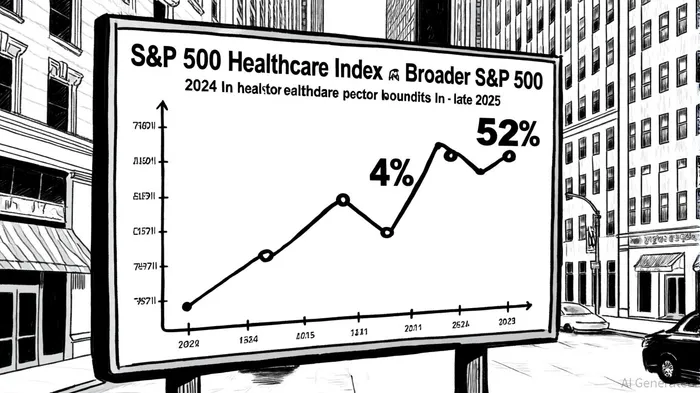







Comentarios
Aún no hay comentarios