
U.S. Healthcare Sector at Crossroads: Navigating Political Uncertainty and Investment Opportunities
The U.S. healthcare sector is navigating a turbulent landscape in 2025, shaped by the ongoing government shutdown and its cascading effects on policy and funding. As Congress remains deadlocked over the expiration of Affordable Care Act (ACA) enhanced premium tax credits, investors face a complex mix of risks and opportunities. The stakes are high: 22 million Americans rely on these subsidies to afford health insurance, and their expiration could trigger a 75% average premium increase in 2026, potentially leaving 4 million people uninsured, according to a CBS News report. This policy uncertainty, coupled with shifts in Medicare, Medicaid, and telehealth reimbursement, demands a recalibration of investment strategies.
The ACA Subsidy Dilemma: A Double-Edged Sword
The expiration of ACA subsidies represents a critical inflection point. According to a Robert Wood Johnson Foundation analysis, hospitals, physicians, and prescription drug services could collectively face $32.1 billion in lost revenue in 2026, with uncompensated care costs rising by $7.7 billion. This financial strain is most acute in non-Medicaid expansion states like Florida, Georgia, and Texas, where the analysis projects health spending for the nonelderly will drop by 4.8%. For investors, this signals a growing risk for traditional acute care providers, which are already grappling with constrained Medicaid reimbursements and labor shortages.
Conversely, companies positioned to address affordability gaps may thrive. Specialty pharmacy firms, for instance, are expected to grow at an 8% CAGR through 2028, driven by demand for cost-effective drug delivery models, according to a McKinsey analysis. Similarly, healthcare technology firms leveraging generative AI for data analytics and patient engagement could benefit from the push to reduce administrative costs.
Medicare and Medicaid: A Mixed Bag of Challenges and Stability
Medicare Advantage (MA) plans are under pressure from the Inflation Reduction Act (IRA), which has raised out-of-pocket caps and reduced plan choices. A Better Medicare Alliance analysis finds that individual MA plans will decline by 6.54% in 2025, with median out-of-pocket maximums rising by 8% to $5,400. While premiums remain stable, these changes could erode profitability for insurers and providers reliant on supplemental benefits.
Medicaid, however, remains relatively insulated for now, with funding available until year-end. Yet, if the shutdown extends into 2026, states may struggle to sustain the program, particularly in rural areas where hospitals already face DSH cuts, as The Conversation reports. Investors should monitor state-level fiscal resilience, as Medicaid-dependent providers in non-expansion states could face disproportionate risks.
Telehealth: A Policy-Driven Rebound or Relapse?
The expiration of Medicare telehealth flexibilities on October 1, 2025, has created a "telehealth cliff," reverting to pre-pandemic restrictions that limit access for rural and elderly patients, according to a Telehealth.org briefing. This rollback has paused reimbursements for telehealth claims, creating operational uncertainty for providers. However, that briefing also notes bipartisan bills like the CONNECT for Health Act and Telehealth Modernization Act aim to restore these flexibilities through 2027. Investors with a medium-term horizon may find opportunities in telehealth platforms that adapt to hybrid care models, though regulatory delays remain a near-term headwind.
Strategic Investment Imperatives
Given these dynamics, a diversified approach is essential. Prioritize subsectors with regulatory adaptability:
1. Healthcare Technology: Firms offering AI-driven analytics, telehealth platforms, and interoperability solutions.
2. Specialty Pharmacy: Companies managing high-cost therapies and home-based care.
3. Non-Acute Care Providers: Entities focused on outpatient services, behavioral health, and chronic disease management.
Conversely, traditional hospitals and general practitioners face margin compression. Mergers and acquisitions in this space may accelerate as institutions seek operational efficiencies.
Conclusion: Weathering the Storm
The U.S. government shutdown has exposed vulnerabilities in the healthcare system, but it has also highlighted opportunities for innovation. Investors must balance short-term risks-such as furloughs and delayed reimbursements-with long-term trends like digital transformation and value-based care. As Congress inches toward a resolution, the key will be agility: staying attuned to legislative shifts while capitalizing on subsectors poised to redefine healthcare delivery.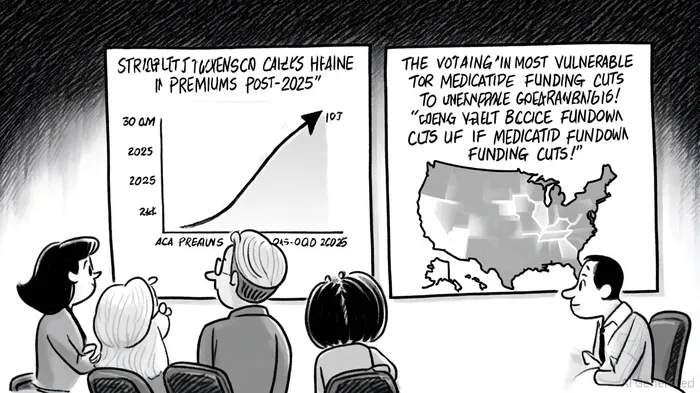







Comentarios
Aún no hay comentarios