
Healthcare Policy Stability and Insurance Sector Valuations: The ACA Extension as a Long-Term Investment Signal
Healthcare Policy Stability and Insurance Sector Valuations: The ACA Extension as a Long-Term Investment Signal
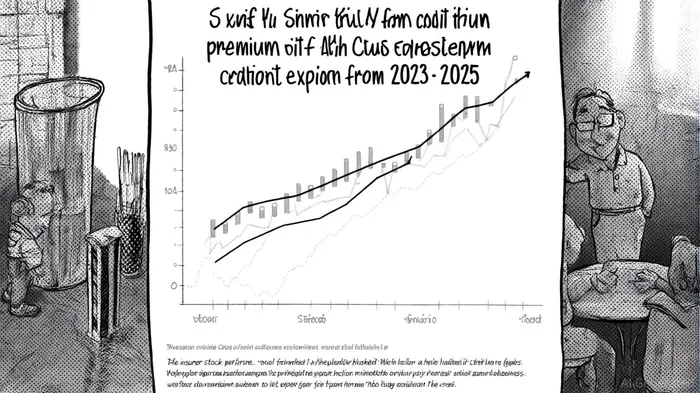
The Affordable Care Act (ACA) has long been a linchpin of U.S. healthcare policy, but its future has never been more pivotal for investors. With enhanced premium tax credits set to expire at the end of 2025, the political and financial stakes are escalating. Recent polling reveals that 78% of Americans support extending these subsidies, including 57% of MAGA-aligned Republicans, according to a 3B Healthcare analysis. This bipartisan backing-despite low public awareness of the issue-signals a critical inflection point for healthcare insurers and providers, offering both risks and opportunities for long-term investors.
Public Support as a Policy Stability Indicator
The ACA's enhanced subsidies have been a lifeline for 24.2 million enrollees in 2025, with four out of five finding plans costing $10 or less per month. Without an extension, premiums could surge by over 75%, pushing 4 million people into the uninsured pool, according to a Paragon Institute analysis that models premium and enrollment outcomes (https://paragoninstitute.org/paragon-pic/insurer-stock-prices-soaring-after-giant-aca-subsidies/). Yet, the political calculus is shifting. A KFF poll found that 80% of supporters of the extension blame Trump or congressional Republicans for potential expiration, aligning with the government shutdown crisis that has made ACA subsidies a central bargaining chip. This dynamic suggests that policy stability-once a source of volatility-is now a predictable tailwind.
For investors, this translates to a clear signal: insurers and providers with ACA exposure are poised to benefit from sustained subsidies. UnitedHealth GroupUNH-- and Anthem, for example, face risk pool destabilization if enrollment drops, but their current valuations reflect optimism about legislative action noted in the 3B Healthcare analysis. The Congressional Budget Office (CBO) estimates that extending subsidies would cost $350 billion over a decade but expand coverage by 3.8 million people by 2035, a projection echoed in the Paragon Institute analysis. For insurers, this means prolonged access to a risk pool that has historically driven profitability, even as Medicaid enrollment declines and Medicare enrollment rises.
Financial Implications for Providers and Insurers
Healthcare providers are equally exposed to ACA policy shifts. The Urban Institute projects a $32.1 billion revenue loss for providers in 2026 if subsidies expire, with hospitals facing a $14.2 billion hit, according to an RWJF-cited analysis (https://www.rwjf.org/en/insights/our-research/2025/09/how-expiration-of-aca-tax-credits-will-affect-healthcare-spending.html). This would exacerbate margin pressures already driven by rising medical loss ratios (MLRs), which hit 87.6% for UnitedHealthcare and 92.4% for Elevance HealthELV-- in Q4 2024, as the 3B Healthcare analysis highlights. However, providers with diversified revenue streams-such as those leveraging strategic partnerships or expanding financial assistance programs-could mitigate these risks, per the RWJF analysis.
For insurers, the story is twofold. While elevated MLRs and thin profit margins (e.g., Cigna's 1.4% in Q4 2024) highlight operational fragility noted by 3B Healthcare, the ACA's historical impact on stock valuations tells a different tale. From 2010 to 2024, health insurer stocks surged 1,032%, outpacing the S&P 500, a figure detailed in the Paragon Institute analysis. This growth was fueled by $218 billion in 2023 ACA subsidies, with Medicaid expansion alone contributing $126 billion. Even as margins dipped in 2023 (to 1.7% pre-tax), the sector's reliance on government funding-now over 50% of total healthcare spending-suggests that policy stability will remain a key valuation driver, a point emphasized by the Paragon Institute.
Long-Term Investment Opportunities
The ACA's expiration cliff in 2025 creates a binary outcome for investors: policy continuity or chaos. Given the 78% public support for extensions noted in the 3B Healthcare analysis, the former seems more likely, particularly as Democrats leverage shutdown risks to secure legislative action. This scenario favors insurers with strong ACA marketplace footprints and providers in Medicaid expansion states, where enrollment gains have offset margin pressures. Conversely, non-expansion states like Tennessee and Mississippi face disproportionate risks, with higher uncompensated care costs and enrollment losses as outlined in the RWJF analysis.
For long-term investors, the ACA's stability also underscores the importance of diversification and adaptability. Providers expanding into value-based care models or community partnerships can buffer against policy shifts, while insurers with robust Medicare Advantage (MA) or Medicaid portfolios may offset ACA volatility, per the 3B Healthcare analysis. The key is to align investments with entities that can navigate both regulatory and market dynamics-a challenge made easier by the ACA's current trajectory.
Conclusion
The ACA's enhanced subsidies are more than a political flashpoint; they are a financial linchpin for the healthcare sector. With public support at 78% and political negotiations intensifying, investors should prioritize ACA-aligned insurers and providers while hedging against non-expansion state risks. The historical surge in insurer valuations-driven by ACA subsidies-suggests that policy stability will remain a critical determinant of sector performance. As the 2025 expiration date looms, the ACA's fate will likely shape the next decade of healthcare investing.







Comentarios
Aún no hay comentarios