
Healthcare and Government Jobs Soar While Manufacturing Struggles—Here's Where to Invest Now
The U.S. labor market is a tale of two economies: one thriving in healthcare and government services, the other buckling under the weight of trade wars and tariff-driven costs. As wage growth diverges sharply between sectors, investors must act fast to rotate into defensive winners and avoid industries caught in the crossfire. Let's break down where the money is—and where it's fleeing.
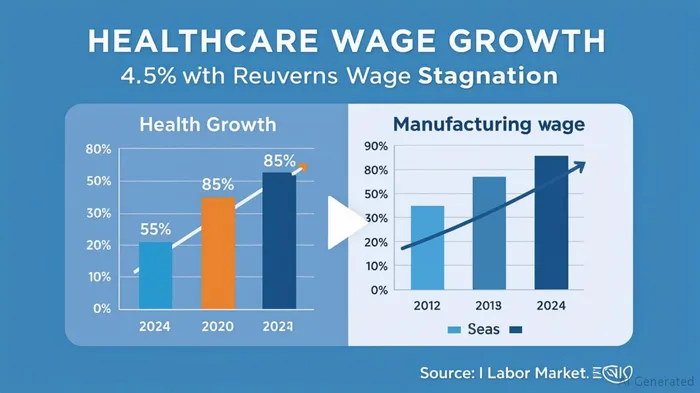
Healthcare: The Unstoppable Wage Machine
Healthcare remains the gold standard of labor demand. Despite Senate Republicans' push to slash Medicaid funding by $1 trillion over a decade—a move that could crimp provider payrolls—this sector is still adding jobs at a torrid pace. Nurses and behavioral health workers are in such high demand that employers are practically begging candidates with signing bonuses and flexible hours.
The data is clear: healthcare wages grew 4.5% in 2024, outpacing every major sector. Even with looming Medicaid cuts, the aging population and chronic underfunding of mental health services mean this sector is here to stay.
Investment Play: Buy into hospitals (HUM, UHS) and mental health providers (CMCSA, PSY). These companies are insulated from tariffs and will thrive even if some Medicaid cuts pass.
State/Local Governments: Steady as She Goes
While not as flashy as tech or finance, state and local government jobs are quietly resilient. Wages rose 4.3% in Q1 2025, thanks to tight labor markets and mandatory spending on education and public safety.
True, federal funding cuts threaten some roles—especially in Medicaid-dependent programs—but these jobs are inherently “sticky.” Teachers, firefighters, and public administrators aren't fleeing to better-paying industries (yet). Plus, with unemployment near 4%, states can't afford to slash their workforces.
Investment Play: Look for ETFs like SPLGSPLG--, which tracks government-linked real estate and infrastructure. These assets benefit from stable tax revenues and are tariff-proof.
Manufacturing: Tariffs = Wage Killers
Now the bad news: Manufacturing is in freefall. After losing 87,000 jobs in 2024, this sector's wage growth has collapsed to 2%—a far cry from its 10.2% peak in 2022. Blame it on tariffs: U.S. duties on Canadian steel and Chinese semiconductors have spiked production costs, forcing companies to lay off workers or reshore inefficiently.
The Federal Reserve's focus on inflation won't help. Higher interest rates will squeeze manufacturers further, especially those reliant on imported parts.
Investment Play: Short the iShares U.S. Industrials (IYJ) or avoid names like CaterpillarCAT-- (CAT) and BoeingBA-- (BA) until tariffs expire—or better yet, never touch them.
Import-Reliant Sectors: Don't Bury Your Head in the Sand
From textiles to auto parts, industries dependent on imports are gasping. Tariffs have made foreign components so expensive that companies are either offshoring jobs or hiking prices—killing demand.
The worst part? None of this is going away soon. Key tariffs on Canadian lumber, Mexican steel, and Chinese goods aren't expiring until 2026 at the earliest. Investors in these sectors are playing a game of tariff roulette.
The Bottom Line: Rotate into Defensives—Now
The message is simple: Follow the wages. Healthcare and government-linked jobs are growing because they're tied to human needs, not trade deals. Manufacturing and import-reliant industries? They're stuck in a losing battle with protectionism.
My advice: Sell your industrial stocks, load up on hospitals and government ETFs, and keep an eye on tariff expiration dates. This isn't a recession—it's a sector reset. Don't be left holding the bag when the music stops.

Final Tip: Use the tariff expiration calendar to time buys in manufacturing—but only if the Fed eases rates and global trade eases. Until then, stick to the safe zones.





Comentarios
Aún no hay comentarios