
Health Care Sector Resurgence: Riding the Wave of M&A Catalysts and Insurer Turnarounds
The health care sector is at an inflection pointIPCX--, with strategic acquisitions and insurer rebounds positioning it as a compelling investment opportunity. Two key catalysts—Merck KGaA's landmark acquisition of SpringWorks Therapeutics and UnitedHealthUNH-- Group's undervalued recovery amid regulatory clarity—highlight the sector's growth potential and defensive appeal. Let's dissect these trends and identify where investors can find value.
Biopharma's New Dawn: Merck KGaA's SpringWorks Acquisition Signals Rare Disease Growth
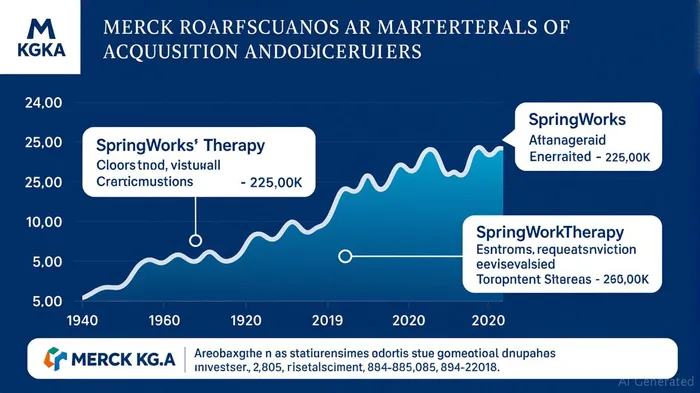
Merck KGaA's $3.9 billion acquisition of SpringWorks Therapeutics, completed in July 2025, marks a strategic pivot toward rare oncology and high-margin therapies. The deal adds two FDA-approved drugs: Ogsiveo (desmoid tumors) and Gomekli (NF1-related tumors), which are addressing critical unmet medical needs. With combined peak sales projected to exceed $1 billion by GlobalData, this acquisition underscores a sector-wide trend: rare disease therapies are becoming engines of biopharma growth.
The strategic rationale is clear:
- Pipeline Enhancements: SpringWorks' pipeline, including the TEAD inhibitor SW-682 and BeiGene's brimarafenib, expands Merck's reach into genetically targeted tumors.
- Global Market Access: Positive CHMP opinions in 2025 position these therapies for EU approval, unlocking a $120 billion rare disease market.
- Financial Synergy: The acquisition is expected to boost Merck's revenue by $1.6 billion annually by 2030 and become EPS accretive by 2027.
This deal signals that M&A in biopharma is not just about cost-cutting but innovation-led growth. Investors should monitor follow-on transactions in rare disease and oncology, where Merck's $15 billion cash reserves and 43.7% leverage ratio provide ample firepower.
Insurer Rebound: UnitedHealth's Undervalued Opportunity Amid Regulatory Crossroads
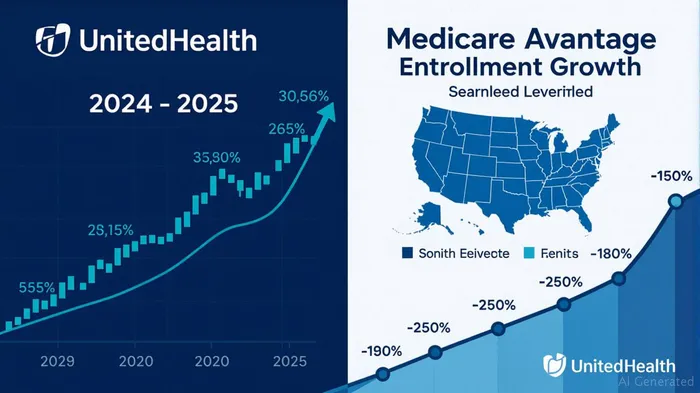
UnitedHealth's 40% stock decline since early 2025 has created a compelling entry point, despite ongoing regulatory and operational headwinds. The company's valuation now sits at a 13.7x forward P/E, a 37% discount to its 10-year average, while its dividend yield has risen to 1.55%—a rare combination of value and income.
Key recovery catalysts:
1. Q2 2025 Earnings: If UnitedHealth can demonstrate margin stabilization in Medicare Advantage (MLR below 87.5%), it could catalyze a rebound. Analysts project 5–7% EPS growth in 2026 as medical costs normalize.
2. Regulatory Resolution: A DOJ settlement below $1 billion (vs. worst-case scenarios) would alleviate overhang. The bipartisan congressional push for accountability also creates a timeline for clarity.
3. Strategic Reorganization: Splitting Optum into a standalone entity could unlock $200 billion in hidden value, simplifying operations and focusing UnitedHealthcare's core MA business.
While risks remain—including a punitive DOJ penalty or a recession-driven drop in membership—the stock's 2.5% dividend yield and fortress balance sheet ($15 billion in cash) provide downside protection.
Why Health Care is a Defensive Haven Now
The sector's dual engines—innovation-driven biopharma growth and value-priced insurers—make it a refuge in volatile markets. Merck's SpringWorks deal and UnitedHealth's undervalued position reflect two distinct but complementary opportunities:
- Biopharma: Invest in companies with rare disease pipelines and strong M&A track records (e.g., MerckMRK--, Alexion, or Ionis Pharmaceuticals).
- Insurers: Look to UnitedHealth and HumanaHUM-- for recovery plays, prioritizing those with Medicare Advantage dominance and dividend resilience.
Investment Thesis: Go Long on Merck and UnitedHealth with a 2026 Horizon
- Merck KGaA (MRK): Target a 12–18 month horizon. The stock is undervalued relative to its $1.6 billion annual sales growth potential in rare diseases. A catalyst watch includes FDA approvals for SW-682 (2026) and Gomekli's EU launch.
- UnitedHealth (UNH): A 24–36 month horizon is ideal. The stock could rebound to $400–$450 (20–30% upside) by 2026 if margins stabilize and regulatory risks subside.
Risk Management: Hedge against sector volatility with a 5% allocation to inverse ETFs (e.g., HEWY) or defensive biotech ETFs (e.g., XBI).
Conclusion
The health care sector is ripe for selective long positions. Merck's SpringWorks deal exemplifies how M&A can fuel growth in high-margin, innovation-driven niches, while UnitedHealth's valuation discount offers a leveraged bet on insurer resilience. With biopharma's pipeline momentum and insurers' dividend stability, now is the time to buy the dip in this sector.
Disclosure: This analysis is for informational purposes only and not a recommendation to buy or sell securities. Individual circumstances may vary.





Comentarios
Aún no hay comentarios