
Hawaiian Coffee Farmers Oppose 50% Brazil 20% Vietnam Tariffs
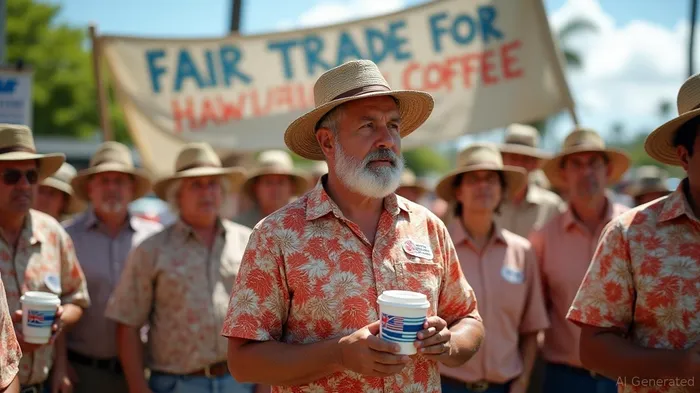
Hawaiian coffee farmers have expressed strong opposition to the proposed tariffs on Brazil and Vietnam, arguing that these measures will not benefit their operations but instead cause significant harm. The farmers contend that the tariffs, which include a 50% levy on Brazil and a 20% levy on Vietnam, will negatively impact the entire coffee market, including local producers in Hawaii.
Suzanne Shriner, who runs Lions Gate Farms and serves as vice president of the Kona Coffee Farmers Association, stated that the tariffs will likely hurt Hawaiian coffee growers as much as they will hurt mainland roasters. She explained that price hikes resulting from the tariffs will squeeze demand, leading coffee drinkers to either skip their morning brew or switch to cheaper alternatives. This scenario is already unfolding due to global production issues, and the additional tariffs will exacerbate the problem.
Bill Murray, head of the National Coffee Association, pointed out that coffee cannot be grown in most parts of the United States, leaving Hawaii as the sole U.S. state with commercial coffee production. However, Hawaii's production capacity is limited. The USDA expects Hawaii to produce just 12,040 tons of coffee cherries for 2024–2025, a number that shrinks further once processed into usable beans. In contrast, the U.S. imported over 450,000 tons of unroasted beans from Brazil alone in 2024, valued at nearly $2 billion. This disparity highlights the impracticality of relying on Hawaii to meet the U.S. coffee demand.
Tony Tate, co-owner of Ka’awaloa, a 7-acre coffee and cacao farm, emphasized that if the price of basic coffee like Maxwell House doubles, consumers are unlikely to switch to more expensive Kona coffee. A pound of roasted Kona beans retails for $60, while the U.S. average for ground roast coffee is $8 per pound. Hawaii’s green beans are currently worth $21.90 per pound, but by the time they reach store shelves, these prices will likely double. This price increase could make specialty coffees unaffordable for many consumers.
Adam Potter, who manages around 3,000 coffee trees and 18,000 cocoa trees on the Big Island, echoed this concern, stating that if people can't afford regular coffee, they certainly won't be able to afford exotic coffees. This sentiment is shared by the chocolate industry, which is also sounding alarms. Hawaii’s cocoa production is minimal, with only 50 tons of dry beans produced in 2022. The U.S. had to import nearly 200,000 tons of cocoa last year. Companies like HersheyHSY-- are seeking tariff exemptions, citing potential costs of $100 million by the end of the year if the tariffs remain in place.







Comentarios
Aún no hay comentarios