
Haverty Furniture's Strategic Position in a Post-Pandemic Retail Landscape
In the evolving post-pandemic retail landscape, Haverty FurnitureHVT-- Companies, Inc. (HVT) has navigated a complex mix of challenges and opportunities. While the company faced a 16.15% decline in total sales for fiscal 2024 compared to 2023[1], recent data suggests a tentative stabilization. For Q2 2025, HavertyHVT-- reported a 1.3% year-over-year increase in consolidated sales, marking the first growth since late 2022[3]. This modest recovery, however, masks deeper structural issues, including a 2.3% drop in comparable store sales for the same period[4]. The company's market share in the Specialty Retail Industry stands at 5.55%, trailing industry leaders like Arhaus Inc. (10.25%) and Williams-Sonoma Inc. (60.12%)[2].
E-Commerce Integration: A Digital Lifeline
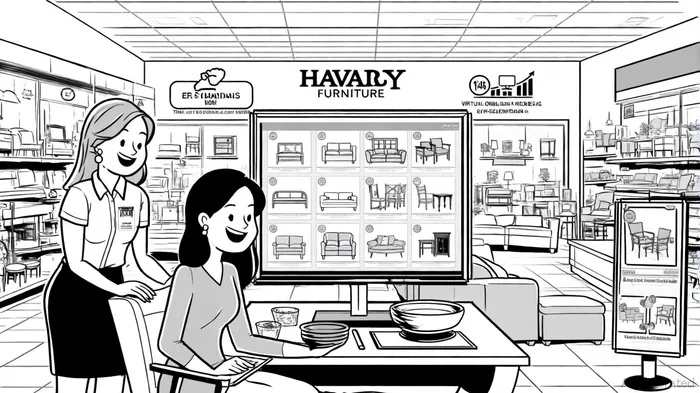
Haverty's e-commerce strategy has emerged as a critical pillar of its resilience. In Q2 2025, the company's online sales platform, HavertysHVT--.com, achieved a 4.4% revenue increase over the previous three months, with a conversion rate of 2.50-3.00% and an average order value of $225-250[5]. This growth is underpinned by a robust omnichannel approach, integrating virtual design consultations, 3-D room planners, and upholstery customization tools[6]. The company has also partnered with technology providers such as Salesforce Commerce Cloud and Adobe Experience Manager to enhance digital engagement[7].
Data-driven marketing further strengthens Haverty's e-commerce efforts. By leveraging customer segmentation-particularly targeting the "OnTrend Shopper," a style-conscious demographic-the company tailors promotions and personalizes recommendations[8]. Social media engagement, with 2.7%-3.2% interaction rates on platforms like Instagram and Facebook, complements these strategies[9]. Despite these advancements, Haverty's e-commerce sales still account for only 3.0% of total revenue, highlighting the need for further digital acceleration[10].
Sustainability and Consumer Resilience
Haverty's HVTerra sustainability program, launched in 2010, has positioned the company as a leader in environmental responsibility. By 2015, the firm had achieved a 20% reduction in energy use intensity (EUI), four years ahead of its 2020 target[1]. Recent investments in energy-efficient technologies, including LED lighting and HVAC upgrades, have further reduced its carbon footprint[1]. These initiatives align with post-pandemic consumer trends, where 68% of shoppers prioritize brands with sustainable practices[11].
However, Haverty's geographic concentration and reliance on traditional retail models pose risks. While the company has expanded its store network-re-entering Houston after 40 years and planning new locations in Florida-it faces headwinds from high interest rates, supply chain disruptions, and a soft housing market[12]. Its SG&A expenses, which rose to 59.3% of sales in Q2 2025, outpaced revenue growth and contributed to a 38.64% decline in net income for the quarter[3].
Strategic Outlook and Market Positioning
Haverty's long-term strategy hinges on balancing physical store expansion with digital innovation. The company plans to open six to eight new stores in Houston by 2026[13], while allocating $24 million in capital expenditures for 2025, including $2.6 million for IT upgrades[14]. Its H Design service, which generated 33.2% of written sales in Q1 2025, offers a competitive edge by blending personalization with digital convenience[15].
Yet, expert analysis underscores the urgency for Haverty to modernize its technology infrastructure and expand its digital footprint to compete with e-commerce giants like Wayfair[16]. A strong balance sheet, with no debt and significant cash reserves, provides flexibility to invest in AI-driven tools, such as virtual showrooms and predictive analytics[17].
Conclusion
Haverty Furniture's strategic position in the post-pandemic era reflects both promise and peril. While its e-commerce initiatives and sustainability efforts align with consumer trends, the company must accelerate digital transformation and address operational inefficiencies to secure long-term growth. For investors, Haverty's resilience lies in its ability to balance tradition with innovation-a delicate act that will define its success in an increasingly competitive retail landscape.





Comentarios
Aún no hay comentarios