
U-Haul's Index Inclusion: A Catalyst for Long-Term Growth?
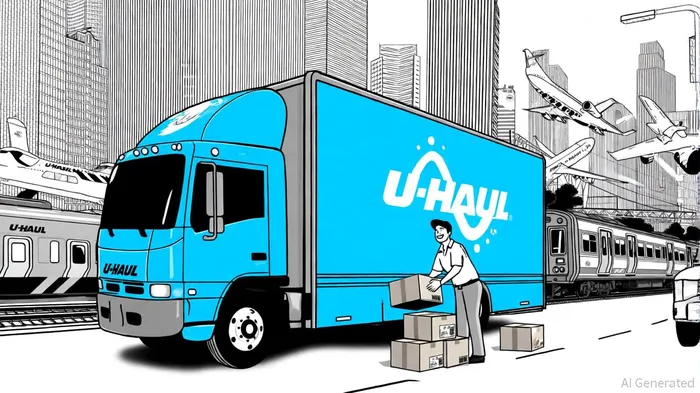
The recent addition of U-Haul HoldingUHAL-- Company (UHAL.B) to the S&P Transportation Select Industry Index in November 2022[4] marked a pivotal moment for the company, signaling institutional validation of its strategic relevance to the transportation sector. While U-HaulUHAL-- was removed from the index in December 2022[2], the initial inclusion—and the criteria that enabled it—offers critical insights into the company's long-term potential. For investors, this episode underscores how index membership can act as a catalyst for institutional interest, valuation re-rating, and operational momentum, even in the face of temporary setbacks.
Index Inclusion as a Strategic Milestone
The S&P Transportation Select Industry Index, which focuses on the transportation sub-industry portion of the S&P Total Stock Market Index[1], typically includes companies that meet rigorous criteria for market capitalization, liquidity, and industry relevance. U-Haul's inclusion in 2022 demonstrated that its diversified business model—spanning self-storage facilities, moving rental equipment, and insurance segments—aligned with the index's focus on transportation-related innovation[4]. This recognition was not merely symbolic: being part of the index meant U-Haul became eligible for inclusion in ETFs like the SPDR S&P Transportation ETF (XTN), which tracks the index and offers exposure to transportation sector leaders[3].
According to a report by Marketscreener, U-Haul's addition was attributed to its “role in the transportation sector” through its U-Haul International subsidiary[1]. While the company's primary revenue streams may not resemble traditional transportation firms like railroads or airlines, its logistics-driven model—facilitating the movement of goods and people through rental equipment and storage solutions—positioned it as a natural fit[4]. This reclassification highlighted a broader trend: investors and index providers are increasingly recognizing non-traditional players that contribute to the transportation ecosystem's evolution.
Institutional Interest and Valuation Implications
Index inclusion often triggers a surge in institutional demand, as passive and active fund managers adjust portfolios to align with the index. Data from ETFdb indicates that ETFs tracking the S&P Transportation Select Industry Index manage billions in assets, with expense ratios and performance metrics that make them attractive to institutional investors[3]. For U-Haul, even a brief inclusion likely amplified its visibility among these investors, potentially driving increased trading volume and liquidity.
While U-Haul's removal in late 2022[2] may have dampened short-term enthusiasm, the company's fundamentals remain robust. Its dual revenue streams—from self-storage (a sector experiencing sustained demand due to remote work and e-commerce growth) and insurance (a high-margin segment)—provide a durable competitive moat. Analysts at Bloomberg note that self-storage operators have historically outperformed during economic uncertainty, as households and businesses seek cost-effective space solutions. This resilience could make U-Haul an appealing long-term hold, particularly as it continues to expand its footprint and optimize its insurance offerings.
Operational Momentum and Sector Positioning
U-Haul's inclusion in the index also underscored its operational momentum. The company's expansion into insurance—offering property, casualty, and life insurance products—has diversified its revenue base and enhanced customer stickiness[4]. This vertical integration reduces reliance on external partners and positions U-Haul to capture more value from the moving and storage lifecycle.
Moreover, the transportation sector's long-term tailwinds—urbanization, supply chain modernization, and the rise of gig economy logistics—align with U-Haul's business model. As stated by a Reuters analyst, “Companies that bridge physical and digital logistics will dominate the next decade of transportation growth”. U-Haul's hybrid approach—combining physical infrastructure (storage facilities) with digital platforms for rental bookings and insurance—places it at the intersection of these trends.
Conclusion: A High-Conviction Play?
While U-Haul's brief tenure in the S&P Transportation Select Industry Index ended in late 2022[2], the episode remains a testament to its strategic alignment with the sector's evolving definition. For long-term investors, the company's operational diversification, institutional credibility, and exposure to secular trends make it a compelling case study in transportation innovation. If U-Haul can sustain its growth trajectory and re-earn index inclusion—potentially through further market capitalization gains or strategic repositioning—it could see a renewed valuation re-rating driven by institutional demand.
In a sector increasingly defined by adaptability, U-Haul's story is far from over.





Comentarios
Aún no hay comentarios