
Harvard's Legal Battle Against Trump's Funding Freeze: Implications for Academic Freedom and Investment
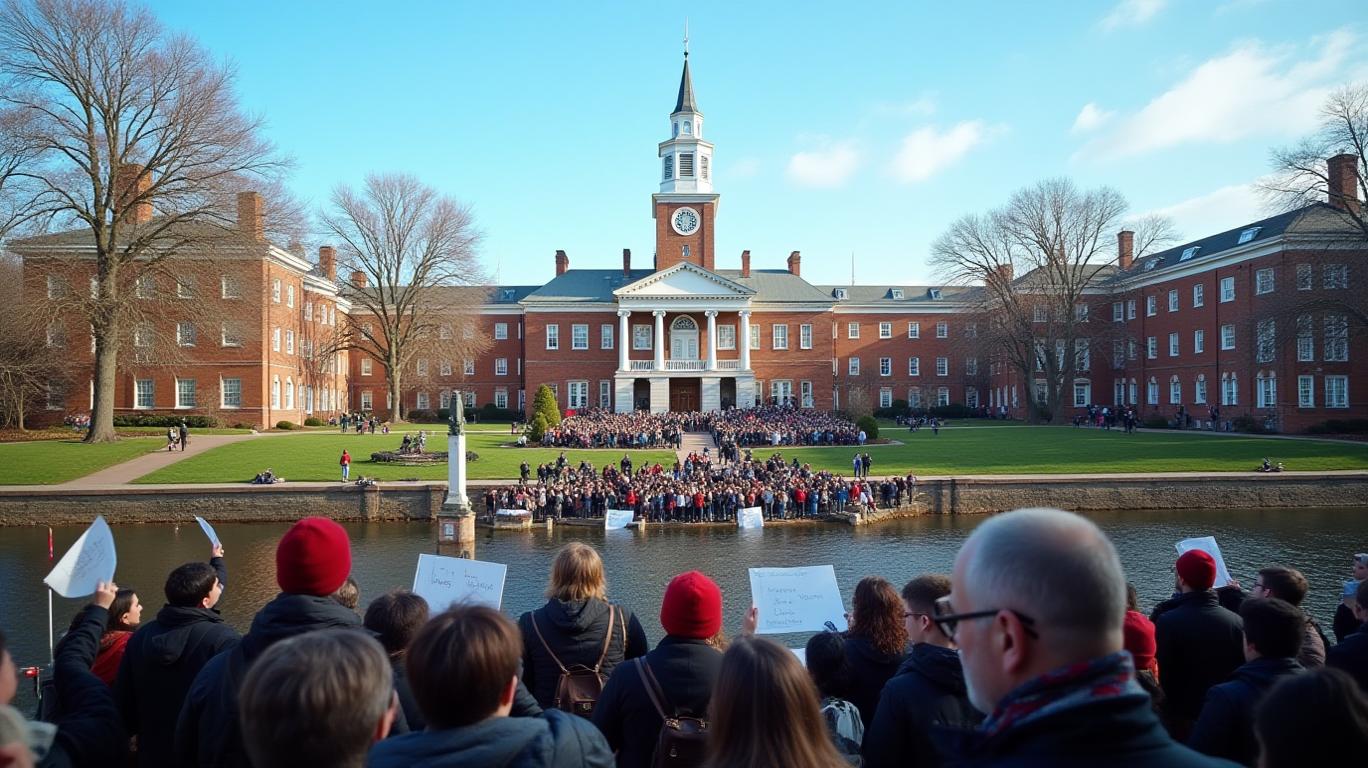
The Trump administration’s 2025 decision to freeze over $2.2 billion in federal grants to Harvard University has sparked a high-stakes legal and ideological confrontation. At the heart of the dispute is the administration’s demand that Harvard implement sweeping reforms—from auditing faculty and student viewpoints to restructuring admissions policies—in exchange for continued funding. Harvard’s defiant response, framed as a defense of academic freedom and constitutional rights, has profound implications for research, innovation, and investment.
The Legal and Financial Stakes
The freeze, announced in April 2025, followed a White House letter accusing Harvard of failing to address antisemitism during protests over Israel’s Gaza war. Harvard President Alan Garber rejected the demands, calling them a “dangerous overreach” that violates Title VI and the First Amendment. The university has since filed a lawsuit in Boston federal court, arguing the freeze is “arbitrary and capricious” and lacks a rational connection to civil rights concerns.
The financial stakes are enormous. Harvard’s $9 billion in federal funding supports not only its research but also affiliated hospitals like Mass General and Dana-Farber. The frozen grants include critical projects like Sarah Fortune’s $60 million tuberculosis research initiative and Donald Ingber’s $20 million radiation countermeasure studies. A shows how such research, often foundational to biotech advancements, directly impacts sectors reliant on NIH-funded breakthroughs.
The Impact on Research and Innovation
The freeze has halted groundbreaking projects with global implications. For instance:- TB Research: Fortune’s consortium, studying immune responses to a disease that kills 1 million annually, faces a decade of work erased. - Space Travel and Radiation: Ingber’s NASA-backed projects to develop countermeasures for Mars missions now risk delays, threatening U.S. leadership in space exploration.- Pandemic Preparedness: Duane Wesemann’s $10 million coronavirus study, tracking immune responses, was abruptly terminated mid-longitudinal data collection.
These projects underscore the link between federal funding and innovation. The reveals how such disruptions could depress valuations in sectors dependent on academic partnerships. Harvard’s lawsuit cites a United for Medical Research report: every $1 of NIH funding generates $2.56 in economic activity, supporting 408,000 jobs and $94.5 billion in annual output.
Broader Implications for Universities and the Economy
The Harvard clash is part of a broader campaign targeting over 60 universities, including Columbia and Stanford. The administration’s use of Title VI—a civil rights law—to pressure institutions represents a novel strategy of leveraging federal funding for ideological control.
Universities face existential risks. Harvard’s School of Public Health, which derives 46% of its budget from federal grants, has already laid off staff and canceled leases. The ripple effects extend beyond academia: partnerships with institutions like St. Jude Children’s Research Hospital and Baylor College of Medicine could unravel, jeopardizing treatments for diseases like ALS and cancer.
Legal analysts warn the case could take years, leaving critical research in limbo. If upheld, the freeze could set a precedent for federal interference in academic governance, chilling risk-taking in research and deterring global talent.
Investment Considerations
For investors, the Harvard freeze highlights three key risks and opportunities:1. Sector-Specific Vulnerabilities: Biotech and pharmaceutical companies reliant on NIH-funded research (e.g., Moderna, Pfizer) may face delayed breakthroughs. Monitor the for signals of investor sentiment.2. University-Backed Innovation: Firms with ties to Harvard’s research—such as those in radiation therapy (e.g., Varian Medical Systems) or neurodegenerative drugs (e.g., Biogen)—could see valuations pressured until the freeze is resolved.3. Long-Term Geopolitical Risks: A prolonged freeze could accelerate a “brain drain,” as top researchers relocate to countries like China or Germany. Track to gauge global competitiveness shifts.
Conclusion
Harvard’s battle against the funding freeze is a watershed moment for academic freedom and U.S. innovation. If the administration prevails, the precedent could erode the autonomy of universities—pillars of research and economic growth—while empowering political interference in science. Conversely, a Harvard victory would reinforce the constitutional boundaries of federal power, preserving the ecosystem that generates $94.5 billion annually.
Investors should remain vigilant. Sectors tied to NIH-funded research face near-term volatility, but long-term opportunities may arise if the U.S. retains its leadership in science. The stakes are clear: the outcome of this legal fight will shape the trajectory of American innovation for decades.







Comentarios
Aún no hay comentarios