
Harley-Davidson's Hardwire Plan: A Bold Bet on Electrification or a Risky Detour?
The motorcycle legend is racing into an electric future—whether its investors are aboard for the ride remains the question. Harley-Davidson’s Hardwire plan, a five-year strategy launched in 2021, is now at a critical crossroads. The board’s push to prioritize electric expansion via its LiveWire division and global market growth has split opinion: shareholder approval hit 82% in May 啐, but activist investors like H Partners argue the company is abandoning its soul in pursuit of sustainability. Is this a visionary pivot or a misstep that risks diluting the brand’s iconic legacy?
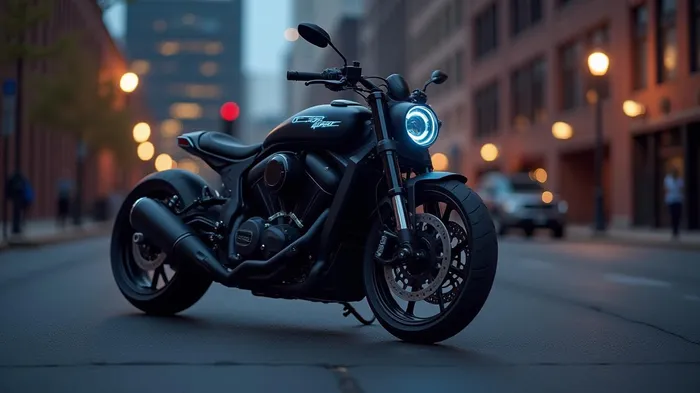
The Board’s Mandate: Electrification as the New Highways
Harley’s leadership has staked its reputation on the Hardwire plan’s twin pillars: profitable traditional segments (Touring, Large Cruiser, Trike) and electric dominance through LiveWire. The Q1 2025 results underscore the tension between these goals. While motorcycle shipments dropped 33% and revenue fell 29%, the company doubled down on its electric bet—doubling investment in LiveWire despite its paltry 33-unit sales in the quarter. This defiance of short-term pain for long-term gain reflects a board convinced that EVs are not just a fad but a necessity to compete in a shifting market.
LiveWire’s spinoff in 2022 as a standalone electric brand—a first for U.S. motorcycle makers—was a strategic masterstroke. Separating it from Harley’s traditional operations allows LiveWire to innovate freely, targeting urban riders and global markets like Asia. Yet H Partners’ objections highlight the risk: prioritizing a niche, underperforming division over core strengths could alienate Harley’s loyal base of cruisers and touring enthusiasts.
Risks: Over-Diversification or Strategic Genius?
Critics argue Harley is stretching itself thin. The Hardwire plan demands simultaneous focus on:
- Global expansion: Cracking Asia’s premium markets (China, Japan, Australia) while navigating tariffs and economic volatility.
- Cost discipline: Reducing motorcycle shipments by 33% to cut inventory and improve margins, despite the hit to top-line growth.
- Electric transformation: Reviving LiveWire’s sales, which fell 72% year-over-year, while competing against faster-moving EV startups.
The danger lies in over-diversification. Harley’s Q1 results showed weakness across all regions except EMEA, where premium models held ground. Meanwhile, LiveWire’s operational losses narrowed but remain steep ($20 million in Q1 2025). The question is whether the brand’s “net-zero” ambitions and modular RevMax platform (used in models like the Pan America) can turn LiveWire into a profit engine—or if it’s a costly distraction.
On the flip side, the Asia-Pacific opportunity is massive. Harley’s 2025 focus on premium segments in China and Japan could pay off if it adapts its offerings to urban markets. And LiveWire’s independence might finally let Harley capitalize on EV demand without alienating traditionalists.
Near-Term Catalysts: CEO Succession and Cash Flow
The board’s credibility hinges on two near-term tests:
1. CEO Succession: Jochen Zeitz’s leadership has driven margin improvements (10.8% in Q1 2025 vs. peers at 9%) and shareholder returns (14% dividend hike, $1.4 billion in buybacks). His successor must balance innovation and heritage—no small task.
2. Cost Discipline: Harley’s $1.9 billion cash pile and disciplined spending ($24 million in cost cuts in Q1) give it runway to weather short-term pain. The Financial Services arm (HDFS) also shines, with 26.1% operating margins—a critical profit pillar.
Long-Term Valuation: Is the Hardwire Plan a Winning Hand?
Harley’s valuation is a bet on two outcomes:
- LiveWire’s Comeback: Can it replicate Tesla’s trajectory? Unlikely—LiveWire lacks scale—but even modest EV adoption in Asia could validate the strategy.
- Brand Resilience: Will traditional riders stay loyal as Harley shifts focus? The 82% shareholder approval suggests they’re willing to give the board the benefit of the doubt.
The key metric is free cash flow. Harley’s 70% FCF-to-EBITDA ratio (vs. peers at 33%) gives it flexibility to invest in R&D and LiveWire without sacrificing dividends. At current valuations, Harley trades at 9.5x EV/EBITDA—a discount to its EV peers but a premium to traditional motorcycle makers. This reflects both its execution risks and its unique position as a legacy brand pivoting to EVs.
Conclusion: A Turning Point or a Detour?
The Hardwire plan is a high-stakes gamble. Harley’s shareholder support signals belief in its ability to blend tradition with innovation—a critical edge in an industry where sustainability and urban commuting are reshaping demand. LiveWire’s stumble in Q1 is a speed bump, not a roadblock. Meanwhile, the board’s focus on Asia and cost discipline buys time to execute.
Investors should consider a position now if they believe Harley can:
- Revive LiveWire’s sales through modular design and global partnerships.
- Maintain margins despite reduced shipments.
- Attract younger riders without alienating its core demographic.
The risks are real—activist pressure, LiveWire’s underperformance, and global macro headwinds—but the rewards could be outsized. Harley’s Hardwire plan isn’t just about motorcycles; it’s about whether a 119-year-old icon can redefine itself for the next century. The road ahead is electric—and full of potholes. But for those willing to ride, the destination could be worth the journey.





Comentarios
Aún no hay comentarios