
Happy Belly Food Group's Canadian Gambit: Franchise Frenzy and Strategic Real Estate Fuel Explosive Growth
The Canadian QSR (Quick Service Restaurant) landscape is undergoing a seismic shift, and Happy Belly Food Group (HBFG) is at the epicenter. With a relentless push into franchising and a masterclass in prime real estate partnerships, the company is turning Canada's $3 billion healthy eating market into a growth machine. Here's why investors should take note.
The Franchise Firehose: Growth Metrics That Demand Attention
HBFG's franchise model is on fire. In Q1 2025 alone, system-wide sales surged to $10.76 million, a 101% year-over-year leap, while operating revenues hit $3.67 million—a 95% increase. TheAdjusted EBITDA jumped a staggering 690% to $0.23 million, marking the company's first quarter of positive operational net income. These numbers aren't just growth—they're proof of scalability.
The engine behind this? A franchise pipeline that's expanding at breakneck speed. By mid-2025, HBFG has 50 operating restaurants, up from just 18 in Q1 2024—a 178% increase. The key brands driving this are:
- iQ Food Co.: Clean-eating bowls and catered services targeting urban professionals. The brand added its 7th location in 2025, a 75% increase since its September 2024 acquisition. A 65-unit pipeline (20 in Alberta, 25 in Ontario, 20 in BC) is now underway.
- Heal Wellness: The star performer, with a 180-unit pipeline across North America. A landmark 40-unit franchise agreement in Quebec (announced June 2025) is a game-changer, tapping into an underpenetrated market.
- Rosie's Burgers and Yolks Breakfast: Filling out the portfolio with craveable comfort food and morning staples.
Real Estate: The Secret Weapon of Margin Expansion
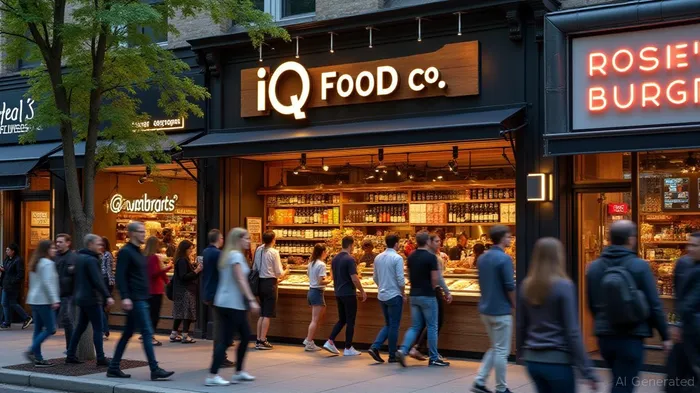
HBFG's real estate playbook isn't just about locations—it's about strategic density. By clustering brands like iQ, Heal, and Rosie's in high-traffic areas, the company is creating one-stop dining hubs that reduce per-unit costs. For example:
- The Cadillac Fairview partnership at Toronto's CF Shops at Don Mills combines Heal's 47th store, Rosie's 9th, and iQ's Ontario debut into a single open-air lifestyle center. This model slashes capital expenditure and rent per square foot while maximizing foot traffic.
- The Avenue/Lawrence iQ location (slated for Q3 2025) is managed by a multi-unit operator already running Heal Wellness stores—a “proven operator” bet that minimizes execution risk.
The math here is simple: shared real estate = higher margins. With franchisees handling upfront costs, HBFG's asset-light model generates recurring royalty revenue (5%–6% of sales) and franchise fees ($30,000–$50,000 per unit). This is growth without heavy balance sheet strain.
The Quebec Play: A 40-Unit Catalyst for 2026
The Quebec franchise deal deserves its own headline. Partnering with a 22-year operational veteran to open 40 Heal Wellness locations taps into a market HBFG has barely touched. Quebec's $450 million healthy eating sector is ripe for disruption, and HBFG's first-mover advantage here could lock in decades of recurring revenue.
This isn't just about numbers. Quebec's proximity to U.S. markets and its bilingual workforce make it a gateway for cross-border expansion—a strategic moat few competitors can match.
Risks? Sure. But the Upside Swamps Them
Critics will point to execution risks: Can franchisees in new provinces like Saskatchewan or PEI deliver? Will oversaturation in urban areas like Toronto crimp margins? HBFG's answer is two-fold:
1. Proven operators: Franchisees like Stephen Travers (a 200-restaurant vet) and the Quebec team are handpicked for their track records.
2. Category dominance: In markets like Ontario, HBFG's 50+ locations create brand recognition that newcomers can't compete with.
Investment Thesis: Buy the Franchise Flywheel
HBFG is a high-growth, low-risk story for investors. With 591 committed locations across its pipeline and a Quebec catalyst in 2026, the path to doubling store counts—and EBITDA—is clear. The asset-light model insulates the balance sheet, while the Quebec deal alone adds ~7% to the current pipeline.
For income investors, the 5%–6% royalty streams are a kicker. For growth hunters, the Q3 2025 openings (Toronto Avenue/Lawrence, PEI Heal Wellness) are key milestones to watch for valuation upgrades.
Final Take: A Recipe for Canadian QSR Domination
HBFG isn't just expanding—it's redefining how QSR brands scale in a health-conscious era. With a franchise machine firing on all cylinders and real estate partnerships that cut costs while boosting visibility, this is a company primed to outpace peers. Investors who bet on HBFG's disciplined growth now may find themselves sitting on a premium healthy eating juggernaut by 2026.
Investor action: Monitor Q3 2025 openings as catalysts. For long-term holds, HBFG's flywheel model suggests it's time to “eat the dip.”







Comentarios
Aún no hay comentarios