
Hanesbrands (HBI): A Resilient Apparel Play in a Tariff-Toughened Market
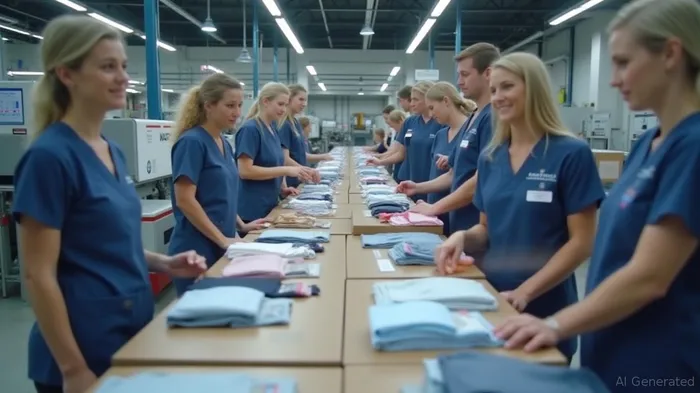
In a sector increasingly buffeted by tariff headwinds and shifting consumer preferences, HanesbrandsHBI-- (HBI) is proving its mettle. The company's Q1 2025 earnings beat, margin-driven growth, and strategically diversified manufacturing network have positioned it as a standout in an otherwise challenging apparel landscape. Barclays' recent price target hike to $6.00 underscores investor optimism, but HBI's story is far from straightforward. Let's dissect its resilience, risks, and why it deserves a closer look.
Q1 Earnings: A Strong Foundation for Growth
HBI delivered a compelling Q1 2025 report, with adjusted EPS of $0.07, a 240% jump from the prior year. Sales rose 2% to $760 million, driven by 4% organic growth in international markets (notably Australia and Asia) and a 60% surge in new business segments like scrubs and loungewear. The real star was margin expansion:
- Gross margin improved 165 basis points to 41.6%, fueled by cost-saving initiatives and better product mix.
- Operating margin soared 390 basis points to 10.7%, with SG&A expenses dropping 5% as a percentage of sales.
This performance, coupled with $1 billion in debt reduction, has slashed leverage to 3.6x net debt/EBITDA—a stark improvement from 5.0x a year ago. Barclays' price target hike reflects confidence in HBI's ability to sustain this momentum.
Tariff Resilience: A Strategic Manufacturing Edge
HBI's manufacturing strategy is its crown jewel. Unlike peers reliant on Chinese imports, HBIHBI-- sources 0% of U.S. products from China, opting instead for a dual-hemisphere supply chain:
- Western Hemisphere (40% of U.S. production): Facilities in the Dominican Republic, ElEL-- Salvador, and Honduras offer tariff-free advantages due to U.S. yarn and cotton content exemptions.
- Eastern Hemisphere (40%): Vietnam and Thailand provide flexibility, while the remaining 20% is sourced from non-tariff-affected regions.
This structure shields HBI from direct tariff impacts until Q4 2025, giving it a critical buffer to execute mitigation plans. Meanwhile, tariff disruptions are creating revenue opportunities: retailers are turning to HBI to replace products previously sourced from high-tariff regions. BarclaysBCS-- estimates this could add $100 million+ in incremental sales annually.
Peer Comparison: HBI's Relative Strength
While peers like VF Corp (VFC) and L Brands (LB) grapple with margin compression and inventory overhangs, HBI's focus on basics (two-thirds of U.S. sales)—a category resilient to economic downturns—gives it an edge.
| Company | Adjusted EPS Growth (Q1 2025) | Operating Margin | Tariff Exposure |
|---|---|---|---|
| Hanesbrands (HBI) | +240% | 10.7% | Low |
| VF Corp (VFC) | -12% | 8.2% | Moderate |
| L Brands (LB) | +5% | 6.8% | High |
HBI's margin trajectory and tariff mitigation prowess contrast sharply with peers.
Risks and Cautions
- Tariff Escalation: While HBI's current strategy works, further tariff hikes or geopolitical tensions could strain margins.
- Consumer Sentiment: The U.S. intimate apparel segment (mid-teens sales decline in Q1) remains weak, tied to discretionary spending cuts.
- Inventory Management: HBI's Q1 cash flow turned negative due to pre-season builds, a risk if demand softens.
Investment Thesis: Buy with Caution
Why Buy?
- Valuation: At $5.34, HBI trades at 9.5x 2025E EPS, below its historical average and peers. Barclays' $6 target implies 12% upside.
- Margin Expansion: HBI's cost discipline and pricing power could push margins toward its low-40s target.
- Debt Reduction: A 3.6x leverage ratio leaves room for deleveraging and shareholder returns.
Why Caution?
- Sector Challenges: Apparel stocks remain volatile amid macro uncertainty.
- Execution Risk: Realizing tariff-driven revenue requires flawless supply chain execution.
Final Verdict
HBI is a selective buy for investors willing to stomach sector volatility. Its manufacturing agility, margin upside, and Barclays-backed valuation make it a compelling long-term play. Monitor its August 7 Q2 earnings report closely—beating the $0.18 consensus could catalyze further upside.
Recommendation:
- Buy if valuation multiples expand (e.g., to 10x EPS).
- Hold if tariff risks or consumer weakness intensify.
Stay disciplined, and let HBI's resilience work in your favor.
Data as of June 19, 2025. Always consult a financial advisor before making investment decisions.





Comentarios
Aún no hay comentarios