
Hallador Energy's Strategic Transformation and Earnings Outperformance: Why HNRG Is a Compelling Long-Term Energy Play
In the ever-shifting landscape of energy markets, Hallador EnergyHNRG-- (HNRG) has emerged as a standout performer, defying the headwinds of the energy transition with a strategic pivot that aligns with both near-term demand and long-term resilience. The company's Q3 2025 results underscore its ability to capitalize on volatile market conditions, with revenue surging 40% year-over-year to $146.8 million, driven by a 62% increase in coal sales and a 29% rise in electric sales. This outperformance is not accidental but the product of a deliberate strategy to diversify its generation portfolio, secure long-term contracts, and position itself at the intersection of traditional and emerging energy needs.
Strategic Moves: From Coal to Gas and Beyond
Hallador's recent application to expand its Merom site with an additional 525 megawatts of gas generation is a masterstroke in a market where reliability is prized. Natural gas, often seen as a bridge fuel in the energy transition, has gained renewed relevance as elevated prices and surging electricity demand-particularly in the U.S.-create a favorable environment for flexible, dispatchable power. By leveraging its existing infrastructure and regulatory expertise, HalladorHNRG-- is not merely defending its coal legacy but accelerating into a segment that complements the intermittent nature of renewables.
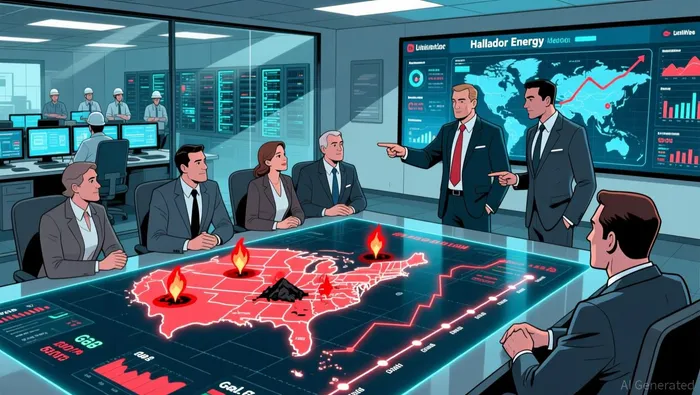 The company's engagement with data center developers and utility partners further illustrates its forward-looking approach. These agreements, which could consume a significant portion of its generation capacity at favorable prices, align with the exponential growth of data-driven industries. As AI and cloud computing reshape global energy consumption, Hallador's ability to provide stable, cost-competitive power positions it as a critical enabler of the digital economy-a sector less susceptible to the political and environmental pressures facing traditional utilities.
Coal Demand Resilience: A Tale of Two Markets
While global coal demand faces headwinds in advanced economies, the U.S. and Asia present a more nuanced picture. In the first half of 2025, U.S. coal demand rose 12% year-over-year, driven by higher electricity demand and elevated natural gas prices. This trend is expected to persist through 2025, with coal consumption projected to grow by 9% for the year. Meanwhile, in Asia, China and India-two of the world's largest coal consumers-continue to rely on the fuel for industrial and power generation needs, despite incremental shifts toward renewables.
According to Wood Mackenzie, global coal demand could remain stronger than anticipated through 2030 due to energy security concerns and the slow adoption of alternatives like carbon capture and storage (CCUS). This "resilience" is not a sign of stagnation but a reflection of the complex interplay between electrification, economic growth, and policy inertia. For Hallador, which operates primarily in the U.S., the current environment offers a window to optimize its coal assets while transitioning into gas and power services that cater to both legacy and emerging demand.
Navigating the Energy Transition: Challenges and Opportunities
The energy transition remains a double-edged sword for HNRGHNRG--. On one hand, renewables like solar and wind have overtaken coal in global electricity generation, accounting for 34.3% of the mix in 2025 compared to coal's 33.1%. On the other, the transition's uneven progress-particularly in sectors like hydrogen and industrial decarbonization-creates gaps that Hallador's hybrid model can fill. Its long-term contracts, which provide stable cash flows, insulate it from the volatility of spot markets, while its foray into gas generation aligns with the IEA's projection that coal and oil demand will peak by 2030.
Critics may argue that HNRG's reliance on coal and fossil-based energy exposes it to regulatory and reputational risks. However, the company's 2023 10-K filing reveals that a significant portion of its coal and energy sales are under long-term contracts, suggesting a strategic hedge against the rapid phaseout of coal in certain markets. Moreover, as geopolitical tensions and energy security concerns persist, the demand for reliable, dispatchable power-whether from coal, gas, or hybrid systems-remains a critical component of the global energy matrix.
Conclusion: A Long-Term Play in a Transitional Era
Hallador Energy's strategic transformation is a testament to its adaptability in a sector defined by disruption. By leveraging coal's current resilience, expanding into gas generation, and securing partnerships with high-growth industries like data centers, HNRG has positioned itself as a bridge between the old and new energy paradigms. While the long-term trajectory of coal remains uncertain, the company's diversified approach and focus on reliability make it a compelling long-term play. In an era where the energy transition is as much about stability as sustainability, Hallador's ability to navigate both the challenges and opportunities of this duality is its greatest asset.





Comentarios
Aún no hay comentarios