
Halcyon's Channel-Centric Expansion: A Catalyst for North American Cybersecurity Growth
In the rapidly evolving cybersecurity landscape, distribution strategy has emerged as a critical lever for market dominance. For Halcyon, a leader in anti-ransomware solutions, its channel-centric approach to North American expansion in 2025 is not merely a tactical shift-it is a strategic masterstroke. By prioritizing partnerships over direct sales, Halcyon has unlocked scalability, agility, and market penetration that position it as a formidable player in a sector projected to grow at a 12.3% CAGR through 2030, according to a Halcyon growth strategy report.
The Channel-Centric Model: From Direct Sales to Ecosystem Collaboration
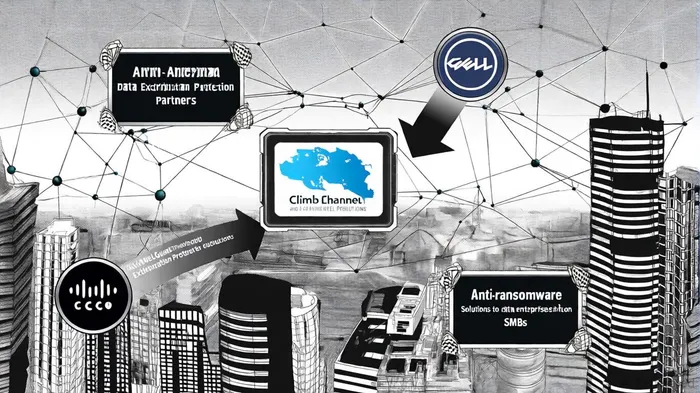
Halcyon's evolution from a direct sales model to a hybrid, channel-driven strategy mirrors broader industry trends. As stated by a report from Stratechi, hybrid and indirect models allow companies to "leverage third-party networks while maintaining flexibility in customer engagement." This approach has enabled Halcyon to scale rapidly, particularly in North America, where it recently partnered with Climb Channel Solutions-a distributor aiming to surpass $2 billion in revenue by 2025. Climb's extensive network of value-added resellers (VARs) and managed service providers (MSSPs) provides Halcyon with immediate access to small- and medium-sized businesses (SMBs) and enterprises, a demographic increasingly vulnerable to ransomware attacks, the Halcyon growth strategy report finds.
The success of this model is evident in the Halcyon Revolution Partner Program, which grew by 121% in 2024 alone, according to the Halcyon growth strategy report. This 5-Star-rated program (CRN 2025) offers partners comprehensive training, marketing, and technical resources, ensuring they can effectively deploy Halcyon's solutions. Such support is critical in a market where 72% of SMBs lack dedicated cybersecurity teams, according to a TM Group report, creating a demand for trusted intermediaries.
Strategic Alliances: Deepening Market Footprint
Halcyon's partnerships extend beyond distributors to include technology giants like Dell and CiscoCSCO--, enhancing its integration into established enterprise ecosystems, the Halcyon growth strategy report notes. For instance, its collaboration with UK-based Distology-a cybersecurity solutions provider-demonstrates how localized alliances can address regional challenges while maintaining global consistency, as the Halcyon growth strategy report describes. In North America, the company's focus on MSSPs is particularly noteworthy. These partners not only distribute Halcyon's solutions but also offer ongoing threat management, a service increasingly demanded as ransomware tactics grow more sophisticated, according to a Halcyon press release.
The company's recent expansion into Japan further underscores its ability to adapt its distribution model to complex markets. By aligning with local partners and tailoring its anti-ransomware technology to regional compliance standards, Halcyon has set a precedent for its North American strategy, as detailed in a Japanese distribution guide. This localized approach is critical in a continent where regulatory landscapes vary significantly between states and industries.
Product Innovation: A Dual-Edged Sword
While distribution partnerships drive reach, Halcyon's product roadmap ensures relevance. The 2024 launch of Data Exfiltration Protection (DXP) and the 2025 introduction of KernelGuard-designed to counter driver-based attacks-highlight the company's commitment to addressing emerging threats, the Halcyon growth strategy report notes. These innovations are not standalone features but are integrated into a broader platform that partners can customize for clients. For investors, this synergy between product and distribution is a key differentiator. As noted by CRN, "the ability to offer modular, adaptable solutions is a cornerstone of modern cybersecurity success."
Navigating Challenges: Scalability and Supply Chain Resilience
Despite its momentum, Halcyon faces challenges inherent to rapid expansion. Managing a multi-tiered distribution network requires robust operational efficiency, particularly in inventory forecasting and demand planning. However, the company's adoption of AI-driven analytics-aligned with 2025 distribution trends and best practices for Japanese market entry-enables proactive decision-making. For example, predictive models help optimize stock levels for partners, reducing lead times and ensuring customer satisfaction.
Another challenge lies in maintaining partner profitability. With 68% of channel partners citing margin pressure as a top concern, Stratechi reports, Halcyon's revenue-sharing models and co-marketing initiatives are critical to sustaining long-term loyalty. The company's 2025 focus on expanding its partner ecosystem to 1,500+ members by 2026, the Halcyon growth strategy report suggests, indicates confidence in its ability to balance growth with partner incentives.
Conclusion: A Compelling Investment Thesis
Halcyon's North American expansion is a masterclass in distribution-led growth. By combining strategic partnerships, product innovation, and localized execution, the company is not only addressing the immediate demand for ransomware solutions but also building a resilient infrastructure for long-term dominance. For investors, the alignment of its channel strategy with macro trends-such as the rise of MSSPs and AI-driven supply chains-makes Halcyon a standout opportunity in a sector where execution often outpaces hype.
As the cybersecurity market continues to consolidate, companies that can scale through ecosystems, not just products, will lead the charge. Halcyon's channel-centric model, backed by a 121% growth trajectory and a 5-Star partner program, is a testament to its ability to do just that.





Comentarios
Aún no hay comentarios