
Gulf-U.S. Strategic Realignment: Unlocking Infrastructure Investment Opportunities in Gaza and Beyond
The geopolitical landscape of the Middle East is undergoing a seismic shift, with the Gulf states and the U.S. forging unprecedented strategic alliances. This realignment—driven by shared economic interests, technological ambition, and a shared vision for regional stability—is creating fertile ground for infrastructure investment, particularly in Gaza's post-war reconstruction. For investors, this is not merely an opportunity but a strategic imperative.
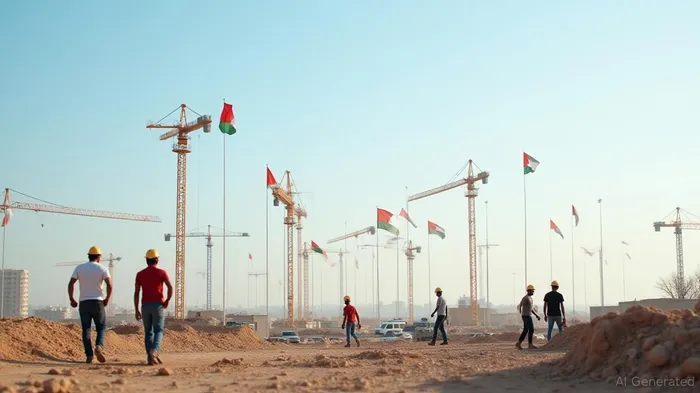
Geopolitical Realignment: A Catalyst for Investment
The Gulf-U.S. partnership, now in full swing, is anchored by mutual economic and security needs. U.S. President Donald Trump's recent Gulf tour solidified this alignment, with landmarkLARK-- agreements in energy, technology, and defense. The Gulf—particularly Saudi Arabia, the UAE, and Qatar—is channeling its sovereign wealth into U.S. ventures, while the U.S. is reciprocating with cutting-edge tech partnerships and energy infrastructure projects.
This synergy extends to Gaza, where the Arab League's $53 billion reconstruction plan, endorsed by Gulf states, offers a rare chance to capitalize on infrastructure development. The plan's phased approach—from temporary housing to industrial zones—provides a clear roadmap for investors seeking long-term returns.
Infrastructure Investment in Gaza: A Multi-Billion Opportunity
The Gaza reconstruction framework, spearheaded by the Gulf, presents a unique portfolio of opportunities:
- Phase 1 (Temporary Housing & Clearing Rubble):
- Focus: Rapid deployment of temporary shelters (e.g., shipping containers) and rubble removal.
- Investment Opportunity: Companies specializing in modular housing and waste management stand to gain.
Gulf Involvement: Saudi Arabia has already allocated $185 million to UN agencies for humanitarian aid, while the UAE's AD Ports Group could lead port redevelopment.
Phase 2 (Permanent Housing & Utilities):
- Focus: Rebuilding homes, hospitals, and utilities.
- Investment Opportunity: Construction firms with expertise in resilient infrastructure and smart energy solutions (e.g., solar power) are well-positioned.
Gulf-U.S. Synergy: U.S. firms like Bechtel and Gulf-backed entities like Saudi Olayan Group are likely to collaborate on large-scale projects.
Phase 3 (Economic Zones & Connectivity):
- Focus: Industrial parks, fishing ports, and a seaport.
- Investment Opportunity: Logistics firms and tech companies can profit from Gaza's potential as a trade hub.
- Gulf Vision: The UAE's DP World and Saudi Aramco could lead port development, leveraging their global experience.
Gulf-U.S. Tech & Energy Synergy: A Boost to Global Markets
Beyond Gaza, Gulf-U.S. partnerships are reshaping global tech and energy sectors:
Artificial Intelligence: The UAE's $5 billion U.S.-UAE AI Campus and Saudi's Humain venture with AMD/NVIDIA are creating hubs for AI innovation. Investors in semiconductor stocks like NVIDIA (NVDA) and AMD (AMD) should note their Gulf-linked growth trajectories.
Energy Transition: Gulf states are expanding their stakes in U.S. LNG projects. The $20 billion Saudi Aramco invested in Sempra Port Arthur LNG terminals underscores the sector's scalability.
Defense & Security: Gulf nations' $240 billion in defense purchases (Saudi Arabia: $142B; Qatar: $96B) will fuel demand for U.S. manufacturers like Boeing (BA) and Lockheed Martin (LMT).
Risks and Considerations
While the opportunities are vast, risks persist:
- Geopolitical Tensions: Hamas's refusal to demilitarize and Israel's security concerns could delay project timelines.
- Funding Shortfalls: The Gulf's shift from aid to investment-based models requires private sector participation.
- Energy Prices: Oil prices below $70/barrel could strain Gulf budgets, though diversified economies (e.g., UAE's tourism) mitigate this risk.
Why Act Now?
The Gulf-U.S. realignment is not a fleeting trend but a structural shift. With Gaza's reconstruction plan gaining momentum and tech/energy partnerships maturing, investors who move swiftly can secure prime positions in:
- Gaza-focused ETFs: Track construction and logistics firms via ETFs like EGShares Middle East (MES).
- Sovereign Wealth Funds: Invest in Gulf-linked assets (e.g., Saudi Telecom Company (STC), Dubai Ports World) via global indices.
- Tech Infrastructure: Back U.S. firms with Gulf partnerships (e.g., AMD, NVIDIA) through sector-specific funds.
Conclusion: The Time for Action is Now
The Gulf-U.S. alliance is rewriting the rules of Middle Eastern investment. From Gaza's reconstruction to AI campuses and LNG terminals, this region is where global capital meets geopolitical strategy. For investors, the message is clear: act now to secure a stake in the infrastructure of tomorrow.
The risks are real, but the rewards—shaped by Gulf wealth, U.S. tech prowess, and regional stability—are historic. The next chapter of the Middle East's economic future is being written. Will you be a spectator or a shareholder?







Comentarios
Aún no hay comentarios