
Gulf Development's 15.7 Bln Baht Investment: Unlocking High-Yield Opportunities in Thailand's Strategic Real Estate Corridors
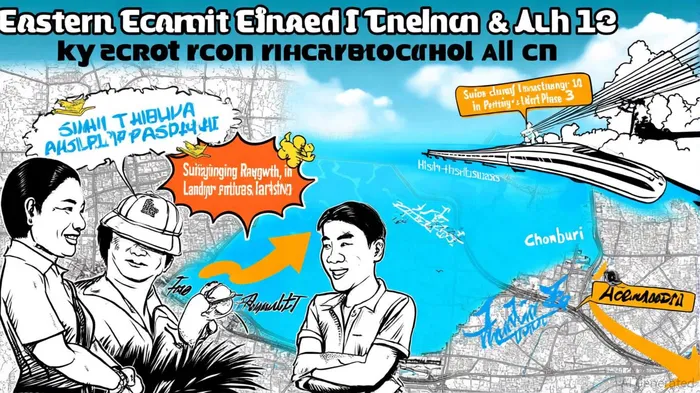
Thailand's real estate market in 2025 is undergoing a transformative shift, driven by strategic infrastructure investments and a recalibration of global supply chains. At the forefront of this evolution is Gulf Development Public Company Limited, which has allocated 15.7 billion baht to high-impact projects in the Eastern Economic Corridor (EEC) and beyond. This investment, part of a broader 130 billion baht three-year plan, is not merely a bet on property—it is a calculated alignment with Thailand's “Thailand 4.0” vision to become a high-income, innovation-driven economy by 2037[4].
Strategic Infrastructure as a Catalyst for Real Estate Growth
Gulf's focus on infrastructure-driven real estate is anchored in its Map Ta Phut Industrial Estate Phase 3 (MTP3) project, a cornerstone of the EEC. The company's 70% stake in the Gulf MTP LNG Terminal Company Limited has enabled the completion of Phase 1 (land reclamation and utility works) and the initiation of Phase 2 (LNG terminal construction) in mid-2025[1]. This project, with an initial capacity of 5 million tons of LNG per annum, is poised to bolster Thailand's energy security while creating a ripple effect on industrial real estate demand.
The EEC's strategic positioning as a hub for next-generation automotive, smart electronics, and aviation industries has already attracted 47 billion baht in foreign investment in Q1 2025, primarily from Japan, China, and Singapore[2]. This inflow has directly fueled land price surges: Pattaya saw a 126.5% year-on-year increase, Rayong rose 43.5%, and Chonburi climbed 33.6%[2]. These figures underscore the EEC's emergence as a magnet for both industrial and residential real estate, driven by improved logistics and the promise of high-speed rail connectivity.
High-Speed Rail and the “Corridor of Opportunity”
The high-speed rail project linking Don Mueang, Suvarnabhumi, and U-Tapao airports is a linchpin of the EEC's development plan. While delays have pushed its completion to 2029, the project's potential to enhance regional connectivity is already reshaping real estate dynamics. According to a report by the NAIOP, every $1 of construction spending generates $2.95 in total economic value, suggesting that Thailand's infrastructure investments could amplify GDP growth and property yields[1].
For Gulf Development, the rail project complements its U-Tapao Industrial Port expansion and Laem Chabang Port Phase 3, creating a seamless logistics network that reduces transportation costs for manufacturers and boosts demand for warehousing and industrial estates[1]. This synergy is critical in a market where CBRE Thailand's 2025 Outlook highlights strong leasing activity in commercial sectors and a growing emphasis on sustainability-certified buildings[3].
Digital Infrastructure and the Future of Real Estate
Beyond physical infrastructure, Gulf's 15.7 billion baht investment extends to digital real estate. The company's joint venture with Binance for digital asset trading services and its partnerships with Google and Oracle for cloud services align with global trends in data center demand. As PwC notes, data centers are at the forefront of investment opportunities in 2025, driven by AI and digital infrastructure growth[3]. Gulf's EEC-based data center expansion is thus a strategic play on Thailand's position as a regional tech hub.
Moreover, Gulf's 40.4% stake in Advanced Info Service (AIS) and its 40% ownership of Thaicom position it to capitalize on the telecom sector's evolution. The CBRE report further emphasizes that mixed-use developments and serviced apartments are gaining traction among urban professionals and expatriates, a demographic likely to expand with improved digital infrastructure[3].
Risk Mitigation and Long-Term Yield Potential
While infrastructure projects inherently carry execution risks, Gulf's diversified approach—spanning energy, logistics, and digital assets—mitigates exposure to sector-specific volatility. The MTP3 project's phased rollout, for instance, ensures steady cash flows from LNG terminal operations even as land prices appreciate. Similarly, the Eastern Economic Corridor's 5-year development plan includes targeted incentives for green infrastructure, aligning with global ESG trends and enhancing long-term asset resilience[4].
For investors, the key takeaway is clear: Gulf's 15.7 billion baht investment is not just about bricks and mortar. It is a masterclass in leveraging strategic infrastructure to unlock high-yield opportunities in a market where land price growth, foreign capital inflows, and technological innovation are converging. As the EEC's GDP per capita is projected to rise by 3390 RMB in urban areas linked to high-speed rail[5], the real estate corridors under Gulf's purview are set to deliver outsized returns for those who act early.







Comentarios
Aún no hay comentarios