
Gujarat Floods: Navigating Risks and Opportunities in India's Industrial Heartland
The recent floods in Gujarat, triggered by Cyclone Asna and relentless monsoon rains, have caused widespread destruction, claiming at least 14 lives and displacing tens of thousands. Beyond the immediate humanitarian crisis, the floods have exposed vulnerabilities in one of India’s most critical economic regions—a hub for ports, manufacturing, and agricultureANSC--. For investors, the disaster underscores both systemic risks and potential opportunities in a climate-stressed economy.
The Economic Toll: A Snapshot of Disruption
The floods have already inflicted severe damage across industries:
- Direct Relief Costs: Over ₹34.36 crore has been disbursed for livelihood support, livestock compensation, and housing repairs, with ₹3,360 crore in pending claims from MSMEs (small and medium enterprises) for flood-related disruptions.
- Infrastructure Damage: Over 2,230 km of roads and 88 flood-affected power substations require urgent repairs, while ports like Mundra and Kandla faced operational halts, delaying cargo worth millions.
- Agricultural Losses: Key crops like cotton and rice remain at risk, with crop surveys ongoing. Historical data shows floods in Gujarat have historically caused agricultural losses exceeding ₹17 billion, impacting rural livelihoods and food security.
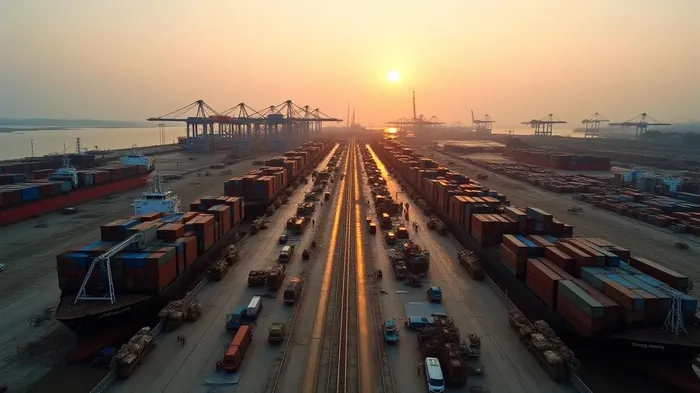
Sector-Specific Impacts: Ports, Logistics, and Manufacturing
Gujarat’s economy is deeply intertwined with its industrial and port infrastructure, making it uniquely vulnerable to climate shocks:
1. Ports and Trade:
- Mundra Port, India’s second-largest container port, halted operations for days due to waterlogging and high winds, delaying cargo worth an estimated ₹180 million metric tons annually.
-
- Road and rail disruptions have worsened logistics bottlenecks, with trucking capacity down by 30% in affected regions.
- Manufacturing:
- Salt Industry: Unseasonal rains slashed salt production by 60%, driving prices to ₹6,000 per tonne—a 50% surge from pre-flood levels.
Pharmaceuticals and Textiles: Supply chain delays have stalled deliveries to northern markets, with 10-day delays becoming routine.
Energy and Power:
- Over 6,900 villages faced power outages, disrupting industrial operations. Renewables, such as solar farms in Kutch, may face long-term damage from waterlogging.
Long-Term Risks and Resilience Gaps
The floods amplify concerns about systemic climate risks in India’s economy:
- Underinsurance: Over 90% of economic losses in India remain uninsured, per Swiss Re. Gujarat’s disaster response relies heavily on government funds, leaving households and businesses exposed.
- Climate Trends: Floods now affect 16.8 million hectares of land annually—a record since 2021—with Gujarat alone accounting for over 10,000 flood-related fatalities since 1953.
- Infrastructure Vulnerability: A 2025 IIM-A study warns that floods cause permanent declines in industrial assets (₹17 billion) and workforce reductions (8,000+ jobs), with effects lingering for a decade.
Investment Implications: Where to Look for Opportunities
Amid the disruption, investors can identify sectors poised for recovery and resilience-building:
1. Infrastructure Rebuilding:
- Roads and Ports: The Gujarat government has allocated ₹700 crore for road repairs under the Mukhyamantri Sadak Yojana. Firms like Larsen & Toubro (LTI.NS) and Adani Ports (APSEZ.NS) stand to benefit from reconstruction projects.
-
- Climate-Resilient Technologies:
- Renewables and Smart Grids: Companies like ReNew Power (RENEW.NS) could gain traction as Gujarat shifts toward decentralized, flood-resistant energy systems.
Insurance and Risk Management: Underwriting firms and climate-tech startups (e.g., Acko, Policybazaar) may see demand for flood insurance and predictive analytics tools.
Agriculture and Food Security:
- Drought-Resistant Crops: Investments in seeds and irrigation tech (e.g., Nuziveedu Seeds (NUZI.NS)) could mitigate future crop losses.
Conclusion: A Crossroads for Gujarat’s Economy
The 2025 floods are a stark reminder of Gujarat’s dual role as India’s industrial powerhouse and a climate frontline state. While immediate losses—₹3,400 crore+ in relief and reconstruction—highlight vulnerabilities, the crisis also creates openings for strategic investments in resilient infrastructure, insurance, and adaptive industries.
For investors, the key is to prioritize sectors that align with long-term resilience:
- Ports and Logistics: Mundra and Kandla’s recovery hinges on climate-proofing, which could attract capital for modernization.
- Technology and Insurance: Solutions for flood prediction and risk mitigation are increasingly critical in a warming world.
Gujarat’s path forward will depend on whether policymakers and businesses adopt a proactive stance—turning disaster into an opportunity to build a more sustainable economic model. The stakes are high: with climate risks intensifying, the state’s choices today will shape its competitiveness for decades.







Comentarios
Aún no hay comentarios