
Guinea's Constitutional Vote and the Emerging Opportunities in Post-Authoritarian Reform Markets
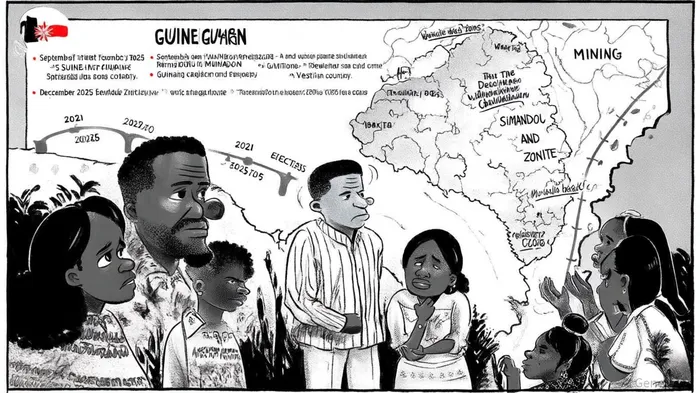
Guinea's September 21, 2025 constitutional referendum represents a critical juncture in the West African nation's transition from military rule to civilian governance. The proposed constitution, which extends the presidential term to seven years (renewable once) and establishes a bicameral legislature with a Senate partially appointed by the executive, has sparked intense debate over its implications for political stability and economic reform. For investors, the outcome of this vote—and the broader political trajectory it sets—will shape Guinea's attractiveness as a destination for capital in the post-authoritarian era.
The New Constitution: A Double-Edged Sword for Governance
The junta led by General Mamady Doumbouya has framed the referendum as a step toward restoring constitutional order, with the goal of holding elections by December 2025. However, critics argue that the draft constitution creates legal pathways for Doumbouya to run for office, contradicting earlier pledges that junta members would not seek elected roles [1]. The inclusion of a Senate where one-third of the members are directly appointed by the president raises concerns about entrenching executive power, while the suppression of opposition parties and civil society actors has further eroded trust in the process [2].
According to a report by the Lansing Institute, the referendum's legitimacy will hinge on voter turnout, transparency, and international perceptions. A “Yes” vote with high participation could signal a degree of public acceptance, potentially stabilizing the political environment and reducing headline risks for investors [1]. Conversely, a low turnout or widespread boycott—such as the one called by the Forces Vives de Guinée—could delay elections, prolong uncertainty, and deter capital inflows [3].
Economic Transformation: Mining-Driven Growth and Structural Challenges
Guinea's economy has shown resilience, with GDP growth reaching 5.7% in 2024, driven by both mining and non-mining sectors [4]. The anticipated start of Simandou iron-ore exports in 2026, valued at an estimated $1.5 billion annually, is projected to further boost growth. However, the World Bank warns that without inclusive policies, the benefits of this boom may not trickle down to the 52% of Guineans living below the $3.65-a-day poverty line [4].
The junta's ability to attract investment in bauxite and iron-ore projects will depend on its capacity to address structural weaknesses, particularly in domestic revenue mobilization. Large mining companies, which contribute over 70% of Guinea's export earnings, have historically underpaid taxes and royalties. Strengthening tax compliance and reinvesting revenues into infrastructure and social programs could enhance long-term growth prospects [4].
Investor Considerations: Balancing Risks and Rewards
For foreign investors, Guinea's post-authoritarian transition presents a paradox: a resource-rich economy with high growth potential, but a political environment still shaped by military influence. Chinese and Western firms with stakes in Simandou and bauxite operations are closely monitoring the referendum's outcome. A successful vote could reduce regulatory risks and provide a clearer timeline for elections, while a contested result might trigger protests or administrative delays [1].
However, the junta's control over the electoral process and repression of dissent remain red flags. As noted by the African Security Analysis, the suspension of political parties and restrictions on media freedom have created an uneven playing field, undermining confidence in the transition's inclusiveness [5]. Investors must weigh these risks against the potential rewards of early access to Guinea's untapped mineral wealth.
Conclusion: A High-Stakes Transition
Guinea's constitutional vote is more than a domestic political exercise—it is a litmus test for the viability of post-authoritarian reform in resource-dependent economies. While the junta's reforms could pave the way for a stable, investor-friendly environment, the path forward remains fraught with challenges. For now, the referendum's outcome will determine whether Guinea's economic transformation is anchored in genuine democratic governance or a hybrid system where military influence persists. Investors with a long-term horizon may find opportunities in Guinea's mining sector, but they must do so with a clear-eyed assessment of the political risks involved.







Comentarios
Aún no hay comentarios