
Growth Equity Opportunities in Early-Stage Tech: Strategic Positioning Through Emerging Market Conferences
The growth equity landscape for early-stage technology firms is undergoing a transformative phase, driven by AI innovation and a recalibrated capital market. As of early 2025, AI remains the dominant force, with primary investments like OpenAI's $40 billion funding round at a $260 billion valuation underscoring the sector's allure, according to a Forbes forecast. However, this exuberance has created a two-tier market: AI-focused firms thrive, while non-AI startups face heightened scrutiny. For investors, navigating this environment requires strategic positioning-particularly in emerging markets, where conferences are becoming critical tools for deal sourcing and market entry.
The Resurgence of Growth Equity: A Structured Approach
The 2022–2023 valuation reset forced many early-stage tech firms to delay fundraising, creating a backlog of capital needs as these companies now return to the market, according to an Adams Street Partners report. This has intensified competition among growth equity investors, who must prioritize firms with strong revenue growth, scalable business models, and sufficient cash runway to weather volatility. The report also notes that disciplined underwriting and robust sourcing capabilities are now table stakes for differentiation.
Emerging markets, with their demographic advantages and rapid urbanization, offer fertile ground for such opportunities. For instance, sectors like healthcare, fintech, and defense tech are seeing explosive growth. Sword Health's announcement noted a $40 million raise in June 2025 at a $4 billion valuation, with its mental health platform "Mind" expanding into emerging markets. Similarly, Mach Industries secured $100 million in Series B funding led by Khosla Ventures, leveraging its participation in the 2025 Oppenheimer Emerging Growth Conference to connect with strategic investors, according to reporting on Mach Industries' funding round.
Conferences as Strategic Leverage Points
Targeted conference participation is no longer optional-it's a necessity for investors seeking to capitalize on emerging markets. Events like the Emerging Markets Institute (EMI) Annual Conference at Cornell SC Johnson and J.P. Morgan's Brazil Opportunities Conference have become pivotal in shaping deal pipelines. The EMI conference, for example, has evolved from addressing "Risks and Realignments" in 2023 to spotlighting "Innovation and Transformation" in 2024, reflecting the growing emphasis on digital finance and AI-driven solutions, as detailed on the EMI conference page.
These platforms enable investors to engage directly with founders, assess local market dynamics, and identify undervalued opportunities. At the 2023 Oppenheimer Emerging Growth Conference, Agilysys secured 1-on-1 investor meetings that catalyzed a 22.8% year-over-year revenue increase in Q2 2024, according to a Nasdaq release. Similarly, Enovix leveraged conference visibility to execute a $96 million secondary equity offering in 2024, per an Enovix announcement.
Case Studies: From Conference Halls to Deal Rooms
The strategic value of conferences is best illustrated through real-world examples. At the 2025 Tuck Emerging Markets Conference, fintech startups in Southeast Asia showcased solutions addressing cross-border payment gaps, attracting investments from global private equity funds. One such firm, a digital banking platform in Indonesia, secured $50 million in growth equity after pitching to attendees, including representatives from General Atlantic and Tiger Global, during the Tuck Emerging Markets Conference.
In Africa, the East Africa Fund I leveraged the Noble Capital Markets Emerging Growth Virtual Equity Conference to source deals in agriculture tech. By connecting with local entrepreneurs and intermediaries, the fund identified a Kenyan startup using AI to optimize crop yields, securing a $15 million investment that scaled the company's operations across East Africa, as discussed in a Forbes analysis.
Strategic Recommendations for Investors
To maximize returns in this evolving landscape, investors should:
1. Prioritize Sector-Specific Conferences: Focus on events aligned with high-growth sectors like AI, fintech, and healthtech, where emerging markets offer unique scalability opportunities.
2. Leverage Virtual Platforms: Virtual conferences (e.g., the Noble virtual conference) expand access to under-the-radar startups while reducing logistical barriers.
3. Build Local Partnerships: Conferences often facilitate introductions to local intermediaries, whose insights are critical for navigating regulatory and cultural complexities.
As the growth equity market matures, the ability to identify and act on emerging opportunities will separate top performers from the rest. By strategically participating in conferences, investors can not only source high-impact deals but also position themselves at the forefront of the next wave of innovation in emerging markets.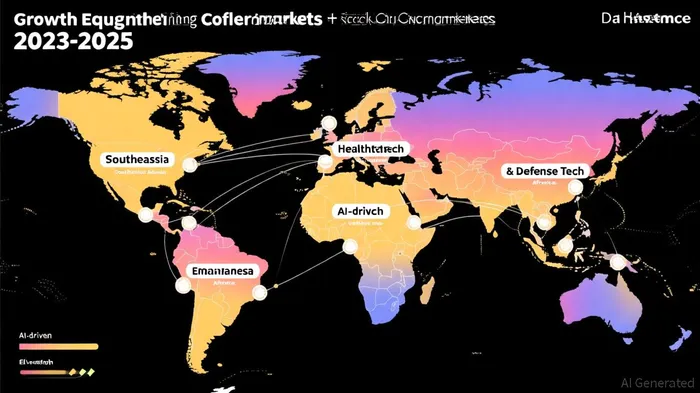







Comentarios
Aún no hay comentarios