
The Growing Systemic Risk in Shiba Inu's Ecosystem and K9 Finance's Strategic Exit Dilemma
The Shiba InuSHIB-- (SHIB) ecosystem, once a symbol of meme-token optimismOP--, now faces a confluence of systemic risks that threaten its long-term viability. Internal community divisions, technical vulnerabilities, and governance challenges have converged to create a precarious environment for investors and developers alike. Meanwhile, K9 Finance, a pivotal project within the Shiba Inu ecosystem, grapples with a strategic exit dilemma exacerbated by malicious actors and fragmented governance structures. These issues reflect broader vulnerabilities in decentralized finance (DeFi) platforms operating within high-volatility, low-trust ecosystems-a context where systemic risks are amplified by rapid innovation, regulatory uncertainty, and the fragility of decentralized governance.
Systemic Risks in Shiba Inu's Ecosystem: A Perfect Storm
The Shiba Inu ecosystem's systemic risks are rooted in two critical weaknesses: community fragmentation and technical vulnerabilities. Developer Kaal Dhairya has openly acknowledged that the primary obstacle to progress is not market conditions but the lack of unity within the community, which has stymied development and eroded trust according to internal reports. This internal discord is compounded by technical failures, such as the recent $4.1 million loss from a Shibarium bridge exploit. Attackers leveraged flash loans and compromised validator keys to drain funds, exposing critical flaws in the platform's security architecture.
Such incidents highlight a broader trend in DeFi: the interplay between smart contract vulnerabilities and governance inefficiencies. As noted in a 2025 study, over $3.1 billion in DeFi assets were lost to exploits in the first half of the year alone, with reentrancy attacks and gas limit issues accounting for a significant portion of these losses. For Shiba Inu, the bridge breach not only caused direct financial harm but also undermined confidence in its infrastructure, a critical asset in an ecosystem reliant on speculative momentum.
K9 Finance's Strategic Exit Dilemma: Governance in the Crosshairs
K9 Finance, a key player in the Shiba Inu ecosystem, faces a unique strategic challenge: navigating exits in the face of malicious actors and governance gridlock. The Shibarium bridge hack exemplifies this dilemma. Despite offering a 5 ETH bounty for the return of stolen assets, the Shiba Inu team had to escalate the reward to 50 ETH to incentivize restitution-a move that underscores the high costs of managing security breaches in decentralized systems.
This incident reflects a broader governance issue in DeFi: the difficulty of enforcing accountability in low-trust environments. A 2025 analysis of governance models in DeFi platforms found that 55% of crime events led to a 14% average decline in governance asset prices, while 68% triggered spikes in trading volumes, eroding $1.3 billion in DAO market capitalization. For K9 Finance, the challenge lies in balancing expansion ambitions-such as its proposed multi-chain strategy-with the need to maintain Shibarium's core user base. While the community supports diversification into chains like Polygon and SuiSUI--, concerns about diluting focus and loyalty persist. This tension between innovation and cohesion is emblematic of DeFi's struggle to scale without sacrificing trust.
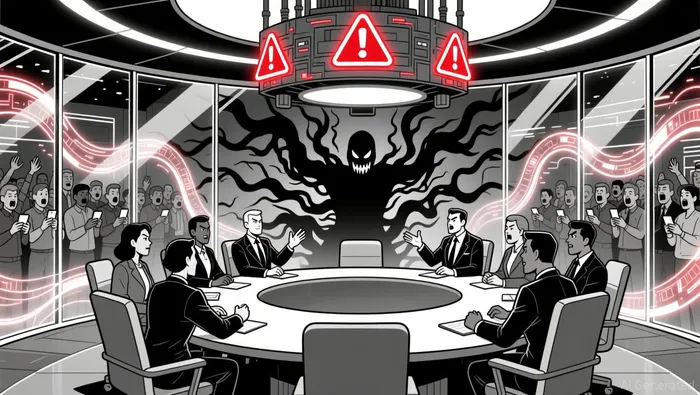
Broader DeFi Context: High-Volatility, Low-Trust Ecosystems
The challenges faced by Shiba Inu and K9 Finance are not isolated. DeFi platforms in high-volatility, low-trust ecosystems are inherently susceptible to systemic risks. A 2025 report by McKinsey identified agentic AI and application-specific semiconductors as transformative forces in technology, yet these advancements also introduce new vulnerabilities in DeFi's infrastructure, such as increased attack surfaces and liquidity risks. Meanwhile, the rise of "crosstagion"-the spillover of instability between DeFi and traditional finance (TradFi)-has further complicated risk management. For instance, stablecoin collapses and tokenized asset failures have demonstrated how DeFi's interconnectedness with TradFi can amplify crises according to recent research.
Governance strategies in such environments must prioritize robust security audits, real-time monitoring, and community-driven accountability. Platforms like AaveAAVE-- and Compound have adopted multi-layered approaches, including insurance funds and AI-driven predictive analytics, to mitigate risks. However, these solutions are not foolproof. A 2025 study found that 22% of failed smart contract interactions in high-volume DeFi apps were linked to gas limit issues, underscoring the technical complexities of maintaining stability.
Implications for Investors: Navigating the Risks
For investors, the Shiba Inu and K9 Finance saga serves as a cautionary tale. The ecosystem's reliance on speculative hype and fragmented governance makes it a high-risk proposition, particularly in a market where volatility is the norm. Data from 2025 indicates that DeFi platforms with strong governance frameworks-such as those employing utility-based evaluation models and decentralized decision-making-tend to outperform peers in sustaining user trust and liquidity. Conversely, projects lacking transparency or plagued by internal divisions, like Shiba Inu, face heightened exposure to liquidity crises and reputational damage.
Regulatory developments also loom large. As jurisdictions like the U.S. and EU tighten stablecoin and AML frameworks, DeFi platforms must adapt or risk exclusion from mainstream financial systems. This transition will likely favor projects with institutional-grade security and governance, leaving speculative tokens like SHIBSHIB-- vulnerable to obsolescence.
Conclusion: A Call for Caution and Innovation
The Shiba Inu ecosystem and K9 Finance's struggles illuminate the fragility of DeFi platforms in high-volatility, low-trust environments. While innovation and multi-chain strategies offer growth potential, they must be tempered by robust governance, security, and community alignment. For investors, the lesson is clear: prioritize projects with transparent, battle-tested infrastructure and adaptive governance models. As DeFi evolves, the ability to balance decentralization with accountability will determine which platforms survive-and which become cautionary tales.







Comentarios
Aún no hay comentarios