
The Growing Role of Data Centers in ESG Bond Markets
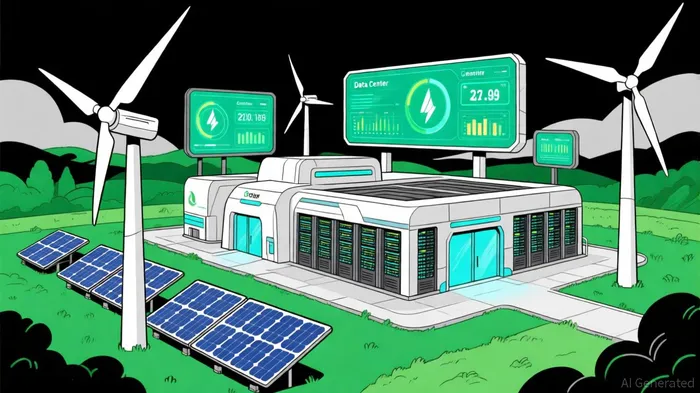
In the digital age, data centers have emerged as pivotal players in the ESG (Environmental, Social, and Governance) bond market, reshaping capital flows through innovative green infrastructure financing. As global demand for computing power surges—driven by AI, cloud services, and digital transformation—data centers are not only consuming 1% of the world's electricity but also pioneering sustainable finance mechanisms to address their environmental footprint [1]. This evolution is redefining how capital is allocated, with ESG bonds and sustainability-linked loans becoming central to funding energy-efficient and decarbonized infrastructure.
The Rise of ESG Bonds in Data Center Financing
The ESG bond market has seen exponential growth, with global sustainable debt issuance projected to reach $1 trillion in 2025 [2]. Data centers, historically energy-intensive, now account for a significant share of this growth. By 2023, data center-specific green bonds had already reached $8.7 billion, with oversubscription rates averaging 2.5x, reflecting strong investor appetite for projects that prioritize energy efficiency, water conservation, and renewable energy adoption [1]. For instance, EquinixEQIX--, a leading data center developer, issued €1.15 billion in green bonds in 2025 to fund renewable energy integration and decarbonization initiatives, aligning with its 100% renewable energy target by 2030 [3].
Sustainability-linked loans (SLLs) are also gaining traction, offering interest rate adjustments tied to environmental performance metrics. These instruments typically feature margin adjustments of 5–10 basis points, incentivizing data centers to reduce power usage effectiveness (PUE) and water usage [1]. Green asset-backed securities, another emerging structure, have achieved 20% higher subscription rates compared to conventional offerings, underscoring their appeal to ESG-focused investors [1].
Regulatory Shifts and Investor Priorities
Regulatory developments in 2025 are further accelerating the adoption of ESG-linked financing. In the U.S., state-level mandates like California's SB 253 and SB 261 require large companies to disclose greenhouse gas emissions, including scope 3 emissions in their supply chains [4]. These laws are setting de facto standards for corporate sustainability reporting, compelling data centers to enhance transparency and align with ESG benchmarks. Meanwhile, the European Union's Corporate Sustainability Reporting Directive (CSRD) extends reporting obligations to U.S. multinationals operating in the EU, emphasizing digital tagging of ESG data by 2026 [5].
Investor preferences are also shifting toward climate-aligned infrastructure. According to Moody's ESG Solutions, data centers with robust environmental performance metrics can secure financing terms with pricing advantages of 15–25 basis points [1]. This premium reflects the growing demand for assets that mitigate climate risks and contribute to global decarbonization goals. Tools from firms like MSCI are enabling investors to integrate ESG criteria into decision-making, further solidifying the link between sustainability and capital allocation [6].
Case Studies: Pioneering Green Infrastructure
Several data center operators have demonstrated the viability of ESG-linked financing. STACK Infrastructure, for example, secured $6 billion in green financing to develop hyperscale data centers powered entirely by renewable energy, including its 200MW NVA05 campus in Virginia [7]. Similarly, NTT DATA Global Data Centers reduced emissions by 25% compared to 2021 baselines through liquid immersion cooling and renewable energy procurement [8]. These projects highlight how green infrastructure financing can drive both environmental and financial returns.
In the Asia-Pacific region, green bonds are expected to reach $238 billion in 2025, with Europe implementing the European Green Bond Standard to enhance transparency [2]. The U.S. Department of Energy and programs like Singapore's Green Mark Scheme are also offering incentives for green certifications, further catalyzing investment in sustainable data centers [1].
The Future of Capital Flows in the Digital Age
As data centers continue to dominate global energy demand, their role in ESG bond markets will expand. With energy needs projected to triple due to AI and cloud computing, utilities are increasingly turning to ESG-labeled bonds to fund grid upgrades and renewable energy projects [9]. This trend is supported by institutional investors seeking long-term, climate-resilient assets. For example, Standard Chartered's 2025 Transition Plan, which embeds climate considerations into operations and generated $982 million in sustainable finance income in 2024, underscores the financial viability of green infrastructure [10].
Conclusion
The convergence of digital infrastructure and ESG finance is redefining capital flows in the 21st century. Data centers, once seen as energy burdens, are now at the forefront of sustainable innovation, leveraging green bonds, SLLs, and regulatory frameworks to align with global climate goals. For investors, this shift presents opportunities to support infrastructure that balances technological progress with environmental stewardship. As the market matures, the ability of data center operators to demonstrate ESG performance will remain a critical determinant of capital access and competitive advantage.





Comentarios
Aún no hay comentarios