
The Growing Risks of Self-Custody Wallets: Browser Extensions and Supply-Chain Vulnerabilities in 2025
In the rapidly evolving landscape of cryptocurrency, self-custody wallets remain a cornerstone of user autonomy. However, recent security incidents have exposed critical vulnerabilities in browser extensions and supply chains, raising urgent questions about the safety of digital assets. For investors, understanding these risks is no longer optional-it is a necessity for safeguarding capital in an increasingly hostile threat environment.
Browser Extensions: A Double-Edged Sword
Browser extensions, while convenient for managing crypto assets, have become a prime attack vector. In late December 2025, Trust Wallet confirmed a vulnerability in version 2.68 of its Chrome extension, leading to unauthorized withdrawals totaling over $6 million. On-chain sleuth ZachXBT identified suspicious JavaScript code (4482.js) that transmitted user data to an unverified domain, enabling attackers to drain funds immediately after users imported seed phrases. Trust Wallet swiftly advised users to disable the compromised version, but the incident underscored a broader issue: browser extensions often require access to sensitive information, making them attractive targets for malicious actors.
This is not an isolated case. MetaMask faced the "Demonic" vulnerability in 2022, where private keys were inadvertently exposed in browser memory. Similarly, Phantom suffered a $500,000 loss in early 2025 due to unencrypted private key storage. These examples highlight a recurring theme: even reputable wallets are susceptible to design flaws that exploit the inherent risks of browser-based interfaces.
Supply-Chain Attacks: A Silent Menace
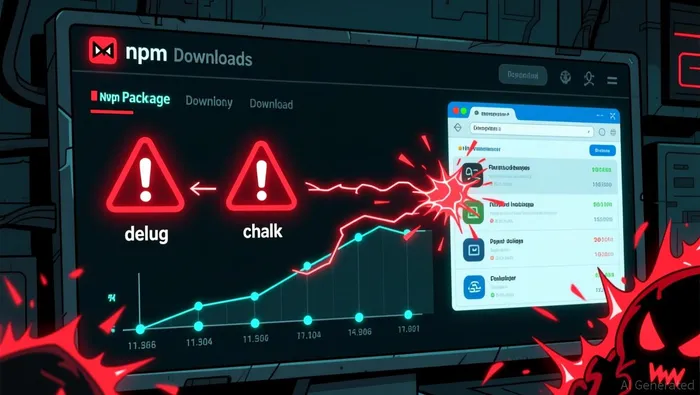
Beyond direct vulnerabilities, supply-chain attacks have emerged as a stealthier and more pervasive threat. In September 2025, a massive compromise of popular npm packages-including debug and chalk-exposed users to malware designed to intercept and manipulate cryptocurrency transactions. Attackers injected malicious code into these widely used libraries, which collectively have billions of weekly downloads. The payload operated exclusively in browser environments, using obfuscation and visually similar address replacement to redirect funds to attacker-controlled wallets.
This incident, as detailed by cybersecurity firm Sygnia, revealed the cascading risks of open-source dependencies. By compromising foundational libraries, attackers could infiltrate countless applications, including crypto wallets, without direct access to their codebases. The attack also demonstrated how supply-chain vulnerabilities transcend the crypto sector, threatening general web application security.
Implications for Investors and the Industry
For investors, these risks translate into tangible financial exposure. A single compromised extension or dependency can lead to catastrophic losses, eroding trust in decentralized finance (DeFi) and custodial models alike. According to a report by Forbes, the npm supply-chain attack in 2025 forced organizations to prioritize dependency audits and runtime monitoring, signaling a shift toward proactive security measures.
Moreover, the proliferation of fake extensions-such as the Ledger Live mimicry discovered in 2025-highlights the importance of user education. Phishing attacks remain the most common threat, with malicious extensions often distributed through third-party app stores. As stated by Bitget's security analysis, users must download extensions only from official sources to mitigate risks.
A Path Forward
The industry's response to these threats must be multi-layered. Wallet developers should adopt rigorous code audits, runtime monitoring, and dependency scanning tools to detect vulnerabilities early. For users, enabling hardware wallets, avoiding seed phrase input in browser extensions, and staying informed about security advisories are critical steps.
Investors, meanwhile, should evaluate projects based on their security track records and transparency. Protocols that prioritize open-source audits and community-driven security initiatives are likely to outperform those with opaque practices. As the crypto ecosystem matures, security will no longer be an afterthought-it will be a defining factor in asset protection and long-term value.







Comentarios
Aún no hay comentarios