
The Growing Risks of Crypto Investment Scams: Protecting Assets in a High-Volatility Landscape
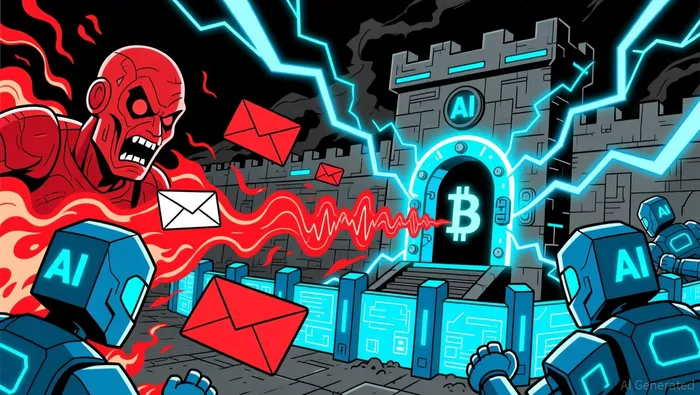
The AI Arms Race: Scammers vs. Defenders
Criminals are leveraging generative AI to create hyper-realistic deepfake videos, cloned voices, and personalized phishing messages that bypass traditional security measures, as the CryptoNews analysis notes. Romance scams, for instance, now use AI chatbots to build emotional connections before extracting funds, resulting in £20.5 million in UK losses, according to the Coinotag report. The speed and scalability of these attacks mean even seasoned investors are vulnerable.
Yet, the crypto industry is fighting back with AI-powered defenses. UK banks have already prevented £870 million in unauthorized crypto fraud using machine learning, a 20% improvement year-over-year, according to the Coinotag report. Blockchain analytics firms like TRM Labs and cybersecurity companies such as Sardine are deploying real-time monitoring tools to detect suspicious wallet activity, as the CryptoNews analysis reports. This "AI vs. AI" battle is reshaping the frontlines of fraud prevention, but individual investors must also adopt proactive strategies to safeguard their assets.
Strategic Risk Mitigation: A 2025 Investor Playbook
Diversification as a Shield
Diversifying across cryptocurrencies, sectors, and even traditional assets remains a cornerstone of risk management, as the Foundershield blog notes. For example, pairing high-risk speculative tokens with stablecoins or blue-chip assets like BitcoinBTC-- can buffer portfolios against sudden collapses. A 2025 study by Foundershield highlights that diversified portfolios weathered market downturns 30% better than concentrated ones, according to the Foundershield blog.Automated Risk Controls
Stop-loss and take-profit orders are no longer optional-they're essential. These tools automate exits when prices hit predefined thresholds, curbing emotional decision-making during volatile swings, as the WhiteBit blog notes. Position sizing, or limiting exposure per trade based on risk tolerance, further ensures that a single loss doesn't derail long-term goals, according to the WhiteBit blog.Security Reinforced
Hardware wallets and cold storage solutions are non-negotiable for long-term holdings, as the WhiteBit blog notes. Avoid leaving large sums on exchanges, which are prime targets for hackers. Enable two-factor authentication (2FA) and update software regularly to patch vulnerabilities.Due Diligence as a Filter
Before investing, scrutinize projects for credible teams, transparent roadmaps, and real-world use cases, as the WhiteBit blog notes. Tools like blockchain explorers and analytics platforms can verify wallet activity and project legitimacy. The Wolfsberg Group's 2025 guidance for digital asset entities underscores the importance of due diligence on partners and blockchains, according to a DWT blog.Regulatory Alignment
The UK's FCA is finalizing rules under its CP25/25 consultation, requiring crypto firms to implement robust governance, operational resilience, and consumer protection measures, according to the FCA consultation paper. Investors should prioritize platforms authorized under these new standards, as they're legally mandated to combat financial crime, according to a Skadden analysis.
The Human Element: Education and Adaptation
Technology alone isn't enough. Staying informed about regulatory updates, market trends, and scam tactics is critical, as the WhiteBit blog notes. For instance, the FCA's proposed application of the Consumer Duty regime to cryptoassets could reshape how platforms interact with users, according to the Skadden analysis. Investors must also adapt to evolving threats-such as AI-generated fake news or social engineering tactics-by cross-verifying information through trusted channels.
Conclusion: Vigilance as a Competitive Advantage
The 2025 crypto landscape demands a blend of technical rigor and human intuition. While AI-driven scams are sophisticated, so are the defenses being deployed. By diversifying portfolios, automating risk controls, and aligning with regulatory frameworks, investors can turn volatility into opportunity. The key is to treat risk mitigation not as a reactive measure but as a strategic advantage in an arms race where the stakes are nothing less than financial freedom.






Comentarios
Aún no hay comentarios