
The Growing Regulatory and Security Risks in the Cryptocurrency Ecosystem
The Rise of Stablecoins in Illicit Financing
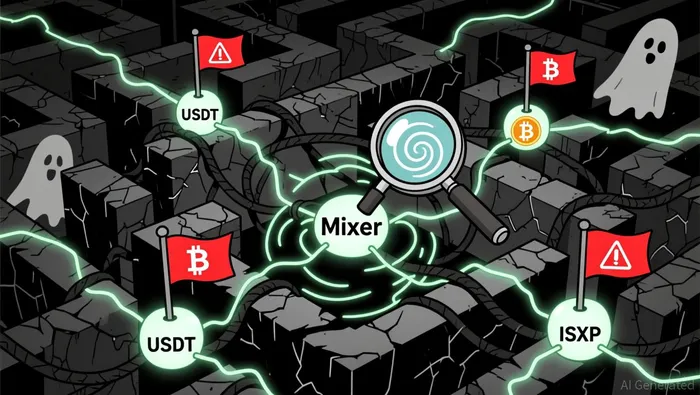
Terrorist groups have shifted their focus from volatile assets like BitcoinBTC-- to stablecoins such as TetherUSDT-- (USDT), which offer price stability and lower transaction fees. According to a report by the Counterterrorism Center at West Point, USDT usage among terror financing entities surged by 240% between 2022 and 2024, far outpacing Bitcoin's 78% growth. This shift is driven by the need for predictable value transfer, as stablecoins mitigate the risk of sudden price swings that could devalue illicit gains.
The Islamic State Khurasan Province (ISKP), an affiliate of ISIS, has become a case study in this trend. In 2024 alone, hundreds of transactions ranging from $100 to $15,000 were linked to ISKP, with stablecoins accounting for 63% of all illicit crypto activity globally. These funds are used to purchase weapons, motorbikes, and logistical support for operations in conflict zones.
Regulatory Responses and Compliance Challenges
Regulators are scrambling to close loopholes. The Financial Action Task Force (FATF) updated its guidelines in 2024 to explicitly address virtual assets and service providers (VASPs), emphasizing the need for anti-money laundering (AML) and counter-terrorist financing (CTF) measures. In Europe, the European Banking Authority (EBA) is pushing for a risk-based approach to AML/CFT, fostering cross-border cooperation to counter decentralized threats.
However, decentralized finance (DeFi) platforms remain a regulatory gray zone. Their lack of centralized control and reliance on smart contracts make traditional compliance measures ineffective. For instance, unhosted wallets allow terrorists to bypass KYC checks entirely. To address this, industry stakeholders are exploring decentralized identity (DID) solutions and AI-driven transaction monitoring tools.
Investor Implications: Navigating a High-Risk Landscape
For investors, the risks of non-compliance are twofold: legal exposure and reputational damage. Firms that fail to implement robust compliance frameworks risk penalties under the FATF's Travel Rule, which mandates the sharing of transaction data between VASPs. In 2025, Tether itself froze over 1,200 addresses linked to sanctions evasion and terrorist financing, signaling a tightening of industry self-regulation.
Investors must also weigh the long-term viability of projects that ignore compliance. DeFi protocols lacking smart contract audits or AML protocols are increasingly targeted by regulators, as seen in the U.S. Treasury's 2024 crackdown on unregulated crypto exchanges. Conversely, platforms that prioritize compliance-such as those integrating blockchain analytics tools-are gaining institutional traction.
The Path Forward: Compliance as a Competitive Advantage
The solution lies in balancing innovation with accountability. Investors should prioritize projects that adopt proactive compliance strategies, such as:
1. Smart Contract Audits: Regular third-party reviews to identify vulnerabilities and ensure alignment with AML/CTF standards according to industry experts.
2. AI-Powered Monitoring: Real-time transaction tracking to flag anomalies, such as sudden large transfers to high-risk jurisdictions.
3. Decentralized Identity (DID): Technologies that verify user identities without compromising privacy, reducing reliance on centralized KYC processes.
Global collaboration is equally critical. As the 2025 Chainalysis report notes, harmonizing regulatory standards across jurisdictions will be key to preventing jurisdictional arbitrage. Investors who support cross-border compliance initiatives-such as the Global Digital Finance (GDF) framework-will be better positioned to navigate this evolving landscape.
Conclusion
The cryptocurrency ecosystem stands at a crossroads. While its potential for financial innovation is undeniable, the risks of misuse-particularly in terrorist financing-demand a reevaluation of investment strategies. For investors, the message is clear: compliance is not just a legal obligation but a competitive edge. In a world where digital assets are increasingly weaponized, vigilance and adaptability will separate the resilient from the vulnerable.






Comentarios
Aún no hay comentarios