
Grocery-Anchored Real Estate: A High-Conviction Bet in a Post-Recession Retail Landscape
In the aftermath of economic downturns, investors often seek assets that weather volatility with resilience. Grocery-anchored real estate has emerged as a compelling candidate, offering a unique blend of stability, inelastic demand, and structural tailwinds. Blackstone's recent $440 million Texas acquisition and its $4 billion buyout of Retail Opportunity Investments Corp. (ROIC) underscore the sector's appeal, particularly in a post-recession environment where consumer spending patterns and real estate fundamentals are reshaping.
The Case for Grocery-Anchored Real Estate
Grocery-anchored properties-shopping centers anchored by supermarkets or big-box retailers-have long been a cornerstone of defensive real estate investing. Their resilience stems from three core fundamentals:
- Low Supply and High Occupancy: The supply of new grocery-anchored developments has lagged demand, driven by rising costs and regulatory hurdles. According to a report by Blackstone, its newly acquired ROIC portfolio-which includes 93 grocery-anchored properties in high-density West Coast markets-boasts an average occupancy rate of 95%. This is a stark contrast to the broader retail sector, where vacancies remain elevated.
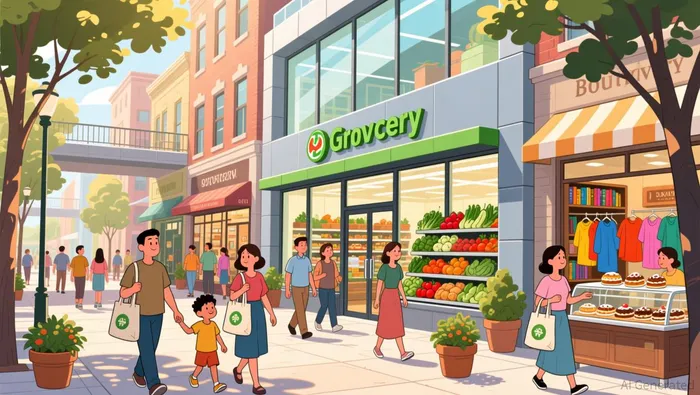 2. Essential Demand: Consumer spending on groceries is inelastic, meaning it remains stable even during downturns. As stated by Blackstone, the firm's focus on "necessity-based real estate assets" reflects confidence in the enduring role of grocery stores as community hubs. This is further reinforced by the shift toward "experiential retail," where consumers seek convenience and localized services, often found in grocery-anchored centers.
- Tenant Stability: Anchors like Albertsons, Safeway, and Walmart provide long-term leases and credit support. ROIC's portfolio, for instance, is backed by national and regional grocery chains with strong balance sheets, reducing the risk of cascading vacancies.
Blackstone's Strategic Moves: A Barometer for the Sector
Blackstone's recent transactions highlight its conviction in grocery-anchored real estate. The $4 billion ROIC buyout, finalized in February 2025, marked a significant step in consolidating its position in urban grocery-anchored markets. By acquiring ROIC's 10.5 million-square-foot portfolio in cities like Los Angeles and Seattle, Blackstone capitalized on the structural advantages of these assets, including their proximity to transit hubs and demographic growth trends according to Nasdaq.
Post-Recession Dynamics: Why Now?
The current economic climate amplifies the case for grocery-anchored real estate. Post-recession, consumers prioritize essential spending, and landlords benefit from a "flight to quality" as tenants seek reliable locations. Blackstone's Core+ strategy, which targets stabilized, income-generating assets, is particularly well-suited to this environment.
Moreover, the industrial real estate boom-driven by e-commerce-has created a halo effect for adjacent retail and logistics assets. Blackstone's $718 million Texas warehouse portfolio acquisition (completed in April 2025), for example, complements its grocery-anchored holdings by capitalizing on the same demand drivers: low vacancy rates and limited new construction according to Seeking Alpha. This synergy between sectors allows for a diversified yet thematically aligned portfolio.
Risks and Considerations
While the fundamentals are robust, investors must remain cautious. Rising interest rates could pressure cap rates, and shifts in consumer behavior-such as the growth of online grocery delivery-may reduce foot traffic. However, Blackstone's track record in managing such risks, coupled with its focus on urban markets with demographic tailwinds, suggests a measured approach.
Conclusion: A High-Conviction Allocation
Grocery-anchored real estate is not a speculative play-it's a strategic allocation for investors seeking resilience. Blackstone's dual focus on ROIC's West Coast portfolio and Texas retail/logistics assets illustrates a forward-looking strategy that balances defensive positioning with growth potential. As the post-recession landscape evolves, these assets are likely to remain a cornerstone of institutional portfolios, offering a rare combination of stability, income, and inflation hedging.







Comentarios
Aún no hay comentarios