
Is Griffon (GFF) at a Dangerous Inflection Point Amidst Earnings and Revenue Disruptions?
Segment Divergence: A Tale of Two Businesses
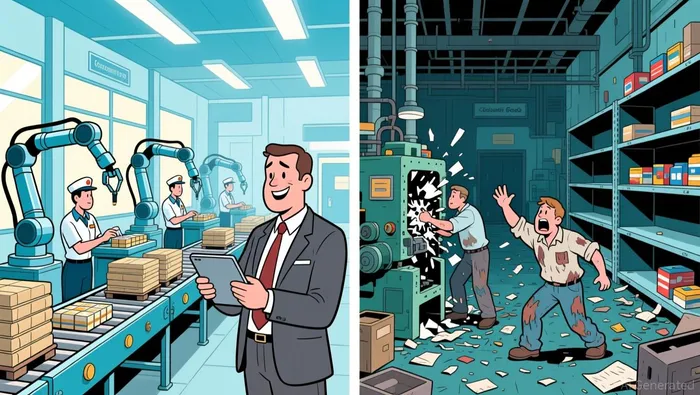 Griffon's struggles in the CPP segment, which includes the Hunter Fan brand, highlight the risks of overexposure to cyclical demand and trade policy shifts. Weak consumer spending and increased tariffs have disrupted historical ordering patterns, leading to underperformance. However, the Home and Building Products (HBP) segment has emerged as a stabilizing force. For the first nine months of 2025, HBP achieved a robust EBITDA margin of 31.4%, demonstrating its ability to generate cash flow even in a challenging macroeconomic climate. This divergence suggests that Griffon's long-term health may hinge on its capacity to rebalance its portfolio toward higher-margin, less cyclical segments.
Valuation Metrics: Expensive or Mispriced?
Griffon's valuation metrics paint a mixed picture. The stock trades at a trailing P/E ratio of 69.16 and a P/B ratio of 47.44 as of November 2025 according to Macrotrends, figures that appear elevated at first glance. However, these multiples must be contextualized against the company's operational realities. The HBP segment's strong performance and Griffon's cost-reduction initiatives in CPP have allowed the firm to reaffirm its full-year adjusted EBITDA guidance of $575 million to $600 million. Moreover, the company's $40 million in share repurchases during Q3 2025 reduced net debt to $1.3 billion, signaling disciplined capital allocation despite its heavy leverage as reported by MarketBeat.
Debt Concerns and Analyst Optimism
Griffon's debt burden remains a significant risk. Its debt-to-equity ratio ranges from 19.09 to 22.71 across different reports, with net debt/EBITDA standing at 2.4x as of September 2025 according to Forbes. Such leverage levels amplify vulnerability to interest rate hikes or further revenue disruptions. Yet, analysts remain cautiously optimistic. A consensus price target of $101.29-ranging from $90 to $115-reflects confidence in Griffon's ability to navigate these challenges. Earnings per share (EPS) estimates between $5.83 and $6.05 further suggest that the market anticipates a rebound in profitability.
Contrarian Case: Balancing Risks and Rewards
For contrarian investors, GriffonGFF-- presents a paradox: a stock with expensive-looking multiples but a resilient core business and active management. The HBP segment's performance and the company's buyback program indicate that Griffon is not a static casualty of sector headwinds but an active participant in its own reinvention. However, the path forward is fraught. Persistent CPP underperformance and high debt levels could derail progress if macroeconomic conditions worsen. Investors must weigh the potential for margin expansion against the risk of further earnings volatility.
Conclusion
Griffon stands at an inflection point defined by divergent operational outcomes and a valuation that reflects both optimism and caution. While the CPP segment's struggles and elevated debt levels pose clear risks, the HBP segment's strength and management's capital discipline offer a counterbalance. For those with a long-term horizon, the current environment may represent an opportunity to invest in a company poised to recalibrate its business model. Yet, this is not a bet for the faint of heart-Griffon's success will depend on its ability to execute its strategic priorities amid a backdrop of sector-specific and macroeconomic uncertainty.







Comentarios
Aún no hay comentarios