
Gridlock to Goldmine: How to Profit from the Pacific Northwest's Renewable Energy Bottleneck
The Pacific Northwest's renewable energy ambitions are hitting a wall—literally. Outdated grid infrastructure managed by the Bonneville Power Administration (BPA) has created a catastrophic bottleneck, approving just 0.2% of renewable energy projects since 2015. With over 200,000 MW of solar and wind projects stuck in regulatory purgatory, the region faces rising electricity costs, looming blackouts, and a climate progress gap. But for investors, this crisis is a call to action. Here's how to capitalize on the chaos.
The Grid's Broken Promise: Why the Pacific Northwest is Stuck
The BPA, a federal agency managing 70% of the region's grid, has become a poster child for regulatory stagnation. Its approval rate for renewable projects—one out of 469—is the lowest in the U.S. Key issues:
- Ancient infrastructure: Parts of the grid are over 100 years old. Since 1990, BPA built just 500 miles of new lines—a fraction of Texas's output.
- Cost-shifting to developers: Projects like David Brown's solar farmFARM-- faced a $212M substation cost hike (from $23M) to connect to the grid, pricing out smaller players.
- Policy paralysis: State efforts to create grid authorities failed in 2024, leaving BPA's risk-averse leadership unchanged.
Investment Play #1: Grid Modernization Tech
The solution starts with rebuilding the grid. Investors should target firms tackling transmission bottlenecks directly:
- Smart Grid Solutions:
- Gridco Systems (GRID): A leader in distributed grid management, its software optimizes grid capacity without costly physical upgrades.
Dominion Energy (D): Expands high-voltage lines in regions with BPA-like constraints.
Public-Private Partnerships:
Quinbrook Infrastructure Partners: Specializes in utility-scale projects, including solar farms paired with new transmission lines.
Policy Advocacy Funds:
- Threshold Asset Management's Climate Infrastructure Fund: Targets regulatory reforms to shift grid costs from developers to ratepayers (as Texas does).

Investment Play #2: Texas-Style Transmission Models
Texas's grid operator, ERCOT, approved projects 19 months faster than BPA's glacial pace. Investors should back firms replicating its cost-sharing and fast-tracking:
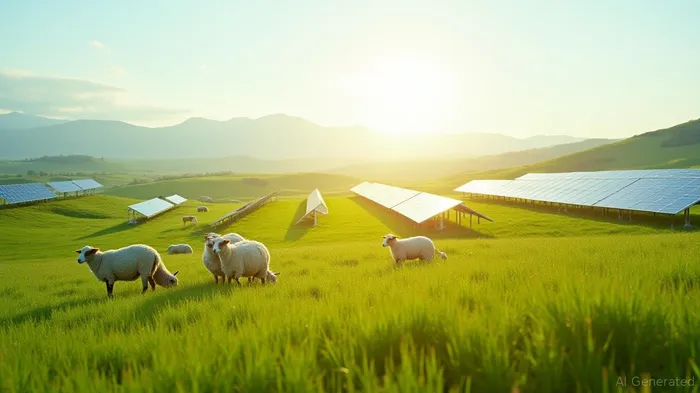
- Lightsource bp (LSBP): A global agrivoltaics leader with Texas-based solar grazing farms. Its model—solar panels paired with livestock grazing—reduces land conflict while boosting biodiversity.
- NextEra Energy (NEE): The largest U.S. renewable operator, it's expanding in states with streamlined permitting.
Investment Play #3: Agrivoltaics—Land-Use Innovation
When grid access is scarce, rethinking land use is key. Agrivoltaics (solar farms co-located with agriculture) offers a dual-income solution:
- Konbit (COLB): A Colorado firm pioneering geodesic dome microfarms on Washington's Colville Reservation. These solar-powered structures grow food and generate 20 kW of electricity.
- WSU's Institute for Northwest Energy Futures: Backed by $2.4M in grants, it tests dynamic agrivoltaics in orchards, reducing apple sunburn while producing 610 kW of solar power.
The Bottom Line: Bet on Grid Fixers, Not Grid Stuck
The Pacific Northwest's gridlogjam isn't a dead end—it's a goldmine for investors willing to fund the rebuild. Prioritize:
1. Firms modernizing transmission (GRID, D).
2. Policy funds pushing Texas-style reforms (Threshold's Climate Infrastructure Fund).
3. Land-use innovators like agrivoltaics (Konbit, Lightsource).
Avoid solar developers stuck in BPA's approval purgatory. Instead, back those bypassing the grid entirely—like microgrid developers or off-grid energy storage (Tesla's Powerwall, TSLA).
The BPA's failures are your gain. The next decade's energy winners will be those who turn gridlock into growth.







Comentarios
Aún no hay comentarios