
Gridlines to Green Growth: Navigating the UK-EU Energy Reintegration
The UK's potential re-entry into the EU Internal Energy Market (IEM) marks a pivotal shift in post-Brexit energy relations, reshaping opportunities for renewable infrastructure investors while threatening legacy players reliant on cross-border arbitrage. As the 2024 “common understanding” and 2025 Joint Statement advance, the energy sector faces a dual dynamic: a surge in cross-border renewable trade and a reckoning for traders profiting from post-Brexit inefficiencies.
The Green Grid: Renewable Infrastructure's Golden Age
The UK-EU agreement's most transformative element is its focus on North Sea renewable energy collaboration. With offshore wind farms slated to provide 300 GW of capacity by 2050, the integration of UK and EU grids could unlock a clean energy superhighway. 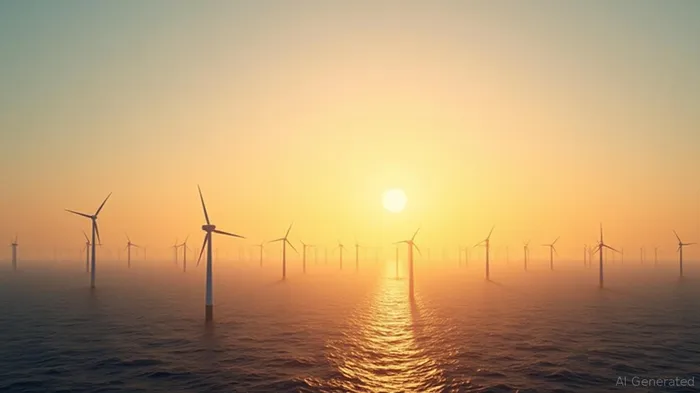 .
.
The IEM reintegration will enable the UK to export surplus renewable power to EU markets, reducing reliance on fossilFOSL-- fuels and lowering consumer costs. For investors, firms accelerating grid interconnections—such as offshore wind developers and interconnector builders—are poised for outsized gains. Key beneficiaries include:
- National Grid (NGG): Operator of critical interconnectors like the 1.4 GW North Sea Link to Norway.
- Ørsted (ORSTED): Global leader in offshore wind, with projects in the UK and EU.
- Cove Energy: Specializing in subsea power cables for interconnector networks.
A reveals a steady rise as interconnector projects gained momentum, with further upside as regulatory alignment progresses.
The Cost Equation: Winners and Losers in a Unified Market
The shift to the EU's “implicit allocation” system for electricity trading—replacing the UK's cumbersome “explicit allocation”—is projected to save consumers £170 million annually. This efficiency gain, however, threatens the profit margins of specialized traders who capitalized on post-Brexit market fragmentation. Firms like Vitol or Trafigura, which arbitrage price differentials between UK and EU markets, face diminished opportunities as cross-border flows smooth out.
Meanwhile, the linkage of the UK and EU Emissions Trading Systems (ETS) introduces a second layer of disruption. Carbon prices are expected to converge at EU levels, raising compliance costs for fossil fuel-dependent industries but creating demand for carbon capture and storage (CCS) technologies. Investors should monitor to gauge momentum in this critical decarbonization lever.
Risks on the Horizon: Technical and Political Hurdles
While the economic case for reintegration is strong, execution risks linger. Technical challenges—such as harmonizing market resolution intervals (GB uses 30-minute vs. EU's 15-minute blocks)—require complex IT overhauls. Delays could push full implementation to 2027, extending uncertainty for traders and investors.
Politically, the EU's demand for “dynamic alignment” with its rules poses a constitutional dilemma for the UK. Disputes over the European Court of Justice's role in resolving energy market conflicts could reignite Brexit-era tensions. For investors, this means favoring firms with diversified exposure to multiple markets—such as NextEra Energy (NEE)—over those overly reliant on UK-EU arbitrage.
Investment Takeaways: Position for the Grid of the Future
- Embrace Renewable Infrastructure: Allocate to companies building cross-border interconnectors and offshore wind farms. The EU's €150 billion Strategic Energy Investment (SAFE) fund will supercharge projects with strong regulatory alignment.
- Avoid Legacy Arbitrageurs: Traders profiting from market fragmentation will see margins erode as efficiency improves.
- Monitor Regulatory Progress: Track the UK's compliance with EU's “at least as ambitious” decarbonization criteria, as delays could disrupt timelines and investor confidence.
The UK-EU energy reintegration is a strategic pivot toward a greener, interconnected grid. Investors who focus on infrastructure resilience and climate-aligned technologies will capture the upside, while those clinging to post-Brexit inefficiencies face a bumpy ride ahead.







Comentarios
Aún no hay comentarios