
Greenland's Untapped Hydropower and Its Potential to Revolutionize Bitcoin Mining Economics
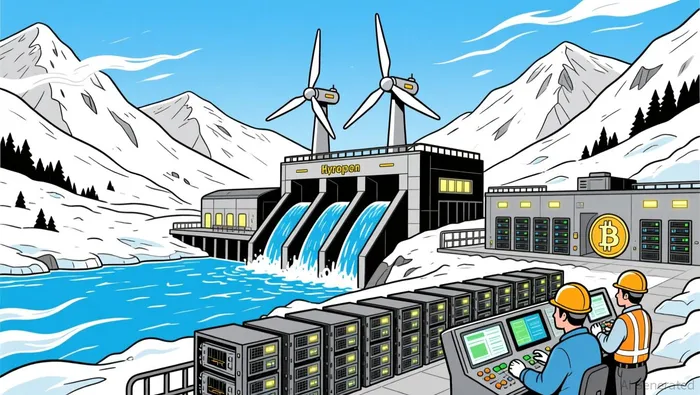
Greenland's gigawatt-scale hydropower tender represents a pivotal opportunity to reshape the economics of BitcoinBTC-- mining, leveraging the island's abundant renewable energy and strategic geographic advantages. With two major hydropower projects-Tasersiaq and Tarsartuup Tasersua-set to generate over 9,500 gigawatt-hours (GWh) annually, Greenland is positioning itself as a potential hub for industrial-scale mining operations. This analysis explores how the tender process, combined with the island's natural and infrastructural attributes, could catalyze a paradigm shift in the energy-intensive cryptocurrency sector.
The Hydropower Catalyst: A Gigawatt-Scale Opportunity
Greenland's government has initiated a competitive tender for its largest hydropower sites, with a projected combined capacity of 750–800 megawatts (MW) and an annual output of 9,500–10,000 GWh. These projects, located on the southwest coast, are expected to attract $3–4 billion in investment for plant construction, transmission lines, and commercial offtake according to official projections. The tender timeline, with pre-qualification in late 2023 and bids in mid-2024, underscores Greenland's commitment to long-term energy development. A 40-year exclusive license for the winning bidder ensures stability for capital-intensive ventures like Bitcoin mining, which require sustained low-cost energy to remain competitive as outlined in licensing terms.
The energy output from these projects could theoretically support a hashrate ceiling of 44.8–65.7 exahashes per second (EH/s) at 17.5 joules per terahash (J/TH) efficiency, representing 4–6% of the global Bitcoin network's hashrate. This potential is further amplified by Greenland's cold climate, which reduces cooling costs for mining hardware-a critical operational expense in warmer regions.
Comparative Advantages: Energy Costs and Environmental Considerations
Bitcoin mining's energy consumption is a defining factor in its economics, with electricity costs accounting for 60–80% of operational expenses. In 2025, U.S. operations alone consumed $130,000 worth of electricity per mined Bitcoin, while regions like China and Kazakhstan offer lower costs at the expense of higher carbon footprints due to fossil fuel reliance. Greenland's hydropower, in contrast, provides a renewable, low-cost alternative. At 17.5 J/TH efficiency, the energy required to mine 1 Bitcoin would cost approximately $18,000, assuming a flat rate of $0.03 per kilowatt-hour (kWh). This represents a 86% reduction compared to U.S. costs, making Greenland a compelling location for energy-efficient mining operations.
Moreover, Greenland's energy mix aligns with global trends toward sustainability. The Bitcoin network's energy mix is already 52.4% non-fossil fuel, with hydropower contributing 42.6% according to industry analysis. By leveraging its renewable resources, Greenland could attract eco-conscious investors and align with regulatory frameworks prioritizing green energy.
Challenges and Strategic Considerations
Despite its potential, Greenland's hydropower tender faces hurdles. Current installed capacity is fragmented, limiting immediate large-scale mining to colocating flexible loads at existing plants. Transmission infrastructure must also be expanded to connect remote hydropower sites to mining hubs, requiring significant upfront investment. Additionally, competition for renewable energy from sectors like green hydrogen production could constrain energy allocation for mining.
Geopolitical dynamics further complicate the landscape. While U.S. officials have speculated about leveraging Greenland's energy for a strategic Bitcoin reserve, Greenland's sovereignty and environmental regulations will dictate how energy is allocated. The government's emphasis on sustainability and long-term resource management suggests a cautious approach to industrial energy use.
Investment Implications and the Path Forward
For investors, Greenland's hydropower tender presents a high-conviction opportunity with long-term upside. The 40-year license structure offers stability, while the island's renewable energy and cooling advantages reduce operational costs. However, success hinges on overcoming infrastructure gaps and securing partnerships with mining firms capable of deploying energy-efficient hardware.
The tender's outcome could also influence global Bitcoin mining dynamics. If Greenland's energy is allocated to mining, it could displace operations in higher-cost regions, accelerating the industry's shift toward renewable energy. Conversely, if energy is prioritized for green hydrogen or ammonia production, mining's role may remain limited to niche applications.
Conclusion
Greenland's gigawatt-scale hydropower tender is a catalyst with the potential to redefine Bitcoin mining economics. By combining abundant renewable energy, natural cooling benefits, and a stable regulatory framework, the island offers a unique value proposition for industrial-scale mining. While challenges remain, the strategic alignment of energy, climate, and infrastructure positions Greenland as a key player in the next phase of the cryptocurrency industry's evolution.







Comentarios
Aún no hay comentarios