
Greenland's Strategic Digital Infrastructure Needs: A Geopolitical Tech Investment Opportunity in the Arctic
The Arctic is no longer a frozen frontier-it's a battleground for technological dominance. As climate change reshapes the region, nations are racing to secure their strategic interests through digital infrastructure. Greenland, a self-governing territory within Denmark, sits at the crossroads of this high-stakes competition. Its digital needs are not just a local concern but a linchpin for Arctic stability, economic growth, and geopolitical leverage.
Greenland's Digital Foundations: Progress and Gaps
Greenland has made strides in modernizing its digital infrastructure, most notably through the Pitu data exchange platform developed by Cybernetica. By 2023, Pitu connected 26 government information systems and supported 88 services, streamlining e-government operations and reducing bureaucratic redundancies. However, the island's internet penetration rate of 69.5% and 124% mobile cellular coverage (as of early 2025) still lag behind global averages, particularly given its remote, sparsely populated geography. These gaps underscore a critical need for investment in high-speed connectivity, cybersecurity, and satellite communication systems, and they echo concerns raised in the DOD's 2024 Arctic Strategy, which calls for better monitoring and response capabilities above 65°N latitude.
The Geopolitical Chessboard: Why Greenland Matters
Greenland's strategic value is undeniable. Its Pituffik Space Base plays a vital role in U.S. missile early warning systems and space surveillance, while its Arctic location positions it as a potential hub for emerging shipping routes, as noted in a Belfer Center explainer. The U.S. Department of Defense's 2024 Arctic Strategy explicitly calls for enhanced communication networks and surveillance capabilities above 65°N latitude, emphasizing collaboration with allies like Finland and Sweden. Meanwhile, Russia and China are deepening their Arctic ambitions. Russia's 2025 naval exercises and China's joint ventures in Arctic logistics-such as the "Arctic Express No. 1" route-highlight a growing Sino-Russian alignment in the region, according to a Diplomat analysis.
Canada, too, is doubling down on Arctic investments, including a $6 billion Over-the-Horizon Radar system with Australia and $253 million for northern development, as reported by GTA Weekly. These moves signal a broader trend: Arctic nations are prioritizing digital infrastructure as a cornerstone of sovereignty and economic competitiveness.
Strategic Investment Opportunities in Greenland
For investors, Greenland's digital infrastructure represents a unique convergence of geopolitical necessity and technological innovation. Key areas to consider include:
- Satellite and Underwater Connectivity: With Arctic shipping routes opening, Greenland needs robust satellite networks and undersea cables to support real-time data exchange and maritime safety. The U.S. and NATO's focus on space-based missile-warning systems, highlighted in the DOD's 2024 Arctic Strategy, suggests a growing market for Arctic-specific tech.
- Cybersecurity and Resilience: As a potential target for cyberattacks given its strategic role, Greenland requires advanced threat detection and response systems. Cybernetica's Pitu platform already sets a precedent for secure data governance.
- Green Energy-Driven Data Centers: Greenland's abundant hydroelectric resources could power energy-efficient data centers, attracting cloud providers seeking sustainable infrastructure.
The Risks and Rewards of Arctic Tech Investing
While the potential is vast, investors must navigate challenges. Greenland's harsh climate and sparse population increase infrastructure costs, and geopolitical tensions could disrupt projects. However, the Arctic Economic Council's sustainability matrix and related funding frameworks, discussed in reporting on Arctic investments, offer a structure for blending public and private funding to mitigate risks.
The U.S. and NATO's emphasis on Arctic domain awareness, coupled with China and Russia's push for digital logistics integration, creates a dual imperative: secure existing assets while capitalizing on new opportunities. For investors aligned with this vision, Greenland's digital infrastructure is not just a bet on technology-it's a stake in the future of the Arctic. 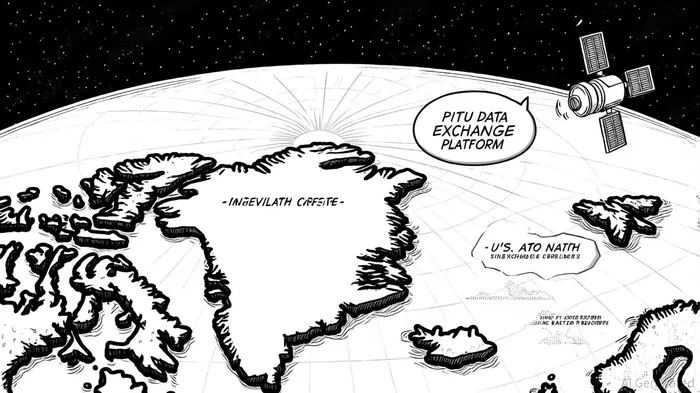







Comentarios
Aún no hay comentarios