
Greenland's Arctic Potential: Navigating Geopolitical Risks and Investment Viability in a U.S.-Led Arctic Strategy
The Arctic is no longer a frozen frontier; it is a geopolitical battleground where resource scarcity, climate change, and strategic positioning collide. Greenland, a Danish autonomous territory with 80% of its landmass covered in ice, has emerged as a linchpin in this new era. Its vast reserves of rare earth elements (REEs), oil, and gas, coupled with its strategic location, have drawn intense U.S. interest. However, the path to unlocking Greenland's potential is fraught with geopolitical tensions, logistical hurdles, and environmental constraints. This analysis evaluates the investment viability of Greenland's resources amid U.S. Arctic ambitions, balancing opportunity with risk.
The U.S. Arctic Strategy and Greenland's Strategic Role
The Biden administration's 2022 National Strategy for the Arctic Region, updated in 2024, prioritizes four pillars: security, climate action, sustainable development, and international governance. Central to this strategy is the Department of Defense's (DoD) 2024 Arctic Strategy, which emphasizes enhancing military readiness and infrastructure in the Arctic to counter Russian and Chinese influence. Greenland's geographic proximity to North America and its role in Arctic surveillance-via the Thule Air Base-make it a critical asset for U.S. security interests.
The Trump administration, however, has taken a more aggressive stance, with former President Donald Trump repeatedly advocating for the U.S. to acquire Greenland. This ambition, framed as a "national security imperative", reflects the island's strategic value in controlling Arctic shipping routes and securing access to critical minerals. The U.S. Export-Import Bank's proposed $120 million loan for Greenland's Tanbreez mine and potential equity stakes in projects like Kvanefjeld underscore the administration's focus on reducing reliance on China, which dominates 90% of global REE processing.
Greenland's Resource Wealth: A Double-Edged Sword
Greenland holds approximately 18% of global reserves for neodymium, praseodymium, dysprosium, and terbium- key components for electric vehicles, wind turbines, and defense systems. Its Kvanefjeld and Tanbreez deposits are among the largest in the world, yet no commercial mining has occurred due to a combination of factors:- Logistical Challenges: Greenland's harsh climate, limited infrastructure, and small population (57,000 as of 2025) make large-scale extraction economically unfeasible in the short term.- Environmental and Regulatory Barriers: The Greenlandic government has banned uranium and petroleum extraction, and environmental protections complicate mining operations.- Political Sensitivity: Greenland's 2024 foreign policy document emphasizes sovereignty and international engagement, asserting that "nothing about us without us". This aligns with broader Western values but complicates U.S. unilateral ambitions.
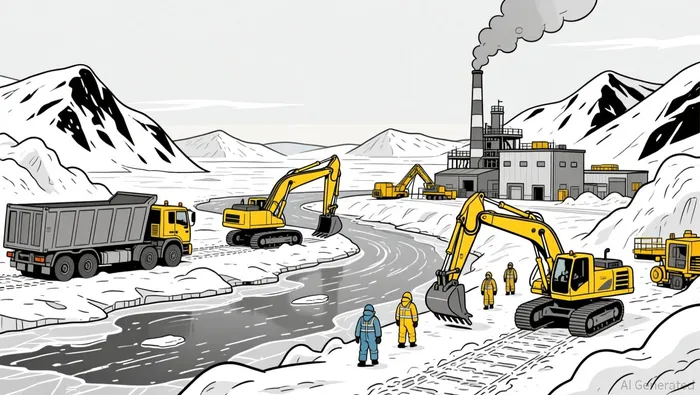
Despite these challenges, the Trump administration's push for direct equity stakes in Greenlandic projects-such as Critical Metals Corp-signals a long-term bet on the island's resource potential. Meanwhile, China's 12.5% stake in Kvanefjeld highlights the global competition for Arctic resources.
Geopolitical Risks: NATO Tensions and Strategic Divergence
The U.S. pursuit of Greenland has strained NATO cohesion. European allies, including Denmark, France, and Germany, have issued a joint rebuke, stating that Greenland's future belongs to its people. Danish Prime Minister Mette Frederiksen warned that U.S. military action against Greenland could effectively end NATO. This tension reflects a broader divergence between U.S. unilateralism and Western multilateralism in the Arctic.
Greenland's 2024 strategy document acknowledges the need for Western alliances but also hints at a contingency plan: without significant investment, Greenland may seek partnerships with other global powers, including China. This dynamic is exacerbated by the Arctic Council's suspension following Russia's invasion of Ukraine, which has fragmented Arctic governance and intensified great-power rivalry.
Long-Term Investment Viability: Balancing Opportunity and Risk
For investors, Greenland represents a high-risk, high-reward proposition. The island's REE deposits could disrupt China's dominance in the sector, but success hinges on overcoming logistical and political barriers. Key considerations include:1. Infrastructure Development: The U.S. and Greenland must collaborate on port, transportation, and energy infrastructure to make mining viable. Public-private partnerships, such as the proposed $120 million loan for Tanbreez, are critical.2. Geopolitical Stability: U.S. investments must align with Greenland's sovereignty and Denmark's diplomatic stance. A 2025 poll found 85% of Greenlanders oppose U.S. acquisition, underscoring the need for inclusive partnerships.3. Environmental and Regulatory Compliance: Mining projects must navigate strict environmental regulations and Indigenous community concerns. Greenland's 2024 strategy emphasizes sustainable development, which could attract ESG-focused investors.
The European Union's Critical Raw Materials Act, aimed at reducing import dependencies, further underscores the global urgency to diversify supply chains. Greenland's role in this context is pivotal, but its success will depend on balancing U.S. ambitions with Greenlandic autonomy and environmental stewardship.
Conclusion: A Strategic Crossroads
Greenland's Arctic potential is undeniable, but its realization requires navigating a complex web of geopolitical, economic, and environmental factors. The U.S. has positioned itself as a key player in this arena, yet its unilateral approach risks alienating allies and complicating resource access. For investors, the path forward lies in long-term partnerships that respect Greenland's sovereignty while addressing infrastructure and regulatory challenges. As the Arctic warms and competition intensifies, Greenland's fate will hinge on its ability to balance strategic interests with sustainable development-a test of global cooperation in an increasingly fragmented world.







Comentarios
Aún no hay comentarios