
Green Rain Energy Holdings: Capitalizing on California's $50 Billion Clean Tech Boom with First-Mover Advantage and Scalable ROI
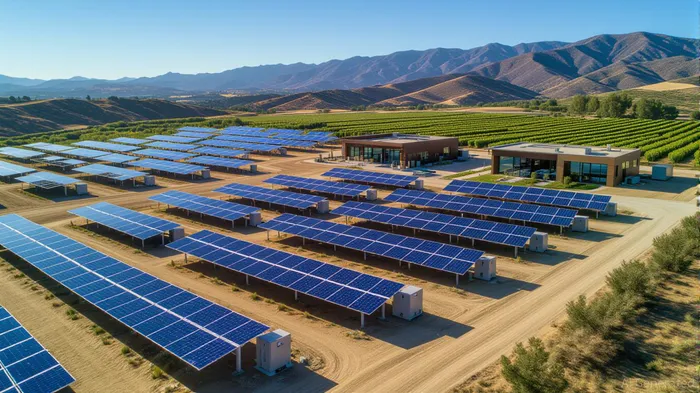
California's clean energy transition is accelerating at an unprecedented pace, driven by state mandates for 100% clean electricity by 2045 and a $50+ billion investment pipeline by 2030[1]. Amid this surge, Green Rain Energy Holdings (OTC: GREH) has emerged as a strategic contender, leveraging a first-mover advantage and scalable infrastructure to position itself at the forefront of the Golden State's renewable energy renaissance.
First-Mover Advantage: Early Projects and Strategic Partnerships
Green Rain Energy's early entry into California's clean tech sector has allowed it to secure prime locations and partnerships critical to long-term success. The company is currently in late-stage negotiations for a 4.2-acre solar energy installation in San Diego County, a project that integrates utility-scale solar generation, battery storage, and solar carports with a resort-style eco-retreat and wellness center[2]. This initiative not only aligns with California's aggressive renewable energy targets but also taps into the state's growing demand for community-driven sustainability projects.
The company's CEO, Alfredo Papadakis, has emphasized that Green Rain's decade-long focus on building relationships and securing sites has positioned it to fast-track projects as investor capital surges into the sector[3]. For instance, the California Energy Commission's $55 million Fast Charge California Project—covering 100% of EV fast charger installation costs—has been swiftly leveraged by Green Rain to expand its EV infrastructure footprint[4]. This agility underscores the company's ability to capitalize on state incentives before competitors can scale similarly.
Long-Term ROI: Aligning with Policy and Market Trends
Green Rain's strategic alignment with California's policy framework and market dynamics positions it to deliver robust returns. The state's looming refinery closures—projected to push gasoline prices above $8 per gallon by 2026[5]—are accelerating demand for EV infrastructure and clean energy solutions. Green Rain's vertically integrated business model, which includes asset ownership, recurring revenue streams from EV charging, and community solar projects, is designed to capture these tailwinds[6].
The company's pipeline further strengthens its ROI potential. By 2025–2026, Green Rain plans to announce its first wave of post-tax-credit projects, with additional sites under evaluation for development[7]. These projects, supported by increased investor allocations, focus on high-traffic locations like hospitality and retail hubs for EV charging, ensuring consistent utilization and revenue. For example, the San Diego solar farm project combines energy generation with social impact elements such as low-income utility cost assistance, enhancing its appeal to both investors and regulators[8].
Strategic Positioning in a $50 Billion Market
California's clean energy market is projected to require over 70 gigawatts of new capacity and a tenfold increase in battery storage by 2035[9]. Green Rain's focus on utility-scale solar, distributed generation, and grid-support technologies positions it to meet these demands while diversifying revenue streams. The company's ability to integrate advanced energy storage with solar projects also enhances grid resilience, a critical factor as climate-driven outages become more frequent[10].
Moreover, Green Rain's community-driven financing models—such as equity-based participation in EV charging infrastructure—align with the U.S. Justice40 Initiative, which prioritizes environmental justice. This approach not only secures public and regulatory support but also opens access to federal grants and tax incentives[11].
Conclusion: A Compelling Case for Long-Term Investors
Green Rain Energy Holdings' strategic positioning in California's clean tech sector is underpinned by a first-mover advantage, policy alignment, and a diversified project pipeline. As the state's $50 billion clean energy market unfolds, the company's focus on scalable infrastructure, recurring revenue, and social impact positions it to deliver both environmental and financial returns. For investors seeking exposure to the renewable energy transition, GREH represents a compelling opportunity to capitalize on a structural shift in one of the world's most ambitious clean energy economies.







Comentarios
Aún no hay comentarios