
Green Plains' Strategic Plant Sale: A Step Toward Enhanced Profitability and Shareholder Value
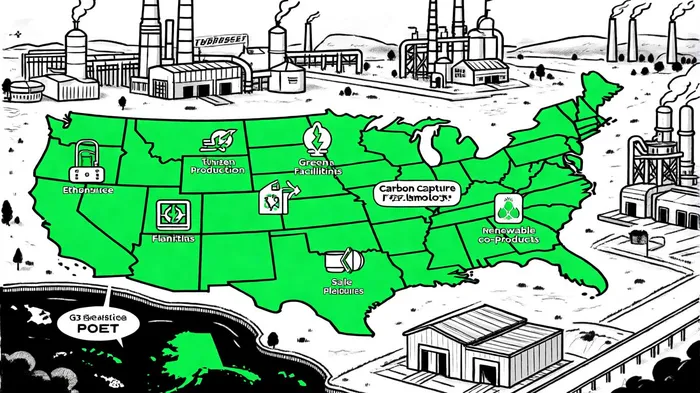
In the volatile world of renewable fuels, strategic asset management can be the difference between survival and stagnation. Green Plains Inc.GPRE-- (NASDAQ: GPRE) has taken a decisive step toward strengthening its financial foundation and positioning itself for long-term growth by selling its Rives, Tennessee ethanol plant to POET Biorefining - Obion, LLC for $190 million in cash, including an estimated $20 million in working capital[1]. This transaction, finalized in Q3 2025, is not merely a liquidity play but a calculated move to align the company's balance sheet with its broader vision of becoming a leader in low-carbon biorefining.
Balance Sheet Optimization: Debt Reduction and Liquidity Gains
The sale's immediate impact is a significant reduction in financial risk. By using the proceeds to fully retire its junior mezzanine debt—originally due in 2026—Green Plains has eliminated a near-term obligation and improved its debt structure[3]. This action follows a Q2 2025 financial report that revealed a net loss of $72.2 million, driven largely by non-cash charges related to asset impairments and restructuring[2]. While the loss underscores the challenges of navigating a cyclical industry, the debt reduction provides a buffer against future volatility.
Moreover, the transaction enhances liquidity, a critical factor in an industry where cash flow can fluctuate with commodity prices and regulatory shifts. According to a report by Business Wire, the sale “aligns with the company's strategy to optimize its asset portfolio and advance carbon reduction initiatives”[1]. By shedding non-core assets, Green PlainsGPRE-- can redirect capital toward higher-margin opportunities, such as its upcoming carbon sequestration projects at three facilities, which are expected to generate $50–$150 million in incremental EBITDA through federal incentives and low-carbon fuel standards[3].
Sector Positioning: Innovation and Competitive Advantages
Green Plains' strategic pivot extends beyond its balance sheet. The company is redefining its role in the renewable fuels sector by transitioning from a traditional ethanol producer to a diversified biorefinery platform. This shift is anchored in proprietary technologies like Maximized Stillage Co-products (MSC) and Clean Sugar Technology (CST), which enable the production of ultra-high-protein feed and low-carbon dextrose—products with higher margins than conventional ethanol[3]. With five facilities already utilizing MSC, Green Plains produces approximately 430,000 tons of ultra-high protein annually, outpacing most competitors[3].
The company's early adoption of carbon capture and sequestration (CCS) further cements its leadership. Three of its plants are set to begin carbon sequestration in late 2025, a move that not only reduces emissions but also taps into federal programs like the 45Q tax credit. As stated by Tenzing MEMO, these initiatives could generate substantial incremental revenue while aligning with global decarbonization trends[3]. The renewable fuels market, projected to grow from $881.7 billion in 2020 to $1,977.6 billion by 2030 at a CAGR of 8.4%[2], offers a tailwind for companies that can scale such innovations.
Challenges and the Path Forward
Despite these strengths, Green Plains faces headwinds. Its reliance on corn prices exposes it to input cost volatility, while regulatory changes in renewable fuel standards could disrupt margins. Larger competitors like POET and ADM, with their greater scale and diversified markets, also pose a threat[3]. However, Green Plains' focus on operational efficiency—evidenced by 99% utilization rates at its nine active plants in Q2 2025[2]—and strategic partnerships, such as its collaboration with Eco-Energy to improve supply chain efficiency by over $50 million[3], demonstrate its ability to adapt.
The recent plant sale and debt reduction provide the financial flexibility needed to navigate these challenges. By prioritizing high-impact projects and leveraging its technological edge, Green Plains is positioning itself not just to survive but to thrive in a sector undergoing rapid transformation.
Conclusion
Green Plains' Tennessee plant sale is a textbook example of strategic asset management. By eliminating debt, enhancing liquidity, and reallocating resources to innovation-driven initiatives, the company is laying the groundwork for sustainable profitability. In a renewable fuels landscape defined by regulatory uncertainty and technological disruption, Green Plains' ability to balance fiscal discipline with forward-looking investments may well determine its success in the years ahead.





Comentarios
Aún no hay comentarios