
Green Plains Navigates Turbulent Q1 with Cost Cuts and Carbon Plays
Green Plains Inc. (NASDAQ: GPRE) reported its first quarter 2025 financial results, revealing a challenging operating environment for its ethanol and agribusiness segments, but also signaling progress on cost reduction and strategic initiatives. The company’s net loss widened to $72.9 million, or $1.14 per share, compared to a loss of $51.4 million or $0.81 per share in Q1 2024. While revenues edged up to $601.5 million from $597.2 million year-over-year, the results underscored margin pressures and the need for structural changes.
The Numbers: A Struggle with Margins
Green Plains’ Q1 performance highlighted a stark contrast between revenue growth and profitability. The ethanol segment, its core business, sold 195.3 million gallons of ethanol, a 6% decline from Q1 2024. This reduction, paired with a $5.4 million year-over-year deterioration in ethanol crush margins (to -$14.7 million), reflects ongoing challenges in a volatile commodity market. Meanwhile, the agribusiness division saw revenue rise 11% to $109.8 million, but gross margins fell 21% to $8.7 million, as trading activities faced weaker margins.
Adjusted EBITDA turned sharply negative at -$24.2 million, compared to -$21.5 million in 2024, with restructuring costs of $16.6 million weighing heavily on results. These costs included CEO-related severance and organizational changes aimed at cutting $50 million in annualized expenses by year-end. Management reported achieving $30 million in savings so far, with a low $40 million annualized run rate expected by 2025’s close.
Liquidity and Debt Management: A Fragile Balance
Despite the losses, Green Plains improved liquidity to $89.2 million by late May 2025, up from $48.6 million at quarter-end. This was aided by extending its $125 million Mezzanine Notes maturity to May 2026 and securing a $30 million revolving credit facility with Ancora Holdings. However, total debt remains high at $571.8 million, with $137.4 million in short-term borrowings, leaving the company vulnerable to interest rate fluctuations.
Strategic Moves to Offset Headwinds
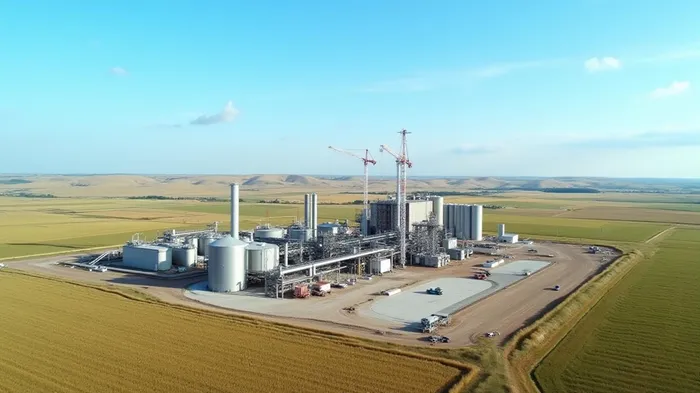
Green Plains is betting on carbon capture and operational efficiency to turn the tide. Construction began on its Nebraska carbon capture project, targeting 800,000 tons of annual CO₂ sequestration by late 2025. This initiative aligns with growing demand for low-carbon fuels and could unlock revenue streams via carbon credits. Additionally, the company’s new ethanol marketing partnership with Eco-Energy LLC aims to streamline supply chains and stabilize pricing.
The Road Ahead: Risks and Opportunities
While cost-cutting and strategic pivots offer hope, risks persist. Ethanol prices remain volatile, with margins squeezed by high corn costs and weak demand. The agribusiness segment’s struggles highlight reliance on commodity markets, which could worsen if global trade tensions escalate. Meanwhile, the carbon capture project’s success hinges on regulatory approvals and market acceptance of its environmental benefits.
Conclusion: A High-Risk, High-Return Gamble
Green Plains’ Q1 results reflect a company in transition. The widening net loss and margin pressures suggest near-term struggles, but progress on cost reduction and strategic initiatives—particularly carbon capture—could position the firm for long-term resilience. Investors must weigh the risks:
- Debt: At $571.8 million, leverage remains a concern, though liquidity improvements are a positive sign.
- Carbon Capture: A potential game-changer, but execution is critical.
- Margins: Ethanol crush margins have fallen 60% since 2022 (see below), and recovery depends on commodity price stability.
For now, Green Plains’ stock (GPRE) appears speculative. While its carbon initiatives and cost discipline offer a path to stabilization, success hinges on managing debt, navigating ethanol market volatility, and monetizing carbon assets. Investors seeking exposure to biofuels and sustainability plays may find allure here, but caution is warranted until profitability improves.
Final verdict: Hold for now, but monitor carbon project progress and margin trends closely.







Comentarios
Aún no hay comentarios